
Restaurant & F&B CPA
Financial Infrastructure for Food & Beverage Growth
Success in food & beverage comes down to mastering costs and making fast, data-driven decisions.
From single-location restaurants to multi-unit franchise groups, we design the financial infrastructure that keeps prime cost under control, cash flow visible, and growth fundable.
Based in Los Angeles, we work with clients across the United States: remotely, at our Los Angeles office, or on site at your restaurant.
Control Your Prime Costs Before the Month Ends.
In the F&B industry, cash flow moves fast. Lantern by SW Accounting gives you the real-time financial visibility you need to protect your margins, straight from your browser or mobile device.
- Dynamic Profit & Loss: Monitor your Statement of Operations in real-time. Spot alarming trends in your food costs or labor before they drain your monthly profits.
- Transaction-Level Transparency: Need to know why operating expenses spiked? Click any number on your dashboard to drill down into the specific vendor payments and journal entries.
- Always-On Analytics: Access your restaurant’s financial heartbeat 24/7. No more waiting for your accountant to email you a static spreadsheet.
- Multi-Location Comparison: See each location’s P&L side by side with consolidated totals — spot your strongest and weakest units at a glance.
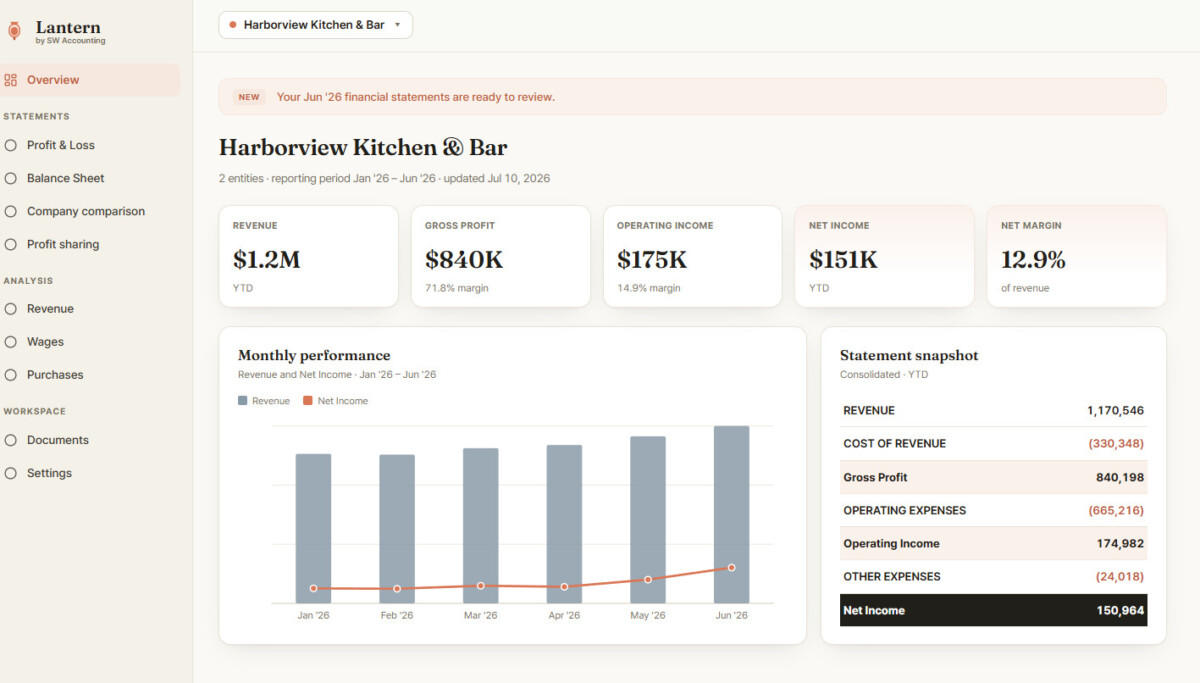
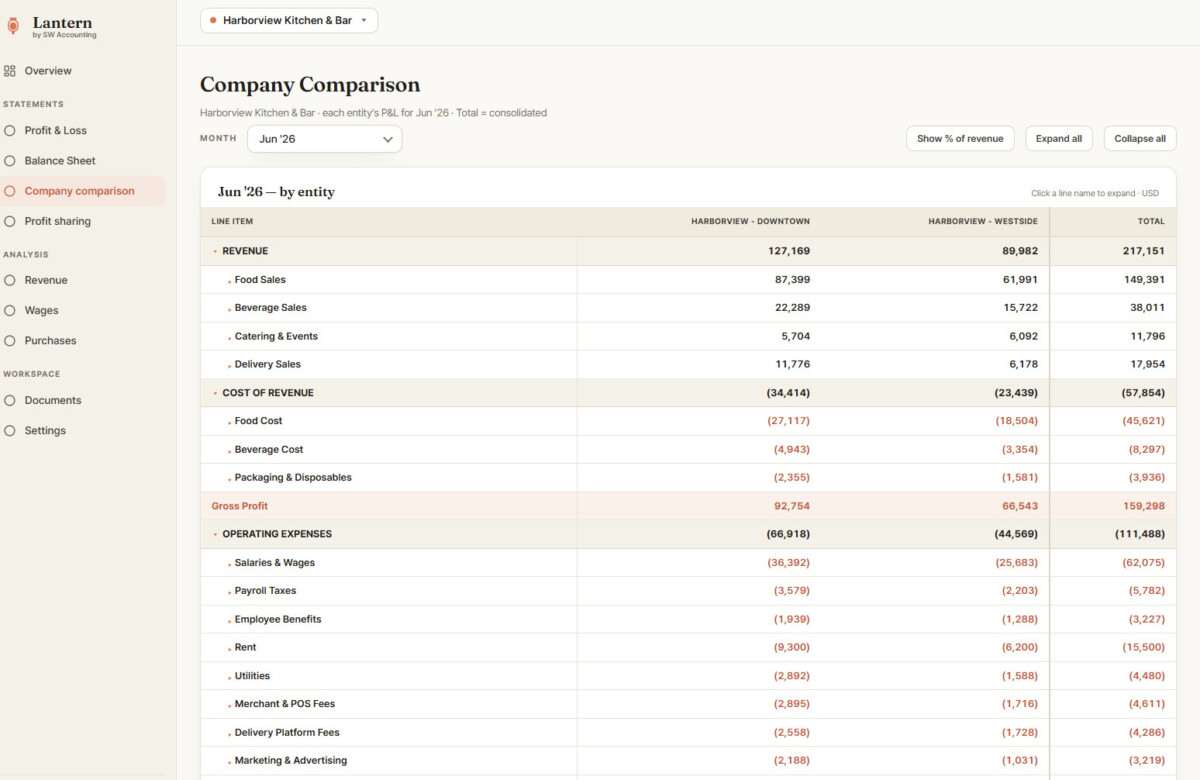
Demo data shown · every number in Lantern drills down to its journal entries.
What do you reconcile every month, and what do I get?
Every month we tie your POS, card processor and delivery-app payouts to the bank, run tips through payroll correctly, and close the books into a P&L you can act on, starting with prime cost.
- POS and card sales to deposits. Daily sales, comps, voids and processor fees from Toast, Square, Clover and similar systems are matched to what actually landed in the bank.
- Delivery-app payouts. DoorDash, Uber Eats, Grubhub and similar platforms deposit net of commissions, promotions, refunds and adjustments. We book gross sales and each fee separately, so the real margin on delivery orders is visible.
- Tips and payroll. Card tips, cash tips and tip pools flow through payroll and tip reporting, and the tips payable balance is cleared each pay period.
- Vendor bills and food cost. Food, beverage and supply invoices are recorded in the month they belong to, so food cost reflects what you actually used.
What you send us: POS and delivery-app reports (or read-only access), bank and card statements, payroll registers and vendor invoices.
What you receive: a monthly P&L by location with prime cost, food cost and labor percentages, a balance sheet, reconciled cash and tips accounts, and Lantern access where every number drills down to its entries.
Every engagement is led personally by CEO Sangwon Youn (US CPA, California; KICPA), with a team of associate CPAs handling the monthly work. We work in English and Korean.