
SECURE 2.0 Updates: How IRS’s New 401(k) Rollover Rules Affects Your Retirement Taxes
Have you ever felt that mixture of excitement and pure confusion when you’re about to receive a payout from your employer’s retirement plan? Maybe you’re moving to a new dream job, or perhaps life threw a curveball and you need to access those funds early. I’ve been there—staring at a stack of tax forms that look like they were written in a different language. To be honest, it’s a lot to take in! But here’s some good news: the IRS recently released Notice 2026-13, which simplifies these explanations to keep up with the latest laws like the SECURE 2.0 Act. My goal today is to walk you through these updates so you can make the best decision for your hard-earned money without the headache. 😊
Understanding the “Safe Harbor” Update 🤔
First off, what exactly is a “Safe Harbor” explanation? In plain English, when you take a distribution from a 401(k), 403(b), or governmental 457(b) plan that is eligible to be rolled over, the law (Section 402(f) of the Code) requires your plan administrator to give you a written explanation. This notice tells you how to avoid taxes by rolling the money over and what happens if you don’t.
Notice 2026-13 is basically a “refresh” of these rules. The last major update was in 2020, but since then, Congress passed the SECURE 2.0 Act of 2022. This act introduced a ton of new exceptions for early withdrawals and changed the ages for when you must start taking money out. The new safe harbor explanations come in two flavors:
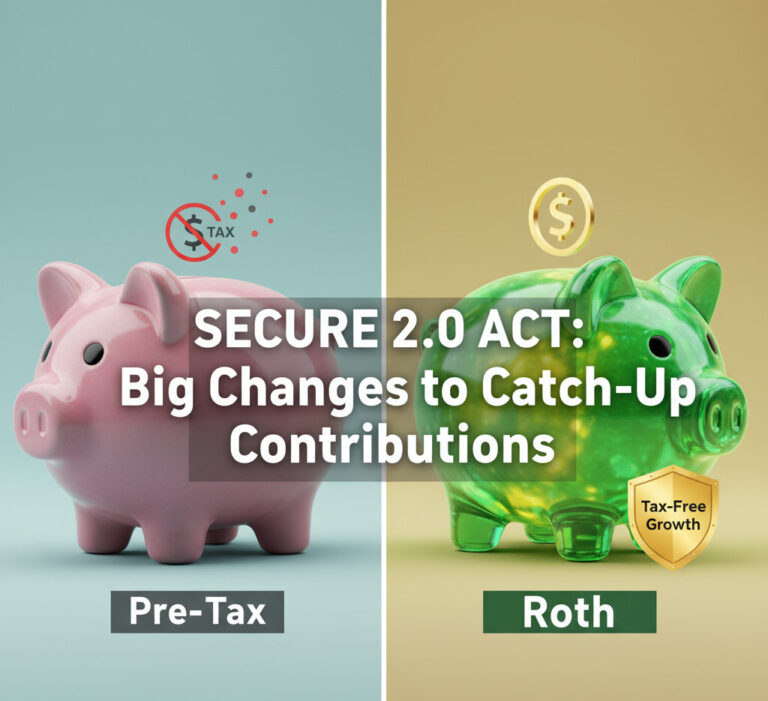
- Payments Not From a Designated Roth Account: For your traditional, pre-tax contributions.
- Payments From a Designated Roth Account: For those after-tax Roth accounts where earnings can be tax-free.
If you have both a traditional account and a Roth account in the same plan, you should actually receive both explanations! Your plan administrator will tell you exactly how much is coming from each.
Big Wins: New Exceptions to the 10% Early Tax 📊
Usually, if you take money out of your retirement plan before age 59½, the IRS hits you with an extra 10% tax. It’s a steep price to pay! However, Notice 2026-13 highlights several new exceptions introduced by the SECURE 2.0 Act that might save you a fortune.
New Tax-Free “Escape Hatches”
| New Exception Type | Brief Description | Repayment Rule |
|---|---|---|
| Emergency Personal Expense | Up to $1,000 once per year for unforeseeable personal needs. | Generally repayable within 3 years. |
| Domestic Abuse Victims | Distributions for victims of domestic abuse. | Repayable within 3 years. |
| Terminally Ill Individuals | For those certified by a physician as having a terminal illness. | May be repayable. |
| Qualified Disaster Recovery | Up to $22,000 for losses in federally declared disaster areas. | Repayable within 3 years. |
It’s important to note that while these new exceptions protect you from the 10% additional tax, you will still owe regular income tax on the distribution unless it’s from a Roth account and meets those specific rules. Also, some of these distributions cannot be rolled over in the traditional sense, though they often can be “repaid” back into the plan later.
For the terminally ill individual distribution, you must have a physician’s certification before the distribution is made. Your plan administrator won’t just take your word for it—they need the paperwork!
The New Timeline for Required Minimum Distributions (RMDs) 🧮
One of the biggest sources of confusion is when you have to start taking money out. The SECURE 2.0 Act pushed the ages back, giving your money more time to grow tax-deferred. Notice 2026-13 incorporates these new “Applicable Ages.”
📝 The RMD Applicable Age Rule
1) If you reach age 72 after Dec 31, 2022, and age 73 before Jan 1, 2033: Your age is 73.
2) If you reach age 74 after Dec 31, 2032: Your age is 75.
→ Basically, most of us now have until age 73 or 75 before the IRS forces us to take a withdrawal.
What is my RMD Starting Age? 🔢
But wait—there’s a huge bonus for Roth lovers! Section 325 of the SECURE 2.0 Act (reflected in the notice) says that RMDs are no longer required from designated Roth accounts while you are alive. This aligns employer Roth accounts with Roth IRAs, which is a massive win for tax-free growth!
Mandatory Cashouts and "Force-Outs" 👩💼👨💻
Have you ever left a job and suddenly received a check in the mail for your small 401(k) balance? That’s called a mandatory distribution. Plans are allowed to "force out" your balance if it's below a certain threshold to save on administrative costs.
Notice 2026-13 explains that this threshold just got a boost. Previously, it was $5,000, but it has been increased to $7,000.
If your balance is between $1,000 and $7,000 and you don't tell the plan what to do, they are generally required to roll it over into an IRA for you rather than just cutting you a check. This helps keep your retirement savings "sticky" and working for you!
The notice also covers specialized situations, like Pension-Linked Emergency Savings Accounts (PLESAs). These are new short-term savings accounts within a plan where you can pull money out tax-free for emergencies. Distributions from these are generally treated as "qualified distributions" (tax-free), even if you're young!
The Rollover Mechanics: Direct vs. 60-Day 📚
When you decide to move your money, you have two primary paths. The path you choose makes a huge difference in how much cash actually hits your account today.
The Direct Rollover (The "Clean" Way)
- How it works: The plan sends the money directly to your new IRA or employer plan.
- Tax Impact: No taxes are withheld. 100% of your money keeps growing.
The 60-Day Rollover (The "Risky" Way)
- How it works: The plan sends the check to you. You have 60 days to deposit it into another retirement account.
- The Trap: The plan must withhold 20% for federal income taxes. To roll over the "full" amount, you have to use your own savings to make up that 20% gap!
If you take the 60-day route and don't have the cash to "fill the hole" left by the 20% withholding, the withheld amount is treated as a taxable distribution—and if you're under 59½, you'll likely owe that 10% penalty on it. Stick with the direct rollover whenever possible!
Conclusion: Key Summary 📝
The world of retirement taxes is constantly shifting, but Notice 2026-13 is a great tool to help us navigate it. By understanding these new exceptions and timelines, you can protect your nest egg from unnecessary taxes and penalties. Here is a quick wrap-up of the most vital points:
- New Exceptions: Emergency expenses, domestic abuse recovery, and terminal illness now provide pathways to early funds without the 10% penalty.
- RMD Ages: Most workers can now wait until 73 or 75 to start withdrawals.
- Roth Benefits: No more lifetime RMDs from employer-sponsored Roth accounts.
- Higher Thresholds: Mandatory cashouts increased to $7,000, keeping more small accounts in the retirement system.
Remember, every financial situation is unique. While these safe harbor notices are designed to be "safe," it’s always a smart move to chat with a tax professional before making a huge move with your 401(k). Do you have any questions about these new rules or a specific situation you're dealing with? Feel free to ask in the comments below—I'd love to help! 😊