EFIN Application 2026: Guide for Tax Preparers & CPAs
Everything tax professionals and CPA firms need to know about obtaining, protecting, and managing an Electronic Filing Identification Number — the EFIN application 2026 process from e-Services application to suitability checks, fingerprinting, and fraud prevention.
If you are planning to e-file federal tax returns as a paid preparer or firm in the upcoming season, there is one credential you absolutely cannot skip. The EFIN application 2026 process is the gateway that turns a tax professional into an Authorized IRS e-file Provider — and without it, your firm simply cannot transmit returns electronically to the IRS. At SW Accounting & Consulting Corp here in Los Angeles, we walk new partners, satellite offices, and seasonal hires through this process every year, and we have seen firsthand how a botched or delayed application can derail an entire filing season.
This guide breaks down what an EFIN actually is, how it differs from a PTIN, what the IRS suitability review involves, how long it realistically takes, and — most importantly — how to protect the credential once you have it.
What Exactly Is an EFIN, and Why Does Every E-Filing Practice Need One?
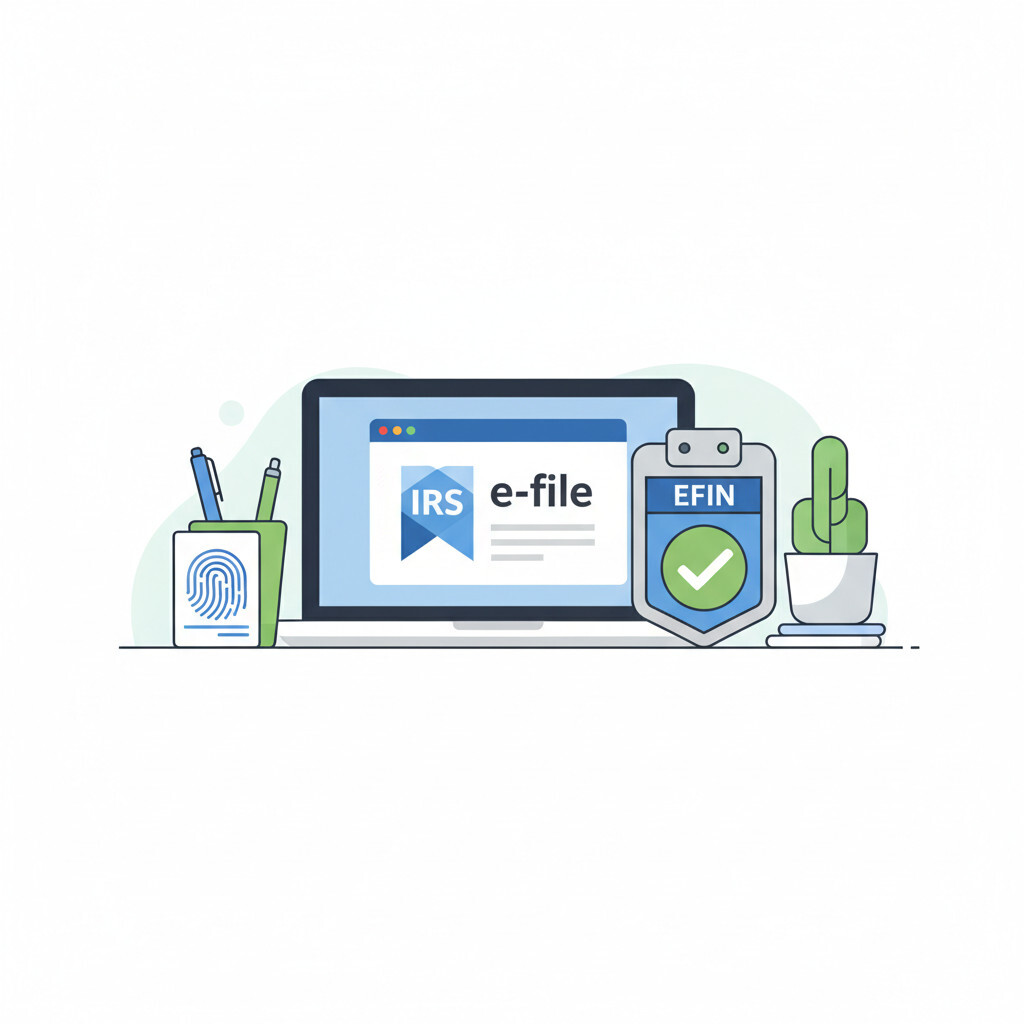
An EFIN — Electronic Filing Identification Number — is a six-digit identifier issued by the IRS to firms and individuals approved to electronically file tax returns on behalf of clients. It is not a preparer credential in the way a CPA license or enrolled agent designation is. Instead, it is a transmission authorization: it tells the IRS e-file system that your firm has been vetted and is cleared to send returns through the pipeline.
The EFIN is tied to a specific physical location — so if your practice operates out of three offices across Los Angeles County, you will generally need three EFINs, one for each office. For a deeper technical dive, see IRS Publication 3112, the IRS e-file Application and Participation guide.
How Do You Actually Apply — and What Does the IRS Check?
The application lives inside IRS e-Services on IRS.gov. You create an ID.me-verified account, complete the online e-file application, list every principal and responsible official, and submit. The IRS runs three parallel checks on every principal:
- Credit check — looking for patterns that suggest financial instability or fraud risk.
- Tax compliance check — confirming your personal and business returns are filed and any balances are current or under an approved agreement.
- Criminal background check — reviewing any history that might disqualify you from handling taxpayer data.
FBI fingerprinting is required for most principals and responsible officials — unless the individual already holds a recognized professional credential such as a CPA license, active bar membership, or enrolled agent status. Our CPAs skip the fingerprint card, which shaves real time off onboarding.
How Long Does the EFIN Application 2026 Process Really Take?
The IRS officially cites a 45-day processing window from the time a complete application is submitted. In practice, that timeline assumes clean suitability results, no missing signatures, and no fingerprint delays. Applications with complications can easily stretch to 60 or 90 days.
The practical implication for LA-area firms planning seasonal hiring: if you are opening a pop-up office in January, your EFIN application should be with the IRS no later than early November. We advise clients to file by October 1 for any new location transmitting returns starting January 15.
Expert Insight from SW Accounting & Consulting Corp
Every year we see Los Angeles firms scramble in December because someone assumed the EFIN would come through “in a few weeks.” The 45-day estimate is a floor, not a ceiling. For multi-office operations, we recommend a rolling EFIN calendar — one spreadsheet tracking application date, suitability completion, fingerprint submission, and renewal review for every location. Treating the EFIN like a license rather than a one-time checkbox is what keeps a growing firm out of January crisis mode.
EFIN vs. PTIN — What’s the Difference?
The short answer: they are different credentials with different jobs, and most active preparers need both.
| Feature | EFIN | PTIN |
|---|---|---|
| Who it identifies | Firm or e-file provider location | Individual paid preparer |
| Who needs it | Anyone who e-files returns for clients | Anyone paid to prepare returns |
| Issued by | IRS via e-Services application | IRS via PTIN system (annual renewal) |
| Suitability review | Credit + tax + criminal + fingerprints | Tax compliance + fee payment |
| Location-specific? | Yes — one per physical office | No — follows the individual |
| Processing time | ~45 days | Same day to a few weeks |
A solo practitioner in Koreatown who prepares and e-files her own clients’ returns needs both: the PTIN to sign the return as paid preparer, and the EFIN to transmit it. A W-2 employee at a large firm only needs a PTIN — the firm’s EFIN covers the transmission.
How Do You Protect Your EFIN?
EFIN theft has quietly become one of the most serious threats to small tax practices. A stolen EFIN lets a bad actor file fraudulent returns in your firm’s name, redirect refunds, and leave you on the hook for cleanup while the IRS investigates.
- Log into e-Services monthly and reconcile your e-file count against the returns you actually transmitted.
- Never share your EFIN with software vendors, referral partners, or clients.
- Revoke access immediately when an employee leaves.
- Report misuse the moment you suspect it by contacting the IRS e-Help Desk.
- Keep principal information current. Ownership, address, and officer changes require prompt updates.
Warning: EFIN Fraud Is on the Rise
The IRS has flagged EFIN misuse as one of the fastest-growing vectors for refund fraud. Criminals steal EFINs through phishing emails, compromised tax software accounts, and social engineering calls. If your monthly e-file count ever exceeds what your firm actually filed — even by one return — stop transmissions immediately and contact the IRS.
What Has Changed for 2026?
The IRS continues to tighten identity protection for practitioners in 2026. Annual re-suitability reviews are more likely to trigger re-verification requests — particularly around beneficial ownership and principal disclosures. Firms with layered ownership structures should expect sharper questions about who the real principals are.
For multi-office operations, EFIN maintenance is now a quarterly task, not an annual one. Ownership changes, new responsible officials, and office relocations need updates in e-Services within stated windows — missing them risks suspension during the worst possible week of the year.