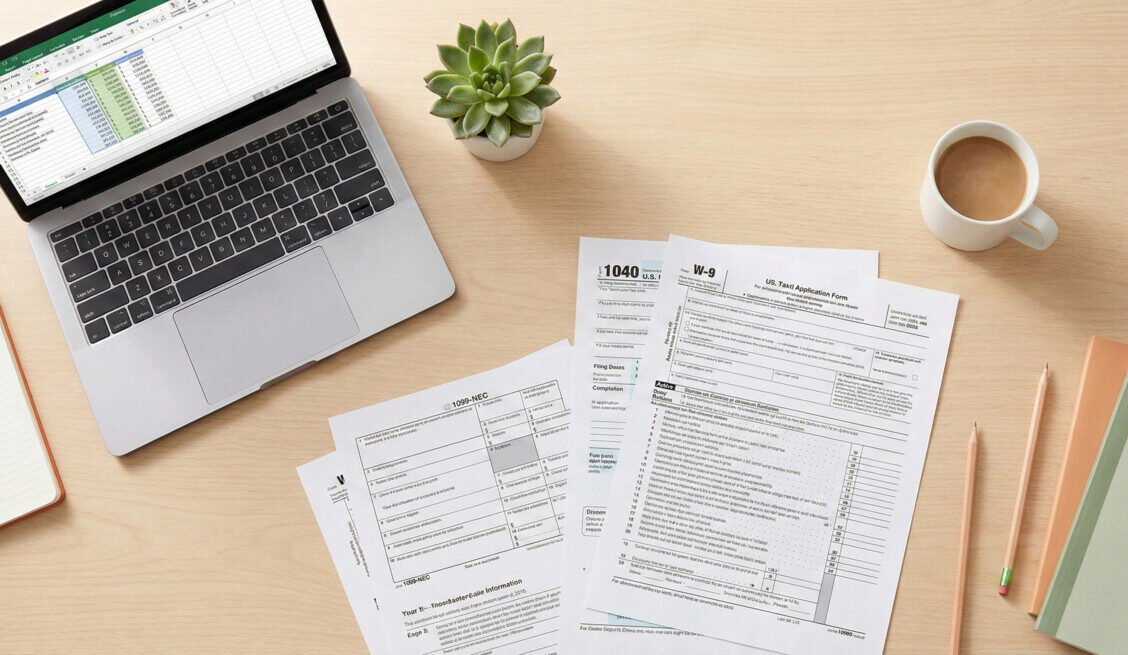
Everything You Need To Know About 1099 Forms 2026
Welcome to 2026! It’s the start of a new year, which means it’s time to get your 1099s in order. If your business paid any contractors in 2025, paid for office rent, or received royalties, there’s a very good chance you’ve got some forms to file. I know, taxes can be super stressful, and the paperwork often feels endless!
But let’s be real—the rules aren’t actually that complicated once you break them down. Waiting too long, however, can lead to mistakes, missed deadlines, and annoying penalties. Nobody wants to hand the IRS more money than they have to, right? So, let’s walk through the basics of who gets a 1099, which forms you need to use, and what crucial deadlines you must meet this season. 😊
Who Gets a 1099, and Which Form? 🤔
There are more than a dozen types of 1099s out there, but don’t panic! Most small businesses only deal with a select few. The most common ones you’ll encounter are the 1099-NEC for nonemployee compensation, the 1099-MISC for rent and other miscellaneous payments, and the 1099-K for payments processed through third-party networks.
While the deadline for issuing most 1099s is usually January 31st, that date falls on a weekend this year. So, the big deadline has been pushed back to February 2, 2026. Mark your calendars!
1099-NEC: Nonemployee Compensation 💼
You’ll likely need to issue a 1099-NEC if your business paid $600 or more to a nonemployee. Think of freelancers, consultants, independent contractors, or service providers.
This form specifically applies when:
- The service provider is not your employee.
- The payment was made in exchange for services.
- The payee is an individual, sole proprietorship, or partnership.
If you’re ever unsure how a contractor is taxed, just check the W-9 form you (hopefully) collected from them! You typically don’t issue a 1099-NEC to C or S corporations, but there are exceptions. For instance, if you paid an attorney or law firm for legal services, you might still need to issue one, even if they’re incorporated.
LLCs can be particularly tricky. If the contractor’s LLC is taxed as a sole proprietorship or partnership and they meet that $600 threshold, you must issue a Form 1099-NEC. If they’re taxed as a corporation, you typically do not.
1099-MISC & 1099-K: Other Business Payments 🏢💳
You’ll use the 1099-MISC to report certain business payments that don’t fall under nonemployee compensation. This typically includes rent payments of $600 or more for office space or equipment leases, royalty payments of $10 or more, and certain prizes or awards.
Just like with the NEC form, there are exceptions for corporations. A common one is business-related medical or healthcare payments. Paid for employee drug testing or an occupational health visit? That probably requires a 1099-MISC.
If you pay a vendor through a platform like PayPal, Venmo Business, Square, or a credit card, you generally do not issue a Form 1099 for those payments. The payment processor is responsible for issuing a Form 1099-K. Double-reporting the same income causes massive headaches for everyone!
Quick Comparison of Forms and Deadlines
| Form Type | Common Use | Threshold | IRS Deadline (2026) |
|---|---|---|---|
| 1099-NEC | Contractors, Freelancers | $600+ | Feb 2 (Paper & E-file) |
| 1099-MISC | Rent, Royalties, Medical | $600+ (Rent) / $10+ (Royalties) | Mar 2 (Paper) / Mar 31 (E-file) |
| 1099-K | Credit Cards, PayPal, Venmo | Handled by Processor | Handled by Processor |
Tips for a Smoother 1099 Season 🗂️
A successful 1099 season starts with good recordkeeping. First, make sure you have a current W-9 for every vendor or contractor you’ve paid in 2025. Pay close attention to how LLCs are taxed on their W-9!
Second, ensure your vendor records are up-to-date. Confirm business names, mailing addresses, and taxpayer identification numbers (TINs). A quick check now can prevent nasty IRS notices and complications later. Finally, create a checklist of which vendors need 1099s and for which types of payments to stay completely organized.
🔢 Late Penalty Estimator
IRS penalties range from $60 to $330 per form depending on how late they are. Estimate your potential risk below!
1099 Season Summary Checklist
Frequently Asked Questions ❓
Planning ahead is your best defense against those hefty penalties! Avoid the scramble by reviewing your records now, confirming who needs a form, and getting everything in order before February 2, 2026. Disclaimer: The information provided is general guidance and may vary based on your specific tax situation. Always consult a tax professional for detailed advice!
If you have any more questions or need help figuring out your vendor classifications, feel free to ask in the comments below! We're always happy to help. 😊