
M&A Landscape July 2025: Key US & Korean Deals Analyzed
Have you been watching the M&A market lately? It feels like every day brings news of another major deal, but the story isn’t just about big numbers. It’s about smart, strategic moves that are reshaping entire industries. Whether you’re an investor, a business owner, or just keeping an eye on the economy, understanding these undercurrents is crucial. We’ve dived deep into the July 2025 data from both the U.S. and South Korea to bring you the insights that matter. 😊
South Korea’s M&A Boom 🇰🇷
South Korea’s investment banking market is on an incredible growth trajectory, projected to soar from $5.18 billion in 2024 to over $13.3 billion by 2035. This isn’t just a random surge; it’s fueled by businesses aggressively seeking competitive advantages and supportive government policies. We’re seeing a fascinating mix of cross-border ambition and domestic consolidation, especially in high-growth sectors.
| Sector | Key Transaction (July 2025) | Strategic Implication |
|---|---|---|
| Digital Health | Samsung Electronics acquires Xealth (US) | Integrating wearable tech with healthcare platforms. |
| Industrial Gas | Bidding for DIG Airgas (up to $3.6B) | High valuation (18-20x EBITDA) shows strong interest. |
| K-Beauty | KKR acquires Samhwa | Explosive growth in cosmetics packaging. |
| E-commerce | AliExpress Korea JV with Shinsegae | Strategic shift to compete in the domestic market. |
Keep an eye on firms like Ark & Partners. They are mastering the low-to-mid-cap buyout space by focusing on tech-enabled companies. Their specialty? A “hands-on” approach that includes what they call “cap table clean-up,” where they consolidate messy ownership structures to prepare a company for major growth. It’s a value-add strategy that larger firms often overlook.
The U.S. Market: Strategic & Resilient 🇺🇸
Across the Pacific, the U.S. M&A market is showing impressive resilience. The theme for 2025 isn’t aggressive expansion but careful, strategic planning. While cross-border activity has cooled slightly, sectors like software, IT, and cybersecurity are hotbeds for deals. We’re also seeing significant consolidation in legacy industries, particularly banking.
New rules introduced at the start of 2025 are designed to limit certain outbound U.S. investments. Furthermore, deals like T-Mobile’s $4.4 billion acquisition of UScellular are facing close antitrust review. This regulatory environment is a critical factor that can impact deal structures and timelines.
Example: The “Golden Goose” Divestiture 📝
A fascinating trend is U.S. banks selling their insurance agency operations. Why sell a profitable business? It’s all about valuation arbitrage.
- The Situation: As of mid-2024, public insurance brokers traded at a median P/E multiple of around 25.9x.
- The Contrast: The S&P U.S. BMI Bank Index traded at a median P/E of only 13.0x.
- The Strategy: By selling an insurance subsidiary, a bank can unlock significant value. For example, Trustmark’s sale of its insurance arm implied an 18.6x EBITDA multiple. They can then redeploy this capital at a higher yield, bolster capital ratios, and focus on their core banking business. It’s a smart way to capitalize on market discrepancies.
July 2025 M&A at a Glance
Key Takeaways for Investors 📝
So, what does this all mean for your investment strategy? Here’s a quick summary of what to keep in mind for the second half of 2025.
- Focus on Strategy: Look beyond the price tag. Understand the strategic rationale behind a deal. Is it for digital transformation, supply chain security, or market consolidation?
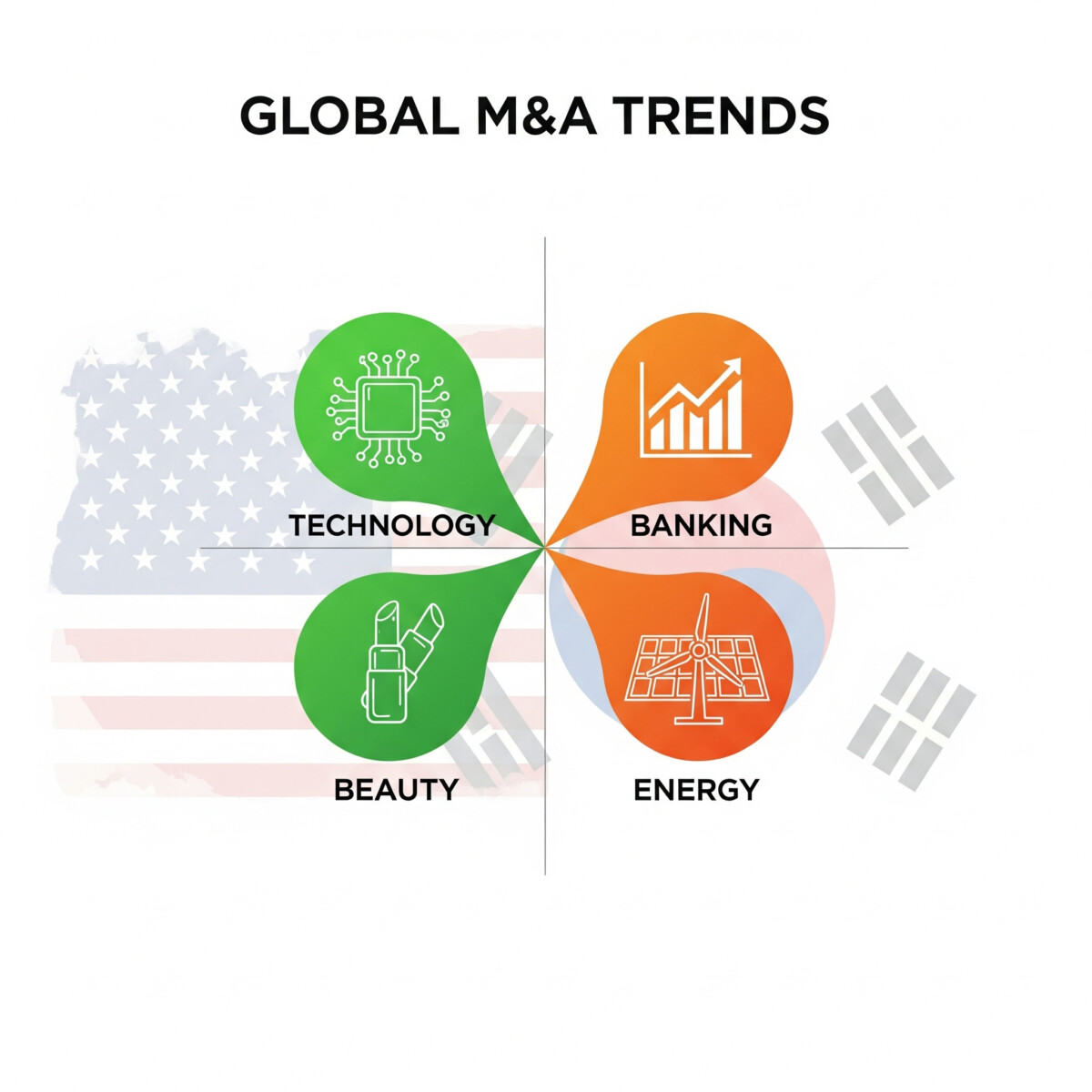
- Watch Key Sectors: Opportunities are concentrated. In Korea, that means K-beauty, tech, and e-commerce. In the U.S., it’s banking, insurance restructuring, software, and energy.
- Follow the Private Equity Playbook: Both large and small PE firms are driving the market. Their focus on operational value and niche strategies can signal where hidden value lies.
- Understand Valuation Gaps: The bank-insurance divestiture trend is a prime example of unlocking value. Look for similar arbitrage opportunities in your own portfolio or market.
Frequently Asked Questions ❓
The M&A world is complex, but navigating it successfully can lead to incredible growth. If you have questions about how these trends could impact your business or investment portfolio, please don’t hesitate to reach out. We’re here to help! 😊