IRS Tax Withholding Estimator: OBBB 2026 Guide %sep% %sitename%
One of the most common tax problems we see in our CPA practice is under-withholding — taxpayers who owe a large bill in April (plus an underpayment penalty) because they didn’t adjust their paycheck withholding after major life changes or new tax law. With the One, Big, Beautiful Bill bringing sweeping changes to tax credits and deductions, the IRS Tax Withholding Estimator has been updated to help millions of Americans recalibrate their withholding for 2026. In this guide, we explain exactly how the tool works, who needs it, and how to use it to avoid a surprise tax bill next April.
What Is the IRS Tax Withholding Estimator and How Does It Work? 🔧
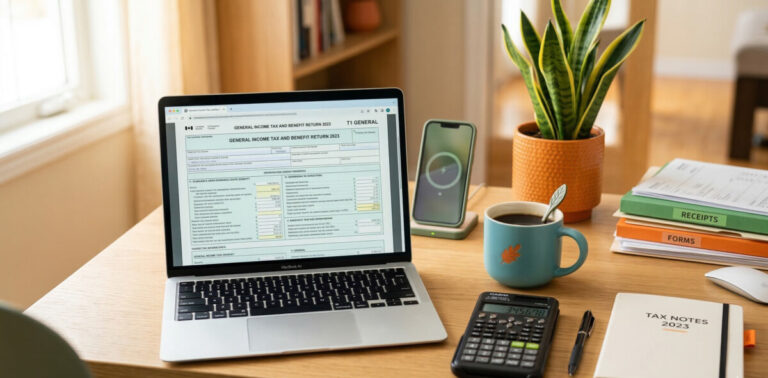
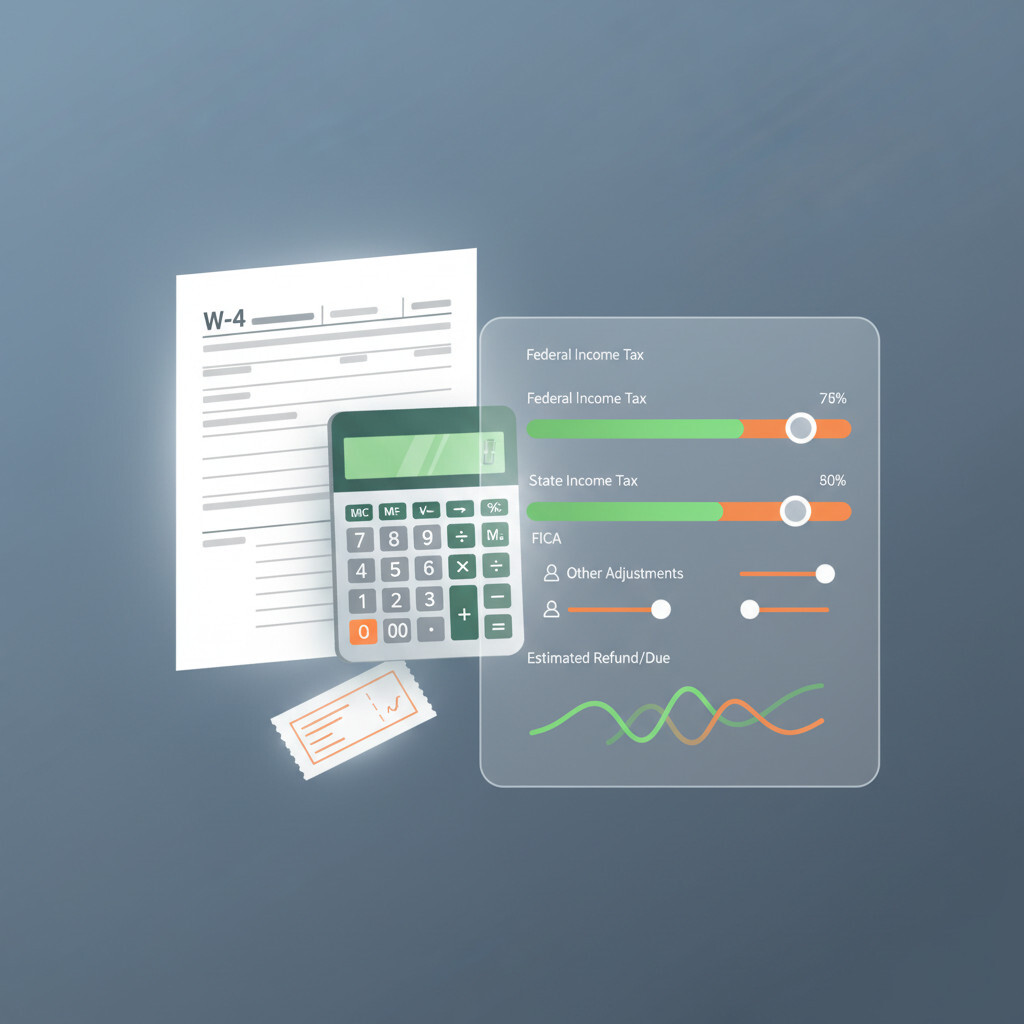
The IRS Tax Withholding Estimator is a free, secure online calculator available at IRS.gov that estimates how much federal income tax should be withheld from your paycheck so you don’t owe a large amount — or overpay — at tax time.
Access the tool at IRS.gov/individuals/tax-withholding-estimator. It is available 24/7, requires no login, and does not ask for personally identifiable information such as your Social Security number. The tool takes most users about 25 minutes to complete — less for those with simpler financial situations such as a single job and no additional income sources.
You’ll be asked to input information such as:
- Filing status (single, married filing jointly, head of household, etc.)
- Number of jobs and income from each
- Any additional income not subject to withholding (freelance, investment, rental)
- Expected deductions and credits for the year (children, education, mortgage interest, etc.)
- Current withholding from your most recent pay stub
The estimator then compares your projected tax liability against what you’re having withheld and tells you whether to increase, decrease, or maintain your current withholding. If an adjustment is needed, the tool helps you fill out a new Form W-4, Employee’s Withholding Certificate to submit to your employer.
What OBBB Tax Law Changes Are Now Reflected in the IRS Withholding Estimator? 📝
The updated IRS Tax Withholding Estimator now accounts for One, Big, Beautiful Bill provisions effective in 2025 and 2026, including the no-tax-on-tips deduction, no-tax-on-overtime deduction, no-tax-on-car-loan-interest deduction, and enhanced deductions for seniors.
Here is a summary of the key OBBB provisions the updated tool incorporates:
| OBBB Provision | Who Benefits | Key Limit |
|---|---|---|
| No Tax on Tips | Service workers in hospitality, food service, gambling, grooming | Up to $25,000 deduction on qualified tips |
| No Tax on Overtime | Hourly workers with FLSA-required overtime | Up to $12,500 single / $25,000 MFJ (premium portion only) |
| No Tax on Car Loan Interest | Individuals with auto loans for US-assembled vehicles | Deduction available for qualifying auto loan interest |
| Enhanced Senior Deduction | Taxpayers age 65 and older | Increased standard deduction add-on for seniors |
| Enhanced Child Tax Credit | Parents with dependent children under 17 | Up to $2,200 per qualifying child for 2025 |
| Charitable Giving Changes | Itemizing taxpayers with charitable contributions | OBBB modifications to deduction rules |
The tool also accounts for OBBB modifications tied to homeownership deductions and other family-related credits. This makes the updated estimator significantly more accurate than simply relying on last year’s Form W-4 settings.
Many of our clients in the hospitality and food service industries — where tips are a major portion of income — are significantly under-withholding in 2026 because their employers haven’t updated payroll systems to reflect the OBBB’s no-tax-on-tips provision. Until new W-2 reporting boxes are available (required starting in the 2026 tax year), we strongly recommend using the IRS Withholding Estimator to manually calculate whether your current withholding is still appropriate, especially if you are claiming deductions for tips or overtime that are not yet reflected on your pay stub.
Who Should Use the IRS Tax Withholding Estimator Right Now? 👤
The IRS recommends that workers, retirees, and self-employed individuals use the Tax Withholding Estimator any time there is a change in their tax situation — and the major changes brought by the One, Big, Beautiful Bill make 2026 an especially important year to check.
You especially need to use the estimator if you fall into one of the following groups:
- Workers who receive tips — the no-tax-on-tips deduction may significantly change your tax liability if you haven’t adjusted withholding
- Hourly workers who regularly work overtime — particularly those in healthcare, manufacturing, retail, or construction where FLSA overtime is common
- Taxpayers with multiple jobs — withholding tables on a single W-4 may not accurately reflect the combined tax liability from multiple income sources
- Married couples where both spouses work — under-withholding is extremely common in dual-income households
- Seniors and retirees — particularly those with pension income, Social Security, and investment distributions who may benefit from enhanced senior deductions
- New parents — if you had a baby in 2025 or 2026, the enhanced Child Tax Credit of $2,200 per qualifying child may reduce your withholding requirement
- Gig workers and freelancers — those who didn’t pay sufficient estimated quarterly taxes may need to increase withholding from any W-2 employment to cover self-employment income
- Anyone who owed a large tax bill or received a huge refund last filing season — both are signs that current withholding is miscalibrated
If you under-withhold and don’t pay enough estimated tax throughout the year, the IRS charges an underpayment penalty — currently calculated at the federal short-term interest rate plus 3 percentage points (approximately 7–8% annually). The penalty applies to the average daily underpayment, and it can add hundreds of dollars to your tax bill even if you pay in full by April 15. Using the Withholding Estimator now (especially with OBBB changes) can help you avoid this entirely.
How Do You Use the Estimator Results to Update Your Form W-4? 📋
Once the IRS Withholding Estimator gives you a recommended withholding amount, you update your Form W-4 with your employer — and the new withholding typically takes effect within one to two pay periods.
Here’s the step-by-step process:
- Run the estimator at IRS.gov using information from your most recent pay stubs and a copy of your most recent federal tax return for accuracy.
- Note the recommended withholding change — the tool will tell you whether to increase or decrease withholding, and by how much per pay period.
- Download Form W-4 from IRS.gov. The estimator will guide you on exactly which boxes to complete based on your situation (Step 3 for credits, Step 4 for additional withholding or deductions).
- Submit the new Form W-4 to your employer’s HR or payroll department. You may change your W-4 as many times as needed during the year — there is no limit.
- Verify on your next pay stub that the withholding amount changed as expected.
- Re-run the estimator mid-year if your situation changes — a raise, new job, large stock sale, or a major life event such as marriage or divorce.
For retirees receiving pension or annuity income, the equivalent form is Form W-4P, Withholding Certificate for Periodic Pension or Annuity Payments, which you submit to your plan administrator rather than an employer.
📌 Key Takeaways
- The IRS Tax Withholding Estimator is free, private, and updated to reflect 2026 OBBB tax law changes
- Workers with tips, overtime, multiple jobs, or life changes especially need to check their withholding now
- Under-withholding triggers an IRS underpayment penalty — the estimator helps you avoid it
- Update your Form W-4 (or W-4P for retirees) immediately if the estimator recommends a change
Frequently Asked Questions ❓
SW Accounting & Consulting Corp serves small business owners, employees, and retirees throughout Los Angeles and the greater Southern California region. If you’d like personalized guidance on updating your withholding or understanding how OBBB tax law changes affect your 2026 tax situation, contact our office today.