California PTE Elective Tax 2026: June 15 Payment Rules and SB 132 Changes
If you have a California pass-through entity electing the optional state-level tax, your California PTE elective tax 2026 compliance calendar runs through this June. The Franchise Tax Board’s May 2026 Tax News issue is the practitioner’s monthly briefing on what’s changing — and this month’s issue covers PTE June 15 mechanics under SB 132, exempt organization Form 199 filings, the SMLLC Form 568 reminder, and Form 593 real estate withholding processing.
At SW Accounting & Consulting Corp, we handle California PTE elections, Form 568 filings, and complex pass-through entity compliance for clients across LA and statewide. This guide summarizes the practical takeaways from the May 2026 Tax News.
What are the June 15 PTE elective tax payment rules? ⏱
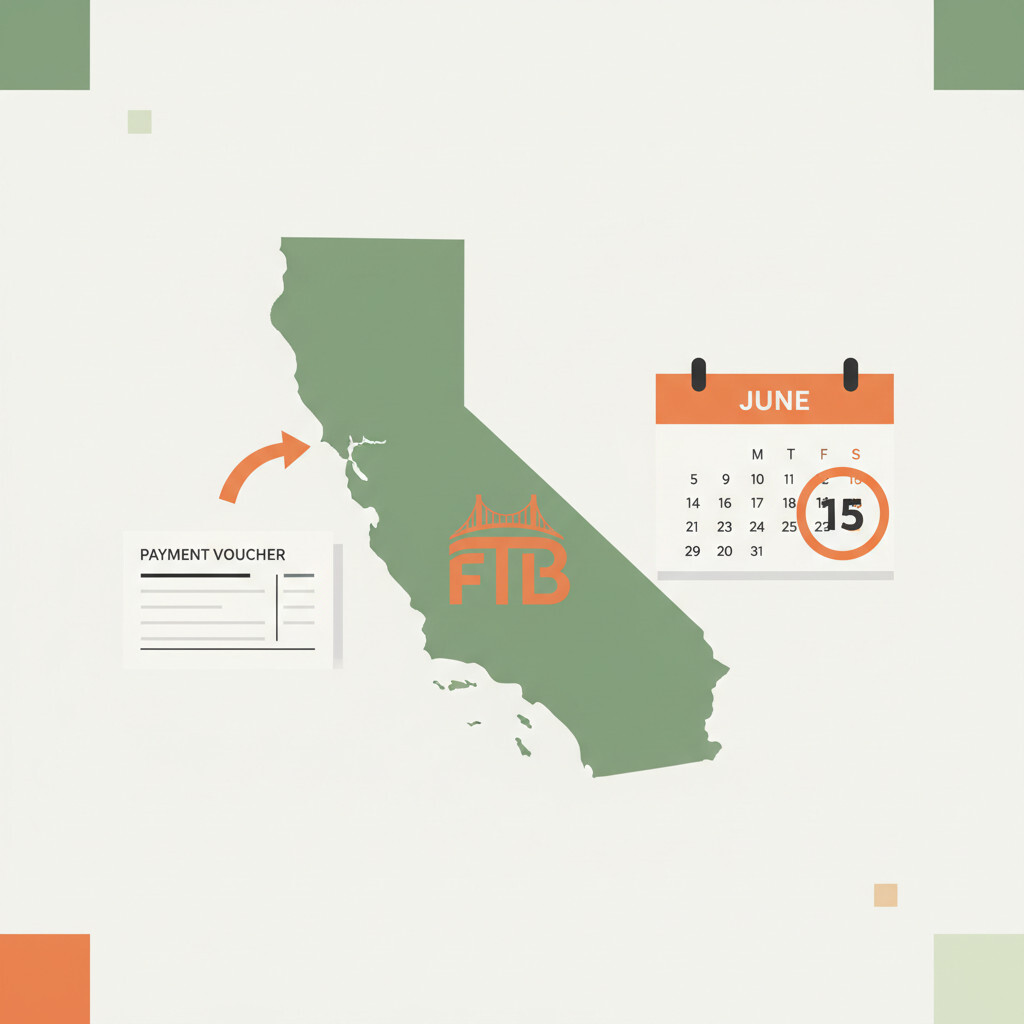
Qualified entities must make the PTE elective tax initial payment on or before June 15, 2026, in an amount equal to the greater of 50% of the prior year’s elective tax or $1,000.
The mechanics:
- Trigger date: June 15 of the elective tax year.
- Required amount: the greater of (a) 50% of prior year’s elective tax paid, or (b) $1,000.
- Payment methods: Web Pay, electronic funds withdrawal via tax software, or check with FTB Form 3893.
- Mandatory e-pay entities: Must remit the PTE payment electronically.
- Separation: PTE payments are made separately from estimated tax payments — don’t combine.
What does SB 132 change for the PTE elective tax in 2026? ⚖
Beginning taxable year 2026, SB 132 introduces a partial-credit penalty: if a qualified entity makes a valid PTE election but fails to make the required June 15 payment in full, the PTE elective tax credit allocated to qualified taxpayers is reduced by 12.5% of their pro rata share of the unpaid amount.
ABC Partnership had $40,000 in PTE elective tax in 2025. The 50% trigger means $20,000 is required by June 15, 2026 (above the $1,000 floor). If ABC pays only $15,000 — short by $5,000 — each consenting partner’s PTE credit is reduced by 12.5% × their pro rata share of the $5,000 underpayment. For a 25%-share partner: $5,000 × 25% × 12.5% = $156.25 credit reduction. Multiply by all consenting partners and the leakage adds up — make the full payment.
FTB has noted that PTE-related forms and instructions are under revision to incorporate SB 132 provisions. Updated 2026 forms (Form 100S, Form 565, Form 568, schedules) will be released through the standard FTB review and approval process. Watch for releases through the FTB Forms portal.
What about exempt organization filings — Form 199 and 199N? 📋
Exempt organizations must file annual information returns by the 15th day of the 5th month following the close of their taxable year — May 15, 2026 for calendar-year organizations.
| Form | When to File |
|---|---|
| Form 199 — Exempt Organization Annual Information Return | Most exempt organizations |
| FTB 199N — California e-Postcard | Smaller exempt organizations meeting e-postcard thresholds |
| Form 109 — California Exempt Organization Business Income Tax Return | Organizations with unrelated business taxable income |
| Form 100 — California Corporation Franchise or Income Tax Return | Certain organizations subject to corporate-level tax |
Automatic 6-month extension is granted if both: (1) the organization is not suspended on the original due date, and (2) the return is filed on or before the extended due date. No extension request form is needed for the FTB to grant the automatic extension.
Why must SMLLCs file Form 568 even if disregarded? 🏛
A single-member LLC that is disregarded for federal tax purposes is also disregarded for California income tax — but California still requires the SMLLC to file Form 568, pay the LLC annual tax ($800), and pay the LLC fee where applicable.
California law treats the entity differently for these specific purposes:
- LLC annual tax — $800 per year, regardless of income.
- LLC fee — varies by gross receipts tier; due if total California-source gross receipts exceed $250,000.
- Form 568 filing — required even though the federal Schedule C captures income/expense for federal purposes.
Many SMLLC owners file Schedule C federally and assume California is automatic. It’s not. Missing Form 568 and the annual tax triggers FTB notices and penalty exposure. We see this most often with new freelancers, sole-prop consultants who formed an LLC for liability protection, and out-of-state owners who registered an SMLLC to do business in California. Set the filing reminder at LLC formation, not later.
An automatic extension to file is granted, but extension to file does not extend the time to pay the annual tax or fee — those amounts are due on the original deadline.
What about Form 593 real estate withholding? 🏠
FTB has issued processing updates on Form 593, the Real Estate Withholding Statement. Practitioners handling California real estate transactions should review the latest FTB Form 593 processing guidance to ensure timely seller/transferor withholding remittance and proper installment sale withholding allocation.
For real estate practitioners and escrow officers, watch for FTB processing improvements that may affect timing of withholding refunds and any updates to the installment sale election rules.
Frequently Asked Questions 🗂
For the underlying FTB May 2026 Tax News article and SB 132 references, see the FTB Tax News page. PTE elective tax credit guidance and Form 3893 are at FTB PTE elective tax credit page.
Need help with PTE election strategy, Form 568 filing, or California exempt organization compliance? SW Accounting & Consulting Corp’s California tax team handles these issues daily — book a consultation.