State Tax Updates May 2026: California, Idaho, Illinois, Kansas, Kentucky
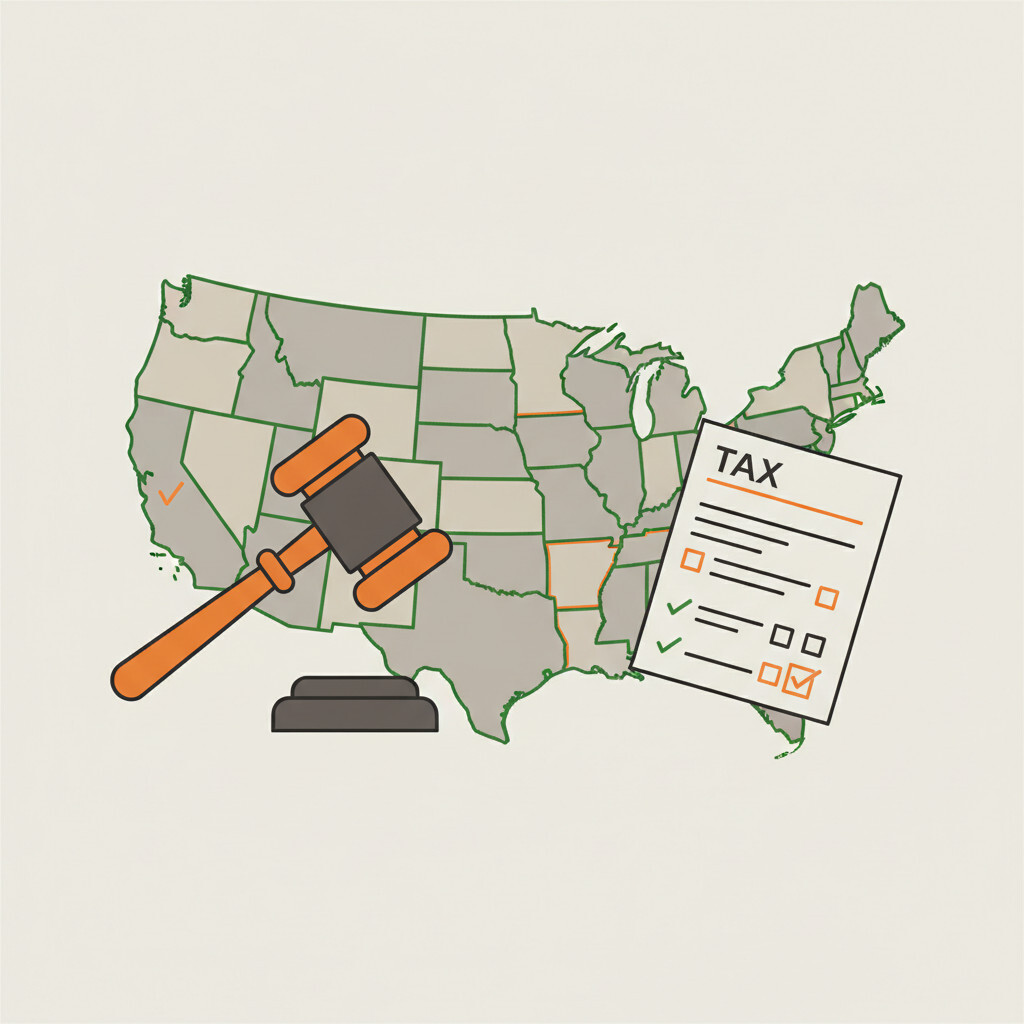
For multistate tax teams and businesses operating across state lines, May brings a busy slate of state tax updates 2026 that materially affect apportionment elections, retroactive tax rate applications, and intercompany expense addbacks. Deloitte’s State Tax Matters Issue 2026-17 (May 1, 2026) captures the most consequential developments. This guide summarizes each, explains the practical impact, and flags what to verify against your own state filings.
At SW Accounting & Consulting Corp, we work with multistate businesses navigating exactly these issues. Below, the most material items by state with planning implications.
California — Agribusiness wins three-factor apportionment ruling 🌾
A California superior court has issued its final statement of decision overruling the FTB’s objections, confirming that an agricultural business (a hog production and harvesting operation) qualified for special-industry three-factor apportionment under Cal. Rev. & Tax Code § 25128(b) for the 2014 tax year — and independently satisfied alternative apportionment requirements under § 25137.
Why this matters:
- California’s general rule is single-sales-factor apportionment — but § 25128(b) preserves a three-factor (property, payroll, sales) formula for specifically enumerated industries including agribusiness.
- The court’s two-pronged holding (industry classification + alternative apportionment) gives taxpayers two independent paths to the three-factor result.
- The decision is subject to appeal — but if it stands, similar agricultural businesses with significant in-state property and payroll may benefit substantially.
The ruling is fact-specific to a hog production and harvesting operation. Other agricultural operations (cattle, dairy, nut/fruit production, vineyards) should review their property/payroll/sales footprint against § 25128(b) industry definitions and run apportionment under both formulas. The § 25137 alternative-apportionment path is an independent backstop — it doesn’t require industry classification, only proof that the standard formula doesn’t fairly represent in-state activity.
Idaho — Supreme Court applies 2021 corporate rate cut to entire FY2021 ⚖
The Idaho Supreme Court ruled that 2021 legislation lowering the corporate income tax rate from 6.925% to 6.5% applies to a fiscal-year (October 1 – September 30) taxpayer’s entire FY2021 — not just the post-effective-date portion.
The case turned on a textual conflict: HB 380 (2021) had an internal statutory reference date of “taxable years commencing on and after January 1, 2001,” but a separate retroactive effective date of “January 1, 2021.” The Idaho Supreme Court applied the unambiguous statutory text — “the legislature meant what it said” — and held the lower 6.5% rate applies for the entire fiscal year.
For fiscal-year Idaho taxpayers who applied the higher 6.925% rate to their FY2021 returns, this ruling potentially supports refund claims. Statute of limitations considerations apply — confirm the refund window is still open before filing.
Illinois — Intercompany interest and intangible expense addback rule changes 🏢
The Illinois Department of Revenue has proposed amendments to 86 Ill. Adm. Code 100.2430 to reflect HB 2755 (Public Act 104-0006) statutory changes — narrowing the exceptions to intercompany interest/intangible expense addbacks and clarifying interaction with IRC §163(j).
Two specific changes:
- §163(j) coordination: For taxpayers whose interest expense is limited under §163(j), any disallowed interest deduction is deemed to relate first to interest paid to unrelated parties. This means more of the deductible portion is intercompany — increasing the addback.
- Repealed exceptions: Two exceptions to the interest addback and one of the intangible addback exceptions are repealed.
Comments on the proposed rule are due 45 days after April 24 publication. Multistate groups with Illinois operations and intercompany interest/intangible structures should run the new computation against current positions and assess whether HB 2755 increases their Illinois base income.
Kansas and Kentucky — OBBBA conformity changes 🗺
Kansas eliminates GILTI references and adopts single-sales-factor apportionment for certain liquor manufacturers; Kentucky modifies its earlier OBBBA §174A decoupling.
| State | Change | Affected Taxpayers |
|---|---|---|
| Kansas | Deletes GILTI reference; single-sales-factor for some liquor manufacturers | Multinational corps with Kansas nexus; in-state liquor manufacturers |
| Kentucky | Modifies prior decoupling from OBBBA’s IRC §174A R&D capitalization provisions | Companies with Kentucky R&D expenditures |
Sales tax updates — Illinois interchange fees and South Dakota rounding 💳
The Office of the Comptroller of the Currency ruled federal law preempts an Illinois state law banning certain interchange fees; South Dakota’s DOR addressed cash-transaction rounding amid the federal penny shortage.
- Illinois interchange: The OCC’s preemption ruling means national banks operating in Illinois can continue charging the disputed interchange fees regardless of the state ban — relevant for national bank merchants and payment processors operating in Illinois.
- South Dakota rounding: With the U.S. Mint’s halt of penny production, retailers face cash transactions that don’t round to the nearest nickel. South Dakota’s DOR clarified that sales tax should be calculated on the pre-rounding total amount, with rounding applied to the final cash amount.
What should multistate tax teams do now? ✅
- California agribusiness review. Run apportionment under both single-sales and three-factor for any agricultural operation. Compare results and document the position.
- Idaho refund analysis. Fiscal-year FY2021 Idaho taxpayers should review whether they applied the higher 6.925% rate and assess refund opportunities.
- Illinois intercompany expense modeling. Recompute Illinois addbacks under HB 2755 and the proposed rule. Consider commenting before the 45-day window closes.
- Kansas / Kentucky conformity recheck. Update conformity tracking for any in-state filings affected by the new GILTI and §174A changes.
- Sales tax mechanics. Update POS and sales tax reporting tools to handle South Dakota rounding correctly; review interchange-fee position with payment processor counsel.
Frequently Asked Questions 🗂
For Deloitte State Tax Matters underlying analysis, see taxathand.com. California Revenue and Taxation Code §§ 25128 and 25137 are on the California Legislative Information site. Illinois Department of Revenue rule changes are on the Illinois DOR portal.
Need help with multistate apportionment, intercompany expense addback analysis, or state tax controversy? SW Accounting & Consulting Corp’s state and local tax team supports businesses across all 50 states — book a consultation.