Energy Credits Online (ECO) Phase-Out: Crucial Deadlines for Auto Dealers
Hey everyone! Let’s be real for a second—keeping up with tax law changes can feel like trying to hit a moving target while blindfolded. If you’re a taxpayer looking to upgrade your home’s energy efficiency, or a car dealer trying to navigate the clean vehicle credit system, you’ve probably experienced that exact frustration recently. With the passage of the OBBB legislation, the rules of the game have shifted dramatically, and the deadlines have been aggressively pushed forward. 😊
You might be wondering, “Did I just miss my window to claim a credit for my new EV?” or “How long do I have to submit my time-of-sale reports?” Take a deep breath. You are not alone in this confusion. In this post, I am going to break down the exact termination dates, explain the crucial difference between “acquiring” a vehicle and “placing it in service,” and outline exactly what dealers must do before the impending April 1, 2026, and June 1, 2026, deadlines. Let’s dive in and secure those credits!
The Clock is Ticking: Phase-Out of 2025 Time-of-Sale Reports ⏰
First and foremost, let’s talk about the immediate operational deadlines hitting the auto industry. If you are a dealer utilizing the Energy Credits Online (ECO) portal, your timeline for managing 2025 calendar year sales is coming to an abrupt end. Prompt and accurate reporting is no longer just a best practice; it is an absolute necessity to prevent delays, critical errors, or completely denied credits when your customers go to file their tax returns.
Here are the hard deadlines you need to circle on your calendar in red ink:
- April 1, 2026: Effective on this date, you will no longer be able to submit edits, returns, or cancellation requests for any calendar year 2025 sales through the ECO portal.
- June 1, 2026: Effective on this date, the window closes entirely for submitting late time-of-sale reports for calendar year 2025 sales through the ECO portal.
Uploading supporting documentation, such as deal jackets and other paperwork pertaining to the clean vehicle credit, drastically helps prevent processing delays. You can seamlessly upload these documents directly through the ECO portal when submitting your time-of-sale reports, edits, returns, and cancellations.
Repaying Advance Payments: Dealership Compliance ⚠️
One of the most heavily scrutinized areas of the clean vehicle credit system is the handling of advance payments. What happens if a customer returns a vehicle, or a sale falls through after you’ve already processed the time-of-sale report? The IRS is very strict on this protocol.
Important reminder: You must repay the advance payment of the clean vehicle credit if you return or cancel a time-of-sale report. The IRS isn’t giving leeway on this; it’s a hard requirement to maintain your dealership’s good standing in the program.
Payment must be made electronically within exactly 30 days of receiving the invoice. All repayments must be processed securely through Pay.gov. Do not attempt to mail a physical check!
The invoice and the required access code are sent directly to the email address associated with your dealership’s advance payment registration. If you’re frantically searching your inbox and are unable to locate the email containing the invoice and access code, don’t panic. You can contact the IRS directly at irs.clean.vehicles.dealer.info@irs.gov to request a replacement. It’s better to be proactive than to miss the 30-day window.
Accelerated Expirations Under OBBB: The Ultimate Timeline 📅
The Omnibus Budget Reconciliation Act (OBBB) sent shockwaves through the tax community by significantly accelerating the termination dates of several beloved energy credit and deduction provisions. This isn’t just a minor tweak; it completely changes the strategic planning for both individual taxpayers and large commercial entities.
To make this as easy to digest as possible, I’ve compiled the exact termination dates for the most critical sections affected by OBBB. Bookmark this table, because you will be referring back to it often!
| Code Section | Section Title | Termination Date & Rule |
|---|---|---|
| 25C | Energy efficient home improvement credit | Not allowed for property placed in service after Dec 31, 2025. |
| 25D | Residential clean energy credit | Not allowed for expenditures made after Dec 31, 2025. |
| 25E | Previously-owned clean vehicles credit | Not allowed for any vehicle acquired after Sept 30, 2025. |
| 30C | Alternative fuel vehicle refueling property | Not allowed for property placed in service after June 30, 2026. |
| 30D | New clean vehicle credit | Not allowed for any vehicle acquired after Sept 30, 2025. |
| 45L | New energy efficient home credit | Not allowed for a qualified home acquired after June 30, 2026. |
| 45W | Qualified commercial clean vehicle credit | Not allowed for any vehicle acquired after Sept 30, 2025. |
| 179D | Energy efficient commercial buildings deduction | Not allowed for property where construction begins after June 30, 2026. |
Looking closely at this table, you’ll notice a massive cluster of vehicle-related credits (25E, 30D, and 45W) all share the exact same brutal cutoff date: September 30, 2025. This means the third quarter of 2025 is going to be an absolute frenzy at dealerships across the country as buyers rush to secure these tax benefits before they vanish completely into thin air.
“Acquired” vs. “Placed in Service”: Decoding IRS Jargon 🕵️♂️
If there is one section of this blog post you read twice, make it this one. The difference between “acquiring” a vehicle and “placing it in service” is the number one cause of denied tax credits and frustrated taxpayers.
For the purposes of the expiring clean vehicle credits (Sections 25E, 30D, and 45W), a vehicle is officially considered “acquired” as of the exact date a written binding contract is entered into AND a payment has been made. It’s vital to note that a payment doesn’t have to be the full price; a nominal downpayment or a vehicle trade-in fully counts as a payment under IRS rules.
📚 Case Study: Beating the Deadline
Let’s look at a practical scenario to illustrate how this works in the real world.
- The Setup: Mark wants to buy a new EV that qualifies for the Section 30D credit. He goes to the dealership on September 28, 2025.
- The Action: Mark signs a written binding contract and trades in his old gas guzzler as a downpayment. However, the specific EV he ordered won’t be delivered to the lot until October 15, 2025.
The Verdict
Does Mark get the credit? Yes! Because Mark acquired the vehicle (contract + trade-in) prior to the September 30, 2025 termination date, he locked in his eligibility. He will officially claim the credit when the vehicle is placed in service (i.e., when he physically takes possession on October 15). The dealer must provide the time-of-sale report within three days of Mark taking possession.
What about the famous election to transfer the clean vehicle credit directly to the dealer at the point of sale? Acquisition alone does not trigger this. You cannot transfer a credit for a car you don’t possess yet. Taxpayers must wait until the time of sale (when they take physical possession of the vehicle) to make the credit transfer election. This is governed heavily by Treasury Regulations and Rev. Proc. 2023-33.
The Future of the Energy Credits Online (ECO) Portal 💻
With the vehicle credits sun-setting, what happens to the ECO portal that dealers use every day? It’s not shutting down entirely, but its functionality is shifting.
New user registration for the Clean Vehicle Credit program through the ECO portal will permanently close on September 30, 2025. If a dealership isn’t registered by then, they are out of the game. However, the portal will remain open beyond that date for limited, specific usage by previously registered users. You will still need the portal to submit time-of-sale reports for those vehicles acquired before the deadline but delivered later, and for updates, such as when a vehicle is inevitably returned.
Deep Dive: Home Improvement and Clean Energy Credits 🏡
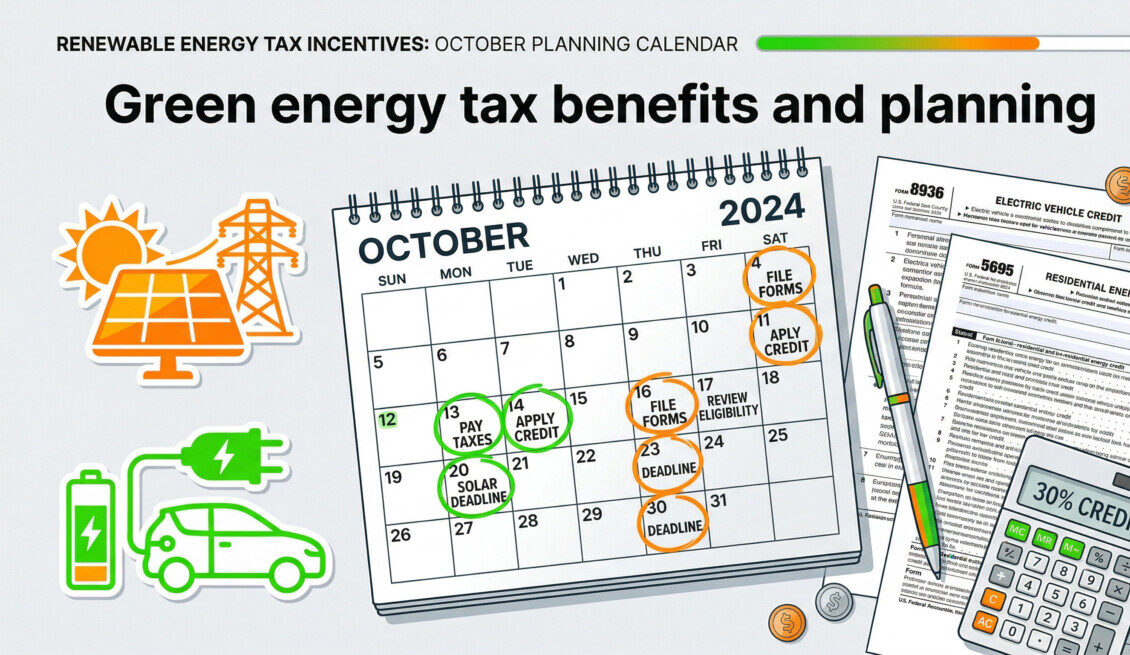
Let’s pivot away from cars and talk about your house. OBBB also took an axe to the residential energy credits, specifically Section 25C and 25D, both of which now terminate on December 31, 2025.
For Section 25C (Energy efficient home improvement credit): There is a bit of good news wrapped in the bad. Because of the accelerated termination, qualified manufacturers are no longer required to make periodic written reports to the IRS regarding specified property. Even for property placed in service before January 1, 2026, those reporting burdens are lifted. However, a manufacturer must still be officially registered with the IRS for their specified property to be eligible for the credit in the first place.
For Section 25D (Residential clean energy credit – e.g., Solar Panels): This one is incredibly strict. Can you claim a credit for solar panels installed in January 2026 if you fully paid for them in December 2025? Absolutely not.
Under Section 25D(e)(8)(A), an expenditure is treated as made when the original installation of the item is completed. Pre-paying does not save you. If the installation crew finishes tightening the bolts on January 1, 2026, the expenditure is legally made in 2026, and your credit is gone. The same applies to new construction; the expenditure is made when your original use of the structure begins.
🔢 Credit Eligibility Deadline Checker
Select your credit type and enter your expected date of acquisition or installation to see if you make the cut!
Key Takeaways of the Post 📝
That was a lot of technical tax information to digest! If you only have a minute, here is the executive summary of what you absolutely need to remember:
- Dealer Portal Deadlines: April 1, 2026, is the last day for 2025 ECO edits/returns. June 1, 2026, is the absolute final day for late time-of-sale reports.
- Vehicle Acquisition: To get the 25E, 30D, or 45W vehicle credits, you must have a binding contract and make a payment (or trade-in) by September 30, 2025.
- Home Installation Reality: For the 25D residential credit, prepaying does not matter. The installation must be 100% physically completed by December 31, 2025.
- Mandatory Repayments: If a dealer cancels a sale, the advance payment must be repaid to the IRS via Pay.gov within 30 days. No exceptions.
OBBB Energy Credit Phase-Out Cheat Sheet
Frequently Asked Questions ❓
Navigating tax law changes is never fun, but being proactive is the best way to secure your financial benefits. Whether you are rushing to sign a contract for an EV by September 30, or making sure your contractors finish your home upgrades before New Year’s Eve, the deadlines are real. To all the dealers out there, please prioritize your ECO portal hygiene right now so you aren’t scrambling in early 2026. If you have any more questions about these crazy deadline changes or need clarification on a specific scenario, feel free to ask in the comments! 😊