Federal Student Loan Caps 2026: Graduate PLUS Phase-Out and Accounting Impact
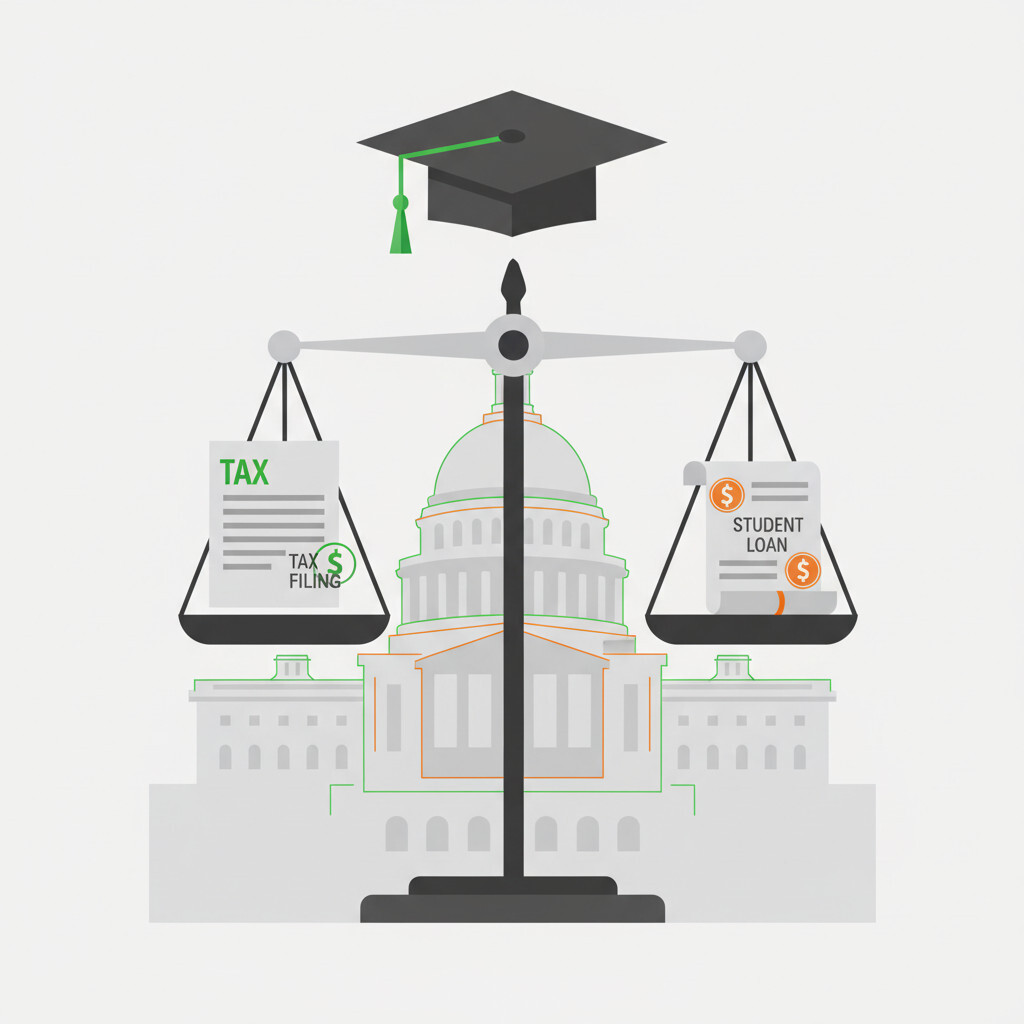
For prospective CPAs, accounting graduate students, and the firms that employ them, the federal student loan landscape just shifted. The Department of Education’s final rule — published Friday in the Federal Register — eliminates the Graduate PLUS Program’s unlimited borrowing and creates a hard two-tier cap system. The federal student loan caps 2026 framework treats accounting, engineering, nursing, and most graduate fields as non-professional — capping borrowing at $20,500 annual and $100,000 aggregate.
At SW Accounting & Consulting Corp, we hire CPAs and work with accounting professionals navigating their education debt. This guide explains the new caps, the AICPA advocacy that didn’t prevail, and what it means for the 150-hour CPA licensure path.
What are the new federal student loan caps for graduate students? 📊
Two cap tiers apply to federal graduate student loans for loans made on or after July 1, 2026 — with no unlimited borrowing under Graduate PLUS.
| Category | Annual Cap | Aggregate Lifetime Cap |
|---|---|---|
| 11 Designated Professional Programs | $50,000 | $200,000 |
| All Other Graduate Programs (incl. accounting, engineering, nursing) | $20,500 | $100,000 |
| Pre-July 1, 2026 Loans | Unaffected — continue under prior terms | Unaffected |
The 11 designated professional degree programs are: law, medicine, pharmacy, dentistry, chiropractic, optometry, osteopathic medicine, podiatry, veterinary medicine, clinical psychology, and theology. The rule did NOT expand the list beyond what was proposed in January 2026.
Why is accounting NOT considered a “professional” degree? ⚖
The Department of Education explicitly addressed accounting in the final rule, holding that an advanced accounting degree is not required for CPA licensure — only 150 credit hours, which can be completed without a specific post-baccalaureate degree.
The Department’s reasoning (from the final rule):
“For example, to obtain licensure as a certified public accountant, an applicant must have completed 150 credit hours of coursework but is not required to have earned a specific post-baccalaureate degree, which is relevant when the department determines whether a specific degree is a professional degree. The department also disagrees with commenters that advanced accounting degrees beyond the baccalaureate level should be considered professional degrees. As the commenters themselves concede, these master’s degrees are not required, in general, to become a [CPA].”
The Department’s distinction:
- Professional degree (their definition) = degree REQUIRED for licensure in that profession (e.g., JD for law, MD for medicine, DDS for dentistry).
- Accounting masters/MBA = optional path to CPA, since 150 hours can be reached through other coursework combinations.
- Nursing = similar treatment — masters not strictly required for RN licensure.
- Engineering = same — advanced degree not required for PE licensure.
What did the AICPA argue and why was it rejected? 🎓
The AICPA submitted a February 2026 letter arguing that accounting IS a profession — state-licensed, with rigorous education requirements, validated by the Uniform CPA Examination, and governed by ethics and competency standards. The Department of Education acknowledged but rejected this argument.
The AICPA’s position:
“Accounting is a profession. CPAs are state-licensed, subject to rigorous education requirements beyond a standard bachelor’s degree, validated by the Uniform CPA Examination, and governed by ethics and competency standards.”
The Department’s response — clarification, not reversal:
“The Higher Education Act uses the term ‘professional student’ in an entirely different context and defines that term in a manner that is quite different than the common usage of the word ‘professional.’ In this rule, we interpret the law as written and do not claim that degrees that do not meet the definition of ‘professional student’ are of lesser worth.”
The Department’s distinction is statutory, not aspirational — but the practical impact on prospective CPAs is real. Many master’s-in-accounting programs cost $40-70K annually; the $20,500 federal cap leaves a significant funding gap.
The CPA exam’s 150-hour requirement has driven many accounting students into master’s programs to reach the hour threshold efficiently. With Graduate PLUS gone and the cap at $20,500 annually, students at $50K+ programs will need private loans (higher interest, less favorable repayment), parent borrowing, employer-sponsored programs, or alternative 150-hour paths (additional undergraduate coursework, online programs, CLEP). Expect impact on the accounting pipeline — and increased pressure on firms to subsidize CPA exam prep and exam costs as retention tools.
What was the Graduate PLUS Program and why was it eliminated? 💸
Graduate PLUS was a federal loan program offering unlimited borrowing for graduate and professional students up to the cost of attendance. Critics argued it inflated graduate program costs by removing borrowing constraints; the final rule eliminates it for loans on or after July 1, 2026.
The pre-2026 framework:
- Direct Unsubsidized Loans — annual limit $20,500, aggregate $138,500 (including undergrad)
- Graduate PLUS — covered the gap above unsubsidized, up to full cost of attendance (no fixed cap)
- Effect — students at $80K+/year programs could borrow $60K-$80K annually via Graduate PLUS
The 2026 framework removes Graduate PLUS entirely. Now students who exceed the new caps must rely on private loans (often with cosigner requirements, higher rates, and less generous repayment options) or other funding sources.
What about repayment for existing loans? 🔄
Loans made before July 1, 2026 continue under their original terms. The final rule also creates new guidelines for repayment, which interact with existing income-driven repayment plans (IDR), SAVE, and PSLF.
Practical implications for current borrowers:
- Existing Graduate PLUS loans stay outstanding under prior terms — not retroactively capped.
- New repayment guidelines from the rule affect how monthly payments are calculated, IDR application, and PSLF eligibility timing.
- SAVE plan remains in operational uncertainty pending separate legal challenges — borrowers should monitor StudentAid.gov.
- PSLF (Public Service Loan Forgiveness) rules continue, but interactions with the new repayment framework may shift qualifying-payment counts.
What should accounting students and CPAs do? ✅
- Time the loan origination strategically. If currently enrolled or about to enroll, complete loan origination before July 1, 2026 to lock in pre-rule terms (including continued Graduate PLUS eligibility for ongoing programs).
- Map total cost of attendance vs. caps. Total grad program cost — $20,500 annual federal cap = annual gap. Quantify and plan funding source for the gap (employer support, parent contribution, private loans, scholarships).
- Consider alternative 150-hour paths. Additional undergrad credits, CLEP exams, online coursework, community college, or accelerated 5-year B.S./M.Acc. programs may close the gap more affordably than a separate M.Acc.
- Negotiate employer support. CPA firms increasingly offer CPA exam fee reimbursement, study course coverage, and student loan repayment benefits. With the funding gap widening, ask for tuition assistance during interviews and at performance reviews.
- Use Section 127 education assistance. Employers can provide up to $5,250/year tax-free for education (covered in our Section 127 guide), including tuition and qualified student loan payments through year-end 2025.
- Track repayment plan changes. If you have existing Graduate PLUS loans, watch for guidance on how new repayment rules interact with your IDR or SAVE plan enrollment.
Frequently Asked Questions 🗂
For the Department of Education’s final rule and Federal Register publication, see federalregister.gov. The AICPA’s February 2026 advocacy letter and ongoing efforts on professional recognition are at aicpa.org. For borrower account information, visit StudentAid.gov.
Need help with CPA pipeline planning, employer education assistance program design, or tax-efficient student loan repayment strategies? SW Accounting & Consulting Corp’s team works with firms and individual accounting professionals — book a consultation.