What California State Tax Changes Should I Prepare For?
State tax moves faster than federal tax and gets a fraction of the attention. A single California budget weekend in June 2026 produced a change that will reprice software for every business in the state, and it arrived inside a trailer bill rather than a headline. The California state tax changes below are the ones we are actively raising with clients, together with the multistate items that catch California businesses selling across state lines.
We work with owner-operated businesses in Los Angeles — restaurants and food and beverage groups, dental practices, professional services firms, and companies operating between the United States and Korea. Almost all of them touch at least two of the items below.
Will California start taxing my software and digital products? 💻
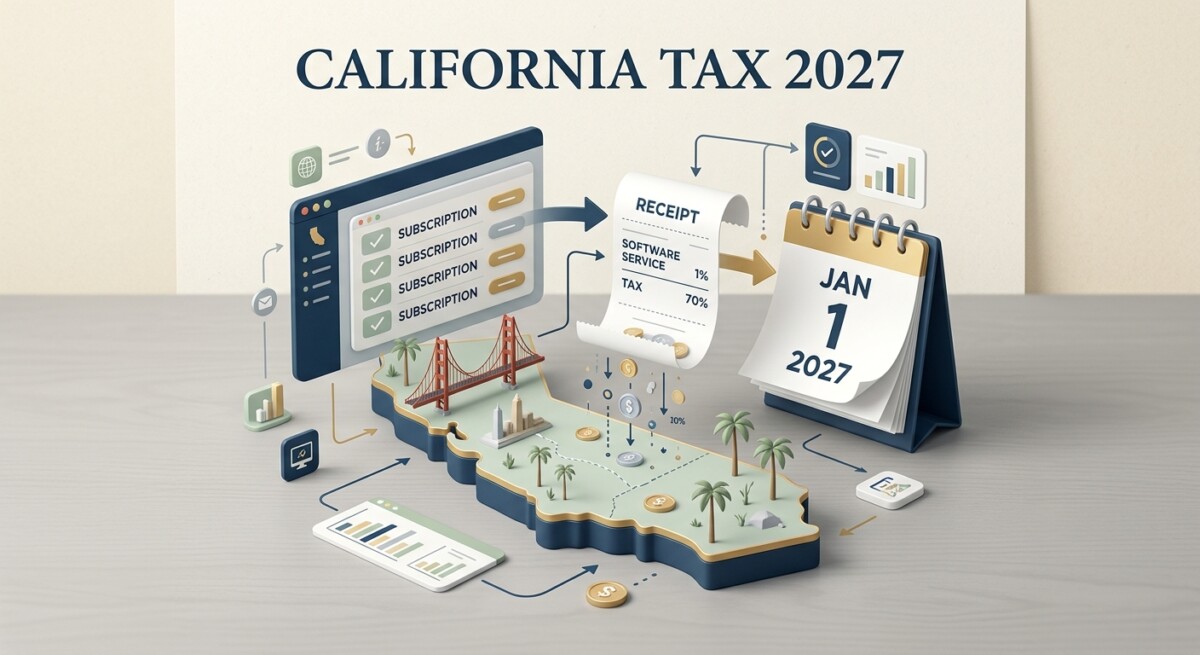
Yes. Beginning January 1, 2027, California sales and use tax applies to defined digital products transferred electronically or accessed remotely, and prewritten computer software is inside that definition. The exclusion for custom software is retained.
Senate Bill 122, signed June 29, 2026 as a taxation trailer bill to the Budget Act of 2026, extends sales and use tax to the permanent or temporary transfer of the right to open, view, access, download, copy, update, possess, store, manipulate or otherwise use a defined digital product. Bill text is available through California Legislative Information, and administrative guidance will come from the CDTFA.
Read the verbs in that list again, because they are doing the work. “Access” and “temporary transfer” mean the statute reaches subscription and remotely hosted arrangements, not only downloads. For a business that sells software, the January 2027 date is a repricing deadline. For a business that buys software — which is every business — it is a budgeting item.
The line that will decide your answer
Prewritten software becomes taxable; custom software does not. That single distinction will determine the treatment of a great deal of spend, and it is often decided by how an engagement was scoped and papered rather than by what the developers actually did. If you sell configurable products, or buy heavily configured ones, the contract language deserves a review well before January 1, 2027 — not in the December before it.
What else did the June 2026 California budget bills change? 📉
The same trailer bill extended and modified California’s limitation on business tax credits and reduced the first-year annual tax for certain entities. A companion bill imposed a managed care organization provider tax.
The business tax credit limitation is the item most likely to change a California return this year rather than next. A limitation on how much credit can be used in a year does not eliminate the credit, but it changes when the benefit is realized — which changes estimated payments, cash planning and, for pass-through owners, personal liquidity. Credit and franchise tax guidance is published by the California Franchise Tax Board.
The reduction in the first-year annual tax for certain entities cuts the other way and is worth confirming if you formed an entity recently or plan to before year-end. As with all trailer bill provisions, individual sections take effect on their own dates rather than all at once.
Why are other states decoupling from federal law — and does it hit me? 🔀
Because state conformity to the federal code is a separate choice in every state. Through mid-2026 a long list of states addressed whether they follow the federal treatment of research expensing and the business interest limitation, and they did not all reach the same answer.
Research expensing under sections 174 and 174A is the flashpoint. Indiana issued a bulletin on state treatment of the federal research expense changes. Connecticut published an administrative bulletin addressing the same sections. Florida addressed updated conformity and decoupling. The North Carolina Department of Revenue addressed implementation of a law updating conformity while decoupling from section 174A, and North Carolina also conformed to aspects of the federal partnership audit regime. Rhode Island decoupled from some provisions and created a high-income surtax. The District of Columbia moved emergency legislation decoupling from some provisions while addressing pass-through entity taxes.
Pennsylvania went a step further and enabled Philadelphia to decouple its Business Income and Receipts Tax from the federal research expense and interest limitation provisions — a reminder that conformity questions do not stop at the state line. The Pennsylvania Department of Revenue has also announced an October 1 enforcement date for destination-based sourcing in Philadelphia and Allegheny counties.
Separately, the New Jersey Division of Taxation administers a new cap limiting the corporation business tax net operating loss deduction to $1 million, running until July 31, 2030. If you carry New Jersey losses into a profitable year, that cap changes the arithmetic.
Do not assume the federal answer flows through
A multistate filer can legitimately face a different research expense answer in every state it files in, and the difference is not an error to be reconciled away — it is the law of each state. If your federal return claims immediate research expensing, each state return needs its own determination. This is the most common place we see a well-prepared federal return produce wrong state returns.
Are there amnesty windows closing this fall? ⏳
Yes. Illinois opened a remote retailer amnesty program on August 1, 2026 that runs through October 31, 2026. Rhode Island has discussed a 75-day amnesty offering a potential full penalty waiver and reduced interest.
Amnesty programs are the most underused tool in state tax. A business that suspects it has unregistered sales tax exposure in a state usually does nothing, because coming forward feels like inviting trouble. What amnesty actually does is convert an open-ended, compounding, penalty-bearing risk into a fixed and knowable number.
The Illinois program is aimed squarely at remote retailers — businesses selling into Illinois without a physical presence there, which describes a great many California e-commerce and wholesale operations. Program terms are published by the Illinois Department of Revenue, and Rhode Island’s program is described by the Rhode Island Division of Taxation.
The date is the whole point. October 31, 2026 is a Saturday, and amnesty windows do not generally reopen. A decision to participate requires quantifying exposure first, which takes weeks rather than days — so a business that starts thinking about this in mid-October has effectively decided not to participate.
What did courts just decide about digital and remote-work taxes? ⚖️
A Maryland court struck down that state’s digital advertising tax, New York courts continued to enforce the convenience-of-the-employer rule against remote workers, and the scope of Public Law 86-272 is now before the U.S. Supreme Court on a petition.
The Maryland Tax Court struck down the Digital Advertising Gross Revenues Tax as unconstitutional and in violation of the Internet Tax Freedom Act. Several states have studied digital and targeted advertising taxes — Utah’s newly enacted targeted advertising tax is itself facing a filed challenge — so a decision holding that this class of tax conflicts with federal law shapes how far other legislatures will go.
On remote work, the New York State Department of Taxation and Finance continued to see its convenience-of-the-employer rule upheld: an appellate court affirmed that no refund was due on remote work performed before and during the pandemic, and an administrative law judge separately denied a refund request for a nonresident’s pandemic-related remote work. The rule is unpopular and durable, which is a bad combination to plan against.
Finally, a Wisconsin taxpayer has asked the U.S. Supreme Court to review the scope of Public Law 86-272 — the federal statute limiting when a state may impose net income tax on an out-of-state seller. A Massachusetts appellate board separately held that the interplay of that statute with a state apportionment adjustment violated the Supremacy Clause. For any business selling across state lines, the protective scope of 86-272 is genuinely unsettled right now.
| Change | Effective / deadline | Who should act |
|---|---|---|
| California sales tax on electronically delivered prewritten software | January 1, 2027 | Anyone who sells or buys software |
| California business tax credit limitation extended and modified | 2026 returns | Credit-claiming California filers |
| State decoupling from federal research expensing (§174 / §174A) | 2026 returns | Multistate filers claiming R&D |
| Illinois remote retailer amnesty | Aug 1 – Oct 31, 2026 | Remote sellers into Illinois |
| New Jersey CBT net operating loss cap of $1 million | Until July 31, 2030 | Filers carrying NJ losses |
| Philadelphia / Allegheny destination-based sourcing | October 1, 2026 | Sellers into those counties |
| P.L. 86-272 scope | Pending at SCOTUS | Out-of-state sellers — monitor |
The short version
- California taxes electronically delivered prewritten software from January 1, 2027 — custom software stays excluded
- The prewritten-versus-custom line is decided in your contracts; review them in 2026, not in December
- State conformity to federal research expensing now differs by state — one federal answer, many state answers
- Illinois remote retailer amnesty closes October 31, 2026 and will not reopen
Frequently asked questions ❓
Q. Will California start charging sales tax on software?
Yes, for prewritten software delivered electronically or accessed remotely, beginning January 1, 2027. Senate Bill 122, signed June 29, 2026, extends California sales and use tax to the permanent or temporary transfer of the right to open, view, access, download, copy, update, possess, store or otherwise use defined digital products, and prewritten computer software falls inside that definition. California’s existing exclusion for custom computer software is retained.
Q. Does the new California digital products tax apply to custom software?
No. The custom software exclusion survives the change. That makes the prewritten-versus-custom line the most consequential distinction in the statute, because the same development spend can fall on either side of it depending on how the engagement is scoped and documented. Businesses that sell configurable software should review contract language well before January 1, 2027.
Q. Why are states decoupling from the federal reconciliation law?
Because conformity is a choice each state makes separately. Through mid-2026, states including Connecticut, Florida, Indiana, North Carolina, Rhode Island and the District of Columbia issued guidance or enacted law addressing whether they follow federal changes to research expensing under sections 174 and 174A and to the business interest limitation. Some conform, some decouple, and some do so only partially, which means a multistate filer can face a different research expense answer in every state it files in.
Q. Is there a state tax amnesty program open right now?
Illinois opened a remote retailer amnesty program that began August 1, 2026 and runs through October 31, 2026. Rhode Island has also discussed a 75-day amnesty offering a potential full penalty waiver and reduced interest. Amnesty windows are unusually valuable for businesses carrying known exposure, because they convert an open-ended risk into a fixed cost, but they close on a fixed date and generally cannot be reopened.
Q. What did the Maryland Tax Court decide about the digital advertising tax?
The Maryland Tax Court struck down the Digital Advertising Gross Revenues Tax as unconstitutional and in violation of the Internet Tax Freedom Act. The decision matters beyond Maryland because several states have looked at digital advertising and targeted advertising taxes, and a court holding that such a tax conflicts with federal law shapes how aggressive other legislatures are willing to be.
Q. Do I owe tax in a state just because an employee works there remotely?
Often yes, and the rules are still being litigated. New York courts through 2026 continued to apply the convenience-of-the-employer rule to deny refunds for remote work performed before and during the pandemic. Separately, a taxpayer has asked the U.S. Supreme Court to review the scope of Public Law 86-272 protections, which is the federal statute that limits when a state can impose net income tax on an out-of-state seller. Until that is resolved, remote employees should be treated as a nexus question, not a payroll question.
State tax exposure is specific to where you sell, where your people sit and how your contracts read. If you would like us to map yours, contact SW Accounting & Consulting Corp. We work with California businesses selling well beyond California.