
2026 Feb State Tax Updates: Navigating OBBBA, Amnesty, and IT Service Taxes
Let’s be honest—trying to keep track of state tax updates feels a bit like trying to catch confetti in a windstorm. Just when you think you’ve got a handle on one state’s rules, another three change their minds! I’ve been diving deep into the latest reports for February 2026, and wow, there is a lot happening. Whether you’re a business owner or just someone who hates surprises during tax season, the recent waves of legislation and court rulings are going to impact your bottom line. But don’t worry, I’ve done the heavy lifting for you. Let’s walk through these updates together and find the silver linings! 😊
The “OBBBA” Rollercoaster: Federal Conformity Updates 🎢
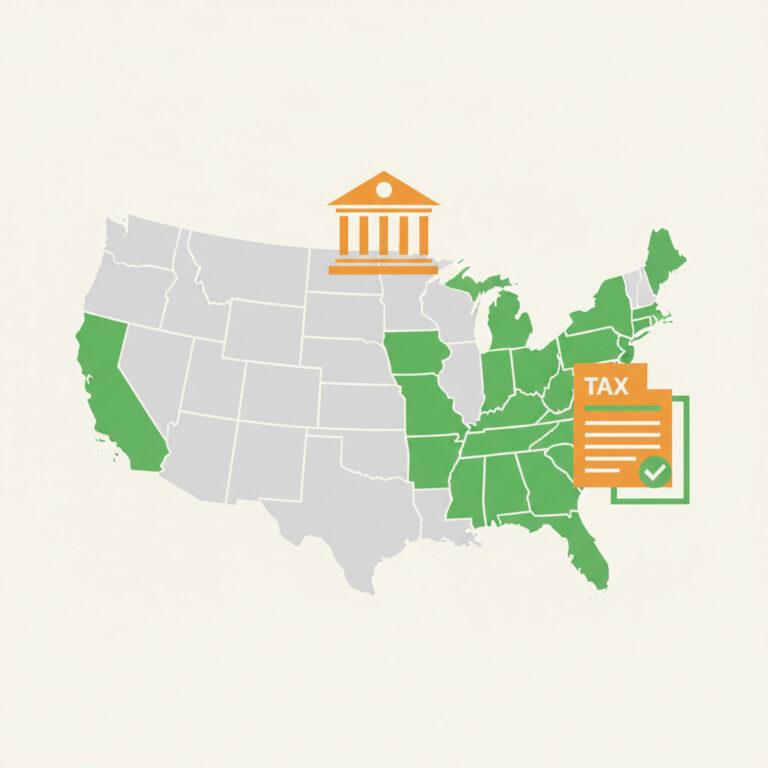
The biggest buzzword in the tax world right now is OBBBA (the federal One Big Beautiful Bill Act, or P.L. 119-21). While it brought big changes at the federal level, the states are having a bit of a “breakup” moment with it. Many states are choosing to decouple from specific provisions to protect their own tax bases.
Take Idaho, for instance. They recently signed H.B. 559, which updates their conformity to the Internal Revenue Code (IRC) as of January 1, 2026. However, they decided to swipe left on OBBBA’s R&D expensing rules (IRC Section 174A) and special depreciation allowances. This means if you’re doing business in Idaho, your federal and state R&D deductions might look very different.
Idaho is currently updating its forms and systems to handle these new “conformity deductions.” If you’re filing for 2025, keep an eye out for updated instructions from the Idaho State Tax Commission.
Over in the District of Columbia, things got a bit dramatic. A Congressional resolution was signed by the President attempting to nullify D.C.’s temporary legislation that decoupled from OBBBA. But here’s the twist: the D.C. Attorney General recently issued an opinion saying the resolution missed its 30-day deadline! As of now, D.C. believes its decoupling rules—affecting R&D and business interest limitations—are still the law of the land.
Virginia also joined the party with a new budget bill. They’ve fixed their conformity date to December 31, 2025. While they conform to some parts of OBBBA, they are explicitly ignoring the immediate expensing for R&D and certain depreciable assets. Interestingly, they also extended their elective pass-through entity tax (PTET) indefinitely, which is a win for many small business owners.
Where Did That Money Come From? Sourcing & Partnerships 📊
If you operate as a partnership or have tiered corporate structures, the Multistate Tax Commission (MTC) is working on something you need to watch. They’ve circulated a discussion draft for what some are calling a “mini-Subchapter K for states.”
This draft addresses how states should source partnership income when there are complicated ownership layers. It’s designed to be general and includes anti-abuse rules. The goal is to create a more uniform approach across states, which could eventually make your life easier—or at least more predictable.
In the courts, Michigan just had a major ruling regarding wholesale electricity. An energy company argued that because their electricity’s “ultimate destination” was often out-of-state, the sales shouldn’t be sourced entirely to Michigan. The court disagreed, ruling that since the delivery points were in-state and the majority of electricity was generated and consumed in Michigan, the in-state sourcing was perfectly fine. This reinforces the idea that “contractual delivery points” often trump “final destination” in utility sourcing.
Colorado also weighed in on partnerships. A recent private letter ruling clarified that if a partnership sells real estate that isn’t part of its “regular course of business” (like selling an assisted living facility building), those gross receipts shouldn’t be included in the apportionment factor for the parent S corporation. This is a great reminder that not all income is created equal when it comes to the apportionment formula.
The Digital Frontier: Sales and Use Tax Changes 👩💻
If you provide IT services or digital ads, Maryland is the state to watch right now. They’ve officially adopted rules for a new 3% sales tax on certain IT and data services. This went into effect recently, and the rules are now very specific about what is covered.
Maryland also updated its controversial Digital Advertising Gross Revenues Tax (DAGRT). The new rule says that to be taxable, digital ad services must be both programmatic and conveyed visually. This is a big win for clarity, as it excludes some types of non-visual or manual advertising services. If you’ve overpaid based on the old, broader definitions, you might even be eligible to file an amended return for the past three years!
Key Sales Tax Updates by State
| State | What Changed? | Impact |
|---|---|---|
| Maryland | New 3% IT/Data service tax | Higher costs for tech services |
| New York | TRAC lease credits | Refunds for overpaid vehicle lease tax |
| Texas | Manufacturing vs. Container exemption | Broader eligibility for refunds |
| Louisiana | Complimentary hotel rooms | Nontaxable marketing tool |
In Alabama, the Tax Tribunal just ruled that a truck purchased out-of-state for a freight business was subject to use tax, even though the owner tried to use a complicated trust/LLC lease structure. The court focused on “substance over form,” basically saying if you buy it and use it, you owe the tax!
Wins for Taxpayers: Incentives & Amnesty 💰
It’s not all “tax more” news. There are some great opportunities to save or fix past mistakes. Indiana has announced a massive Tax Amnesty Program starting July 15, 2026. If you have unpaid taxes from previous years, this eight-week window could allow you to waive 100% of the interest and penalties. That is a huge deal!
In Massachusetts, the Life Sciences Center (MLSC) Tax Incentive Program is now open for applications until March 31, 2026. Some of these credits are even refundable, meaning you could get a check back even if you don’t owe taxes. If you’re in the life sciences space, don’t leave this money on the table.
Texas is also transitioning its R&D incentives. Starting January 1, 2026, the old choice between a franchise tax credit or a sales tax exemption is being replaced by an entirely new R&D franchise tax credit. The Comptroller has clarified that the sales tax exemption is gone for periods after 2025, so make sure your accounting team is ready for the switch.
Quick State Tax Penalty Estimator 🔢
Think you might owe back taxes? Use this tool to see why the Indiana Amnesty (or similar programs) might be worth it. (Assumes a 10% penalty and 5% interest rate).
Property Tax & Legal Wins ⚖️
In Texas, crude oil inventories held in coastal tank farms were once again deemed exempt from property taxes under the U.S. Constitution's Import-Export Clause. This is a consistent win for the energy industry, as the courts view this oil as being in the "stream of export."
And a quick note on California: Lawmakers have proposed a bill (A.B. 1790) that would eventually repeal the water's-edge election by 2028. This would be a massive change in how multinational corporations report income in the Golden State. It needs a two-thirds vote to pass, but it’s a clear signal of where things might be headed.
2026 State Tax Survival Card
Frequently Asked Questions ❓
Final Thoughts: Stay Proactive! 📝
Whew! We covered a lot of ground, didn't we? From the drama in D.C. to the savings in Indiana, 2026 is shaping up to be a busy year for tax professionals. The common theme here is that states are becoming more aggressive about defining their own rules, especially in the tech and partnership sectors.
My advice? Don't wait until the week before your deadline to look into these changes. Check if your state has a new conformity date and see if you’re eligible for any of the new incentives (especially in Massachusetts!). If you have any questions or if you've run into a weird tax situation lately, feel free to drop a comment below. I'd love to hear how you're navigating these changes! 😊