2026 Corporate Tax Planning: The End of “Wait-and-See
Let’s be real for a second—if you’ve been working in corporate finance or tax planning over the last decade, you’ve probably felt like you were trying to build a house on shifting sand. Between temporary provisions, looming expirations, and a highly polarized political environment, mapping out a multi-year tax strategy has been nothing short of a nightmare. I’ve heard from so many CFOs who were essentially paralyzed, forced to adopt a “wait-and-see” approach.
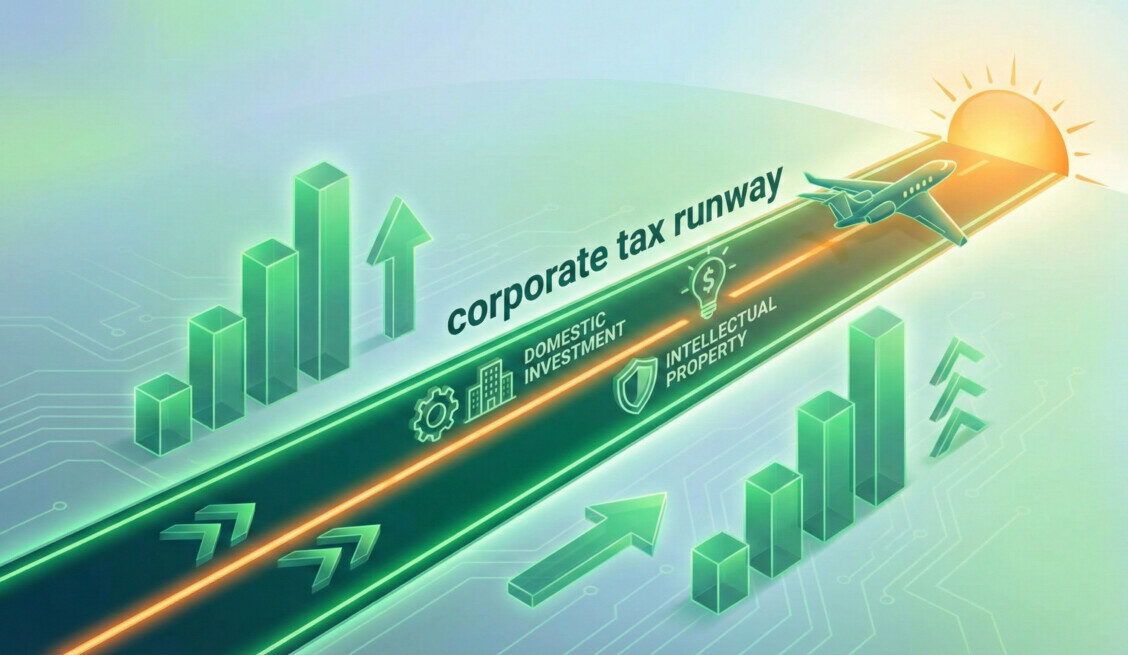
But I have some genuinely good news for you today! As we settle into 2026, the landscape has fundamentally changed. Thanks to the recent One Big Beautiful Bill Act (OBBBA) coupling with the foundational 2017 Tax Cuts and Jobs Act (TCJA), the U.S. tax code for large multinational corporations is finally providing a much-needed sense of permanence. We have a firmer runway now, and it’s time to take action. 😊
The End of “Wait-and-See”: A Stable 21% Corporate Rate 🏢
For the longest time, one of the biggest question marks hanging over corporate America was the fate of the corporate tax rate. The 2017 TCJA brought it down, but many CFOs were justifiably nervous that it was a temporary gift that could vanish with the next political shift.
Well, the OBBBA has officially put those fears to rest. The legislation has made the 21% corporate income tax rate permanent. This is a massive deal. It means that when you are forecasting out three, five, or even ten years, you can actually lock in that number without having to build wildly divergent contingency models for a sudden rate hike.
As tax experts like Chris Jones at Ballard Spahr have pointed out, taking the anxiety of rate fluctuations off the table fundamentally changes the conversation. You no longer have to waste energy hedging against a shifting baseline; instead, you can focus on actual strategic growth.
Political analysts and tax specialists widely agree that due to the current U.S. political environment, this newly established tax code is unlikely to face any material changes until at least 2029 (after the next presidential election cycle). You have a solid window to execute long-term strategies!
Bringing IP Home: The Onshoring Incentive 🇺🇸
One of the clearest intentions of both the TCJA and the new OBBBA is to put a heavy thumb on the scale in favor of U.S. investment. The government desperately wants companies to locate their activities, operations, and most importantly, their Intellectual Property (IP), right here in the United States.
This means if your company has been holding intellectual property offshore to take advantage of favorable tax regimes, it is absolutely time to rethink that supply chain and financing structure. The new incentive structures for owning IP in the U.S. finally have the “staying power” that corporations were waiting for to justify the massive effort of restructuring.
| Strategic Area | Previous Climate (Pre-OBBBA) | Current Reality (2026 Onward) |
|---|---|---|
| Corporate Rate | Uncertain longevity, high risk of increase. | Firmly set at 21%, allowing long-term ROI models. |
| Intellectual Property | Hesitation to onshore due to temporary rules. | Permanent incentives highly favor U.S.-owned IP. |
| International Tax | Volatile GILTI rules clashing with OECD. | Reworked ~14% effective rate aligning closer to global minimums. |
While onshoring non-U.S. intellectual property is highly favored under the new U.S. rules, you must tread carefully. Many foreign jurisdictions impose hefty “exit taxes” if you move your IP. Furthermore, without meticulous analysis, restructuring could inadvertently trigger the U.S. corporate alternative minimum tax introduced by the 2022 Inflation Reduction Act.
The Absolute Necessity of Advanced Tax Modeling 🧮
Because of intersections between the OBBBA, the Inflation Reduction Act, and international exit taxes, “back of the envelope” calculations simply won’t cut it anymore. Tax modeling has gone from being an important task to being the central pillar of corporate financial strategy.
To give you an idea of how complex this gets, let’s look at a specific interaction regarding Research and Development (R&D) and IP income.
📚 Case Example: The 14% vs. 21% Disconnect
- The Income Side: Under the new rules, certain qualified intellectual property income is taxed at a highly favorable rate of roughly 14%.
- The Deduction Side: However, related deductions (like R&D expenses) are often applied to income that would otherwise be taxed at the standard 21% rate.
The Takeaway: This mismatch between income taxation rates and deduction application rates means you can’t just assume a flat tax impact. The sequencing of how you claim these deductions and recognize income requires robust, multi-scenario software modeling to optimize your effective tax rate without triggering the alternative minimum tax.
And speaking of effective tax rates, the OBBBA completely renamed and reworked the 2017 GILTI (global intangible low-taxed income) rules. The new international effective tax rate sits around 14%, which elegantly smooths out friction with the OECD’s push for a 15% global minimum tax.
🔢 Quick IP Tax Rate Estimation Tool
Use this simple interactive tool to see the estimated blended tax rate difference between keeping IP abroad versus onshoring it under the new OBBBA framework (Simplified for demonstration).
Not Everything is Perfect: The "No Tax on Tips" Scramble 👩💼👨💻
To be totally fair, while the macro picture for corporate tax is beautifully stable right now, the OBBBA did throw some curveballs at specific sectors. If you are operating in the hospitality industry or any tip-oriented business, you know exactly what I'm talking about.
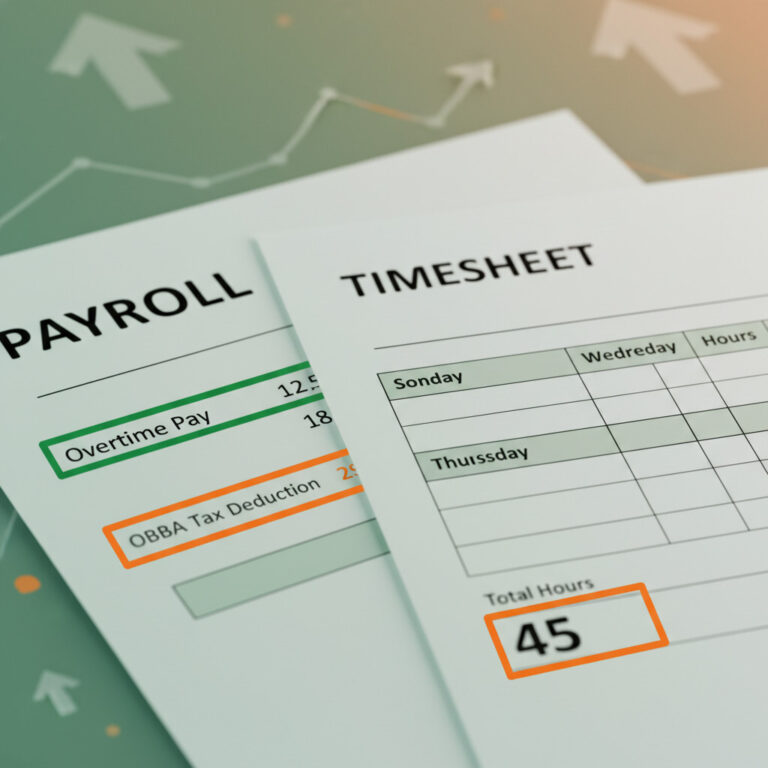
The new "no tax on tips" provision has resulted in one of the most significant payroll reporting upheavals in over a decade. Finance teams and HR departments are currently scrambling to completely overhaul their wage and W-2 reporting processes to remain compliant.
But here is a silver lining: The Treasury Department is currently formulating guidance on how to interpret these new laws. The Trump administration is actively seeking feedback from businesses. If you have a novel issue or are facing undue regulatory burdens, now is the time to speak up. The government is remarkably open to hearing from taxpayers to make the U.S. a more attractive place to operate.
Key Takeaways of the Post 📝
Here is a quick wrap-up of what CFOs and tax departments need to prioritize heading into the rest of 2026.
2026 Corporate Tax Summary
Frequently Asked Questions ❓
In summary, 2026 is the year to step off the sidelines. The legislative runway is finally firm enough to build sustainable, long-term tax infrastructure for your corporation. Take advantage of the permanent 21% rate, carefully evaluate onshoring your IP, and make sure your tax modeling software is up to the task.
What are your biggest hurdles in adjusting to the OBBBA this year? Let me know your thoughts or drop any questions in the comments below! 😊