Employee Lawsuit Defense: A 3-Layered Shield to Protect Your Business
If you’re running a business in the United States, you know there’s this constant, kind of low-level hum of risk in the background, right? And a huge part of that is the threat of an employee lawsuit. Maybe you’re new to the American legal system and you’re trying to figure out this crazy patchwork of state and local laws. Or maybe you’ve just heard horror stories from other owners.
It’s a very, very real anxiety. We hear it all the time. You’re just trying to run your company, but you’re haunted by this feeling that one misunderstanding or one difficult termination could spiral into a legal nightmare. Today, we’re going to tackle that anxiety head-on. We’re going to build a complete, multi-layered defense plan, giving you real peace of mind. Let’s dive in! 😊
1. The U.S. Landscape: A Litigious Reality 😟
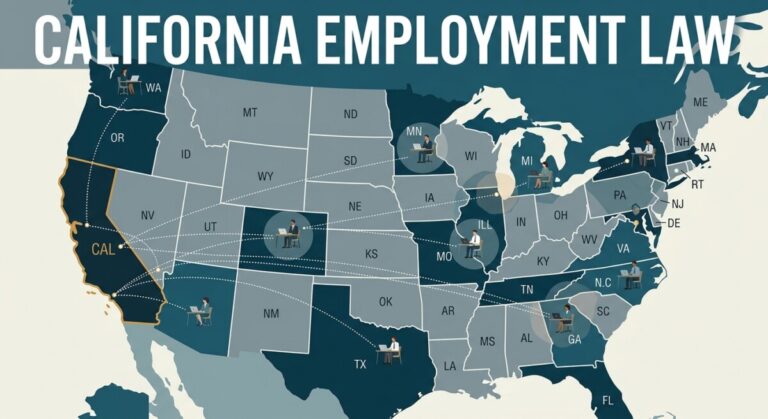
So, what makes the U.S. employment scene so tricky? Honestly, it’s a “perfect storm” of a few things. You’ve got a culture that’s pretty quick to sue, a complex quilt of different state and local laws layered on top of federal ones, and for international companies, some pretty significant cultural differences.
And look, this isn’t just a headache for companies coming from overseas. American businesses grapple with this every single day. We’re talking about a reality where the average cost just to *defend* a lawsuit—not even to lose one, just to pay the lawyers—can easily soar into the six figures. It’s a serious risk, and it’s why you can’t just “wing it.”
2. The “At-Will” Paradox: Myth vs. Reality ⚖️
Okay, to really wrap our heads around this risk, we have to start with the absolute bedrock principle of American employment law. It’s called **”at-will employment.”**
On the surface, it sounds simple. “At-will” basically means that an employer or an employee can end the employment relationship at any time, for any reason, or for no reason at all. On paper, that sounds like it gives employers a massive amount of freedom, doesn’t it?
And that right there, that *is* the central paradox. If you can fire someone for *any* reason, how in the world can there even be such a thing as a “wrongful termination” lawsuit? This is the crucial misunderstanding, the exact point where so many well-meaning businesses find themselves in very, very hot water.
Your ability to fire “for any reason” stops immediately if the reason is **illegal**. There are two giant exceptions to at-will employment that create almost all lawsuits.
The Exceptions to At-Will Employment
| Exception Type | What It Means (In Plain English) |
|---|---|
| 1. Protected Status | You cannot fire someone *because of* their race, gender, religion, age, disability, national origin, or other protected characteristics. This is discrimination. |
| 2. Public Policy Violation | You cannot fire someone for doing something the law protects. For example, you can’t fire them for being a whistleblower, filing a workers’ comp claim, or refusing to do something illegal for you. |
This is the core of the issue. A fired employee doesn’t sue by saying, “You fired me for no reason!” They sue by saying, “You *said* you fired me for no reason, but the *real* reason was because of my age (Protected Status)!”
3. Your First Layer of Armor: Proactive Defenses 🛡️
Now that we understand the risk, let’s start building our defense. The absolute best strategy *always* begins long before a problem ever shows up. This is all about creating your company’s first real layer of armor. It rests on three pillars.
The 3 Pillars of Proactive Defense 📝
- Step 1: Screen. It all starts with effective, consistent hiring and screening. Bringing the right people in from day one is your best, earliest defense.
- Step 2: Policies. This is completely non-negotiable. You **must** have clear, written HR policies in an **Employee Handbook**. Think of this as your company’s official rulebook. It sets clear expectations for everyone.
- Step 3: Train. You have to train every single employee on those policies. This isn’t just about checking a box for compliance; it’s about creating a culture where everyone actually knows and understands the rules.
That handbook is your best friend. It defines your policies on harassment, discrimination, and performance, and it creates a clear process for employees to follow if they have a problem. Without it, you’re just making up the rules as you go—and that’s a legal disaster waiting to happen.
4. The Golden Rule: Response & Documentation 📝
But hey, even with the best policies in the world, issues are going to come up. It’s just a fact of life when you’re managing people. What you do *in that moment* is your second layer of defense. This is all about how you respond to and, most importantly, document an incident.
I really cannot say this enough: **DOCUMENT EVERYTHING**. Seriously. In the world of employment law, there’s a saying that every business owner needs tattooed on their brain:
If you have a verbal conversation about poor performance and have no record of it, legally, it never happened. If you give a warning but don’t document it, it never happened. Your documentation is your single most powerful piece of evidence if a dispute ever escalates.
What should you document?
- Performance issues
- Conversations about those issues
- Official warnings (written and signed, if possible)
- How you and the employee agreed to resolve the issue
- The final termination meeting (what was said, who was there, the date)
This paper trail proves that you had a legitimate, non-discriminatory reason for your actions. It’s the evidence that defeats a “he said, she said” lawsuit.
5. The Ultimate Shield: EPLI Insurance 💰
And you know, here’s the hard truth. You can do absolutely everything right. You can have the perfect handbook, the best training, and flawless documentation… and you *still* cannot physically prevent someone from filing a lawsuit against you.
So, what happens when that lawsuit lands on your desk anyway? This brings us to the final, and frankly, the most practical layer of your defense. This is the **financial safety net** that catches you when the worst-case scenario actually happens.
It’s called **Employment Practices Liability Insurance**, or for short, **EPLI**.
EPLI is a very specialized type of insurance. It’s totally separate from your General Liability policy (which covers a customer slipping and falling) or your Worker’s Comp (which covers on-the-job injuries). EPLI’s *entire job* is to protect your company from the financial devastation of an employment-related claim.
It’s built to handle the most common and most expensive claims a business can face from its employees, like sexual harassment, discrimination, and wrongful termination.
What EPLI Covers (and What It Doesn’t)
| Covered ✅ | Not Covered ❌ |
|---|---|
| Legal Defense Costs: Your attorney’s fees, which can be astronomical. | Punitive Damages: Extra penalties a court might add to punish a company for *really* bad behavior. |
| Judgements & Settlements: The amount you have to pay if you lose or decide to settle the case. | Criminal Fines: If someone’s actions were criminal, insurance won’t cover the fines. |
| Claims like: Harassment, Discrimination, Wrongful Termination, Breach of Contract. | Other Insured Claims (like worker’s comp or general liability, which have their own policies). |
Conclusion: Your Multi-Layered Shield 🛡️
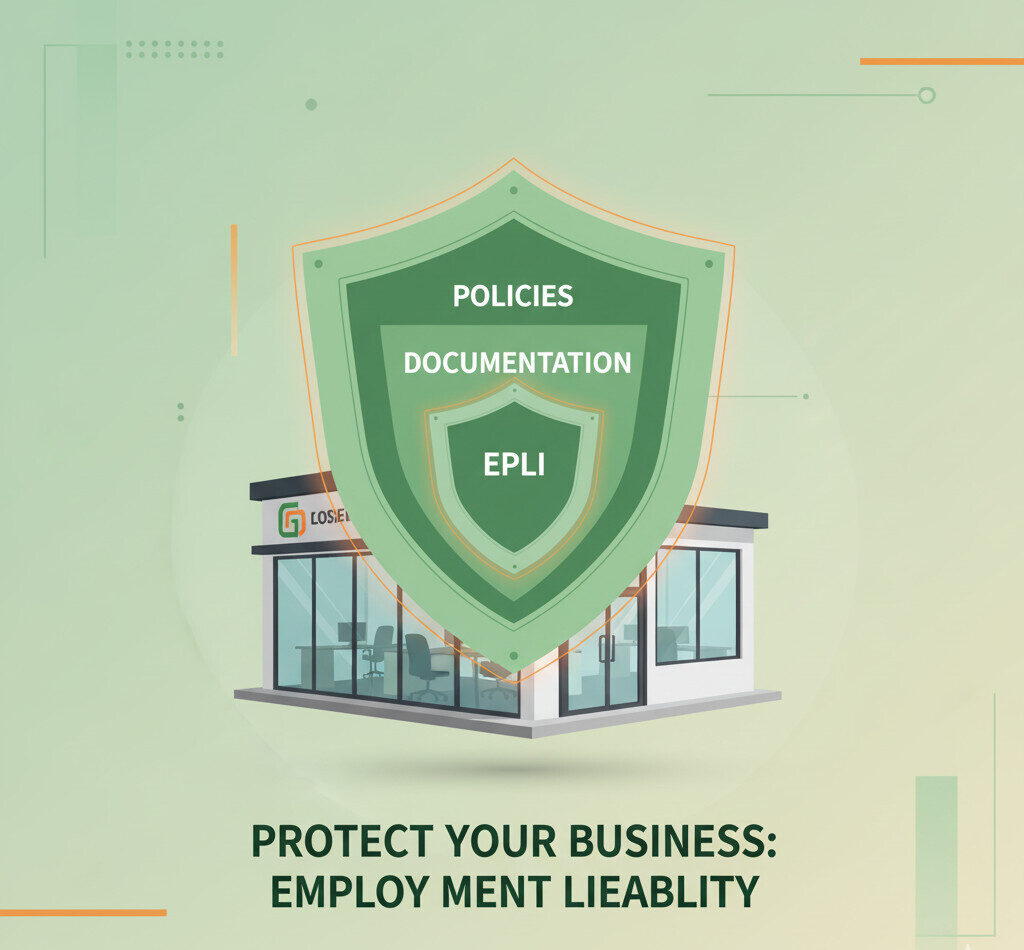
So, let’s just bring this all together. Your protection isn’t one single thing. It’s this **multi-layered shield**.
- Layer 1 (Action): You start with a strong foundation of clear policies in your Employee Handbook and great training.
- Layer 2 (Evidence): You back that up with obsessive, meticulous documentation for every single incident.
- Layer 3 (Safety Net): And finally, wrapping around all of it, is your financial safety net: your **EPLI policy**.
See how that works? Each layer supports the others to make your business truly secure.
I’ll just leave you with this simple but really powerful question. You have poured your time, your energy, your money, and your life into building your business. The final question is: have you taken the time to build the shield that’s going to protect it?