
What end of year tax moves should you make in 2026?
With two months left in the year, we are at the point where almost every meaningful tax lever still moves — and almost every one of them closes at midnight on December 31. Clients call us in March asking what they could have done. The honest answer is: a lot, but most of it had to happen now. This guide is the list of end of year tax moves we run with our Los Angeles clients each November, built around the primary-source rules at the IRS and the changes Congress wrote into the One Big Beautiful Bill Act. It assumes you have an ordinary mix of W-2 wages, investment accounts, a retirement plan, and some charitable intent. Use it as a working list, not a filing position.
What’s the big picture for end of year tax moves in 2026? 📅
The 2026 return is the first full year under the One Big Beautiful Bill Act, so the high-value moves are the ones that line up new deductions with the brackets you can still shape before December 31.
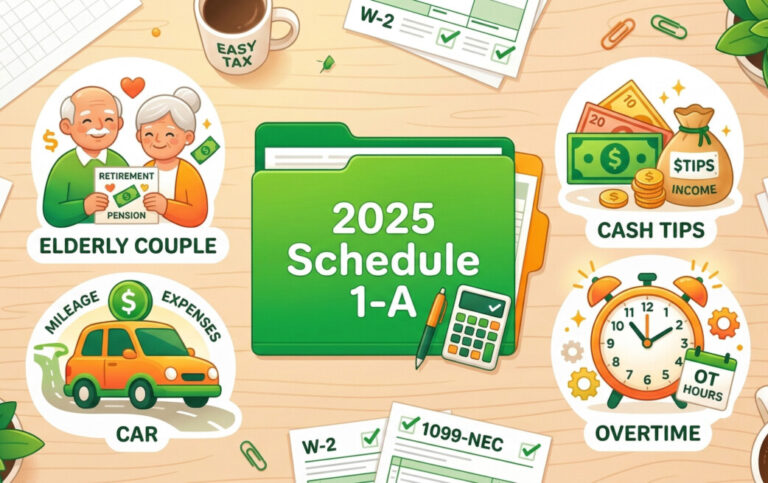
The 2026 filing season is different from 2025 in three ways that actually change what you do in November. First, the One Big Beautiful Bill Act (Pub.L. 119-21) created a $6,000 senior bonus deduction for taxpayers aged 65 and older, available for 2025 through 2028, with income phase-outs that reward bracket management. Second, the same law added above-the-line deductions for qualified tips and qualified overtime — available to non-itemizers — through 2028. Third, a new 0.5% of AGI floor applies to itemized charitable contributions starting this year, which rewards clients who plan their giving in advance rather than deciding on December 29.
The traditional year-end moves still matter — contributions, conversions, harvesting, spending down flexible-spending dollars, and verifying withholding — but they interact with the new deductions in ways the 2024 checklist did not anticipate. Running the 2026 projection before you commit to a Roth conversion or a large charitable gift is now the entry fee, not an optional refinement.
How should retirement end of year tax moves fit together? 💼
Fund the plans you have to the applicable limits, take every required minimum distribution before December 31, and decide whether a Roth conversion in this bracket beats paying the tax later.
Workplace plans and IRAs have different deadlines, and missing a deadline costs more than missing a limit. Elective deferrals to a 401(k), 403(b), or governmental 457 plan must come out of a paycheck issued in 2026, which in practice means your December pay period. Catch-up contributions, including the SECURE 2.0 Act super-catch-up for employees aged 60 through 63, follow the same cutoff. Traditional and Roth IRA contributions for 2026 can be made through the April 15, 2027 filing deadline. SEP-IRA contributions can run until the extended due date. See IRS retirement contribution limits for the current annual numbers.
Required minimum distributions are the item that trips up the most clients. If you are subject to RMDs — generally beginning at age 73 under current law — the deadline for all accounts except a first-year RMD is December 31. The IRS excise tax on a missed RMD is 25% of the shortfall, dropped from the old 50% under the SECURE 2.0 Act, and can be reduced to 10% if you correct the miss quickly and file Form 5329 with a reasonable-cause statement. IRS rules on required minimum distributions sets out how distributions are calculated, which accounts can be aggregated, and how first-year deferrals to April 1 of the following year work.
A Roth conversion is the lever most worth pulling in a low-income year. Converting traditional IRA dollars to a Roth IRA this December accelerates tax on the converted amount but locks in today’s rates and starts the five-year clock on tax-free qualified distributions. The right size of conversion is the amount that fills your current bracket without pushing you into the next one and without triggering IRMAA surcharges on Medicare in two years. For a 65-year-old retiree with modest W-2 wages ending in 2026, a mid-six-figure conversion done across several years often beats one big conversion in a single year.
Which new OBBBA deductions matter before December 31? 🏛️
The senior bonus deduction, the tip deduction, and the overtime deduction — all created by the One Big Beautiful Bill Act, all subject to income phase-outs, and all worth more when you can shape this year’s AGI.
| Provision | Who qualifies | Year-end move |
|---|---|---|
| Senior bonus deduction ($6,000) | Taxpayers aged 65+, MAGI below the phase-out ceiling, tax years 2025–2028. | Where possible, keep AGI under the phase-out — stagger Roth conversions, defer a bonus, or accelerate deductible retirement contributions. |
| Qualified tip deduction | Workers in traditionally tipped occupations, tax years 2025–2028, subject to income phase-outs. | Confirm the employer is separately tracking qualified tips so the W-2 reports them cleanly; non-itemizers can claim the deduction. |
| Qualified overtime deduction | Employees paid federal-overtime-rate wages, tax years 2025–2028, subject to income phase-outs. | Verify payroll is coding the overtime premium portion correctly; the deduction is on the premium, not the base wage. |
| 0.5% AGI charitable floor (itemizers) | All itemizing taxpayers beginning in 2026. | Bunch two or three years of giving into 2026 through a donor-advised fund so the floor is cleared only once. |
Each of these turns on AGI. The senior bonus deduction phases out above specified income levels; the tip and overtime deductions phase out above their own thresholds. That makes every traditional AGI-lowering move — pre-tax 401(k) contributions, HSA contributions, capital-loss harvesting — more valuable in 2026 than it would have been a year ago. For a senior couple hovering near the senior-bonus phase-out, a $20,000 pre-tax deferral in December can be worth more than the deferral itself because it protects a $12,000 bonus deduction on the joint return.
The charitable floor is permanent for itemizers
The 0.5% of AGI floor on charitable contributions is not a one-year rule. Beginning with tax year 2026, itemizers lose the first half of one percent of AGI in charitable giving. On a $200,000 AGI return that is $1,000 of nondeductible gifts every year unless the giving is concentrated. A donor-advised fund funded in a bunch year is the common response — it clears the floor and the standard-deduction hurdle in the same year, and grants to charities continue in future years out of the fund.
Which charitable end of year tax moves still work? 🎁
Qualified charitable distributions from IRAs, a donor-advised-fund bunch, and gifts of appreciated securities — in that order for taxpayers over 70½, and in the DAF-first order for everyone else.
Charitable rules changed enough in 2026 that the old “write a check in December” habit needs a fresh look. IRS Topic No. 506 on charitable contributions still governs the basic categories of deductible contributions, the recordkeeping thresholds (contemporaneous written acknowledgment at $250, Form 8283 for non-cash gifts over $500), and the AGI percentage limits for different property types. On top of that framework, the planning moves are now:
- Qualified charitable distributions (QCDs) directly from an IRA by a taxpayer aged 70½ or older. The QCD counts toward the RMD, is excluded from AGI, and bypasses the new 0.5% floor because it is not an itemized deduction at all. The 2026 QCD limit is indexed; check the current cap on the IRS page before writing the check.
- Bunching through a donor-advised fund. Fund a DAF with two or three years of intended giving in 2026, deduct the full amount this year (subject to AGI limits), and grant out to specific charities over the following years. One itemizing year, two or three standard-deduction years.
- Gifts of appreciated long-term securities. You deduct fair market value and avoid the capital-gain tax you would have paid on a sale. Combine with the DAF — fund the DAF with appreciated stock rather than cash.
- Non-itemizer deduction (new for 2026). For taxpayers taking the standard deduction, the OBBBA preserves a limited above-the-line charitable deduction. It is smaller than the itemizer path but it exists — small cash gifts still move the return.
From our practice: write the check this week, not December 31
In our practice, the clients who get burned on charitable giving are the ones who put it on the calendar for the last business day of the year. Mailed checks are deductible in the year mailed, but a credit card gift must post, and a stock transfer must settle. Settlement of a brokerage transfer of appreciated shares typically needs seven to ten business days of lead time, and some donor-advised funds require more. Treat December 15 as the real deadline for anything that has to touch a custodian.
How do you sequence your end of year tax moves on the calendar? ✅
Work it backward from December 31, in four waves — November for projections, early December for the deferrable moves, mid-December for the brokerage and custodian trades, and the final payroll for withholding fixes.
- November — run the projection. Pull 2026 year-to-date numbers from payroll, brokerage, and self-employment records. Estimate taxable income, AGI, and the resulting marginal bracket. Flag any phase-out you are near — senior bonus, tip, overtime, QBI, child tax credit, IRMAA.
- Early December — the deferrable moves. Lock in Roth conversion amounts, set 401(k) deferral elections for the final paychecks, confirm employer matches will be funded, and queue any SEP-IRA planning for the following March.
- Mid-December — brokerage and custodian trades. Harvest capital losses against realized gains, complete any gifts of appreciated stock, fund the donor-advised fund, and confirm RMDs are scheduled. Build in the settlement lag.
- Final payroll — the withholding fix. If the projection shows a shortfall, a corrected Form W-4 filed before the last paycheck can still cure it because withholding is treated as paid evenly through the year. Use the IRS Tax Withholding Estimator to size the change rather than guessing.
- Before December 7 — Medicare open enrollment. Not a tax item, but a financial one with real tax tailwinds. Medicare open enrollment runs through December 7, and switching plans can move your projected 2027 premiums and out-of-pocket exposure by thousands.
- Before December 31 — FSA spend-down. Flexible spending account dollars that do not carry over are forfeited at year end. IRS Publication 969 on FSAs and HSAs describes which plans allow carryover and which do not. Elective medical purchases and routine prescriptions are the common uses.
Summary: 2026 end of year tax moves
- December 31 is the real deadline for retirement elections, RMDs, Roth conversions, tax-loss harvesting, FSA spend-down, and most charitable gifts — only IRA contributions stretch into 2027.
- The One Big Beautiful Bill Act’s senior bonus, tip, and overtime deductions all phase out by income, so AGI-lowering moves are worth more in 2026 than in prior years.
- The 0.5% AGI charitable floor starts in 2026 for itemizers — bunch giving into a donor-advised fund, or use qualified charitable distributions if you are 70½+.
- Missed RMDs trigger a 25% excise tax (reduced to 10% with timely correction); SECURE 2.0 Act lowered the old 50% rate but did not remove it.
- A corrected W-4 before your last paycheck can still cure underwithholding for the year; the IRS withholding estimator sizes the change in minutes.
Frequently asked questions about end of year tax moves ❓
Q. How late in December can I still do year end tax planning?
Most moves have a Dec. 31 cutoff — charitable gifts, Roth conversions, tax-loss harvesting, FSA spend-down, and taking required minimum distributions. A few items stretch into the new year: traditional and Roth IRA contributions for the prior year can be made up to the April 15 filing deadline, and SEP-IRA contributions can run until the extended due date. If you want anything that involves a payroll change, a new 401(k) election, or a brokerage trade settled in time, plan on the week of December 15 as your real deadline.
Q. Is there still a senior bonus deduction in 2026?
Yes. The One Big Beautiful Bill Act adds a $6,000 bonus deduction for taxpayers aged 65 and older for tax years 2025 through 2028, subject to modified AGI phase-outs. It is on top of the regular standard deduction and the existing age-65 add-on. Because it phases out at higher incomes, some seniors benefit from pushing a Roth conversion, a stock sale, or a bonus into a lower-income year so the deduction is not lost.
Q. Do I have to itemize to get the new charitable deduction in 2026?
No, but the rules split in two directions. Non-itemizers get a limited above-the-line deduction, while itemizers face a new 0.5% of AGI floor on charitable contributions starting in 2026. For an itemizer with $200,000 AGI that means the first $1,000 of giving is nondeductible. Bunching two or three years of gifts into one year through a donor-advised fund is a common response — it clears the floor and the standard deduction in the year of the gift.
Q. What happens if I miss my RMD by December 31?
The excise tax on a missed required minimum distribution is 25%, reduced to 10% if you correct the shortfall within a short correction window and file Form 5329. The 25% rate replaced the old 50% penalty under the SECURE 2.0 Act, but the correction is not automatic — you have to take the missed amount, file the form, and attach a reasonable-cause statement. First-year RMDs can be deferred to April 1 of the following year, but doing so stacks two RMDs into one tax year.
Q. What’s the deadline to change my W-4 and affect this year’s tax bill?
The last pay period of the year. If you discover in November that too little tax is being withheld, a corrected Form W-4 filed before your final paycheck can still move the needle — withholding is treated as paid evenly throughout the year, so a December fix can cure an underpayment that a single estimated payment cannot. The IRS Tax Withholding Estimator is the fastest way to size the change.
Q. Is a Roth conversion still a good year-end move in 2026?
It depends on your bracket and your runway. A Roth conversion locks in today’s tax rates on the converted amount and starts the five-year clock on tax-free growth. Conversions make sense when this year’s taxable income is unusually low, when you expect higher future rates, or when leaving a tax-free asset to heirs matters to your estate plan. They don’t make sense if the conversion pushes you into a higher bracket than you’d pay in retirement, or if you need the converted dollars to pay the tax.
Q. Does the new tip and overtime deduction help me if I don’t itemize?
Yes. The deductions for qualified tips and qualified overtime created by the One Big Beautiful Bill Act are available to non-itemizers for tax years 2025 through 2028, subject to income phase-outs and reporting requirements. Employers are still obligated to withhold on the wages; the deduction is claimed on the return. If you work in a tipped or overtime-eligible role, make sure your W-2 reporting separates the qualifying amounts so you can claim the deduction cleanly.
This article is general information, not tax advice for your situation. Year-end moves turn on facts — bracket, age, state residency, and interactions with Social Security and Medicare. If you want a tailored 2026 projection and a signed-off checklist, contact SW Accounting & Consulting Corp for a confidential review.