Foreign Importer of Record: What Changes in Dec 2026?
If your business imports into the United States through a nonresident entity — or serves clients who do — the rules that made that arrangement cheap and light-touch are about to change. A June 3, 2026 executive order, Strengthening Customs Enforcement, tightens who can act as a foreign importer of record, raises the price of getting it wrong, and pulls federal income tax and state nexus questions into the same planning window. The implementation deadline is December 2026.
At SW Accounting & Consulting Corp, we advise Los Angeles businesses that source overseas — apparel importers, restaurant groups sourcing specialty ingredients, e-commerce sellers using bonded logistics — and multinational groups whose US subsidiaries act as IOR. This post is a plain-English map of what the order actually changes, why the tax exposure is bigger than the customs headline, and what to check before December.
What is an importer of record, and who is affected? 🛃
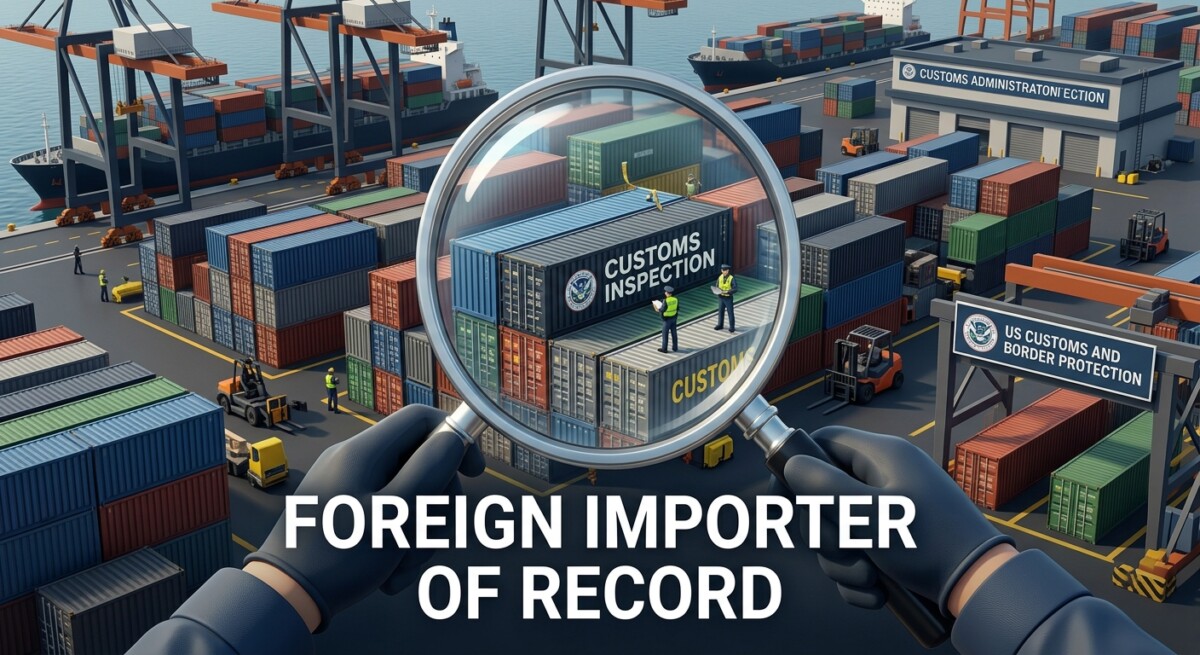
The importer of record (IOR) is the party legally responsible to US Customs and Border Protection for a shipment’s duties, valuation, classification, and compliance. Nonresident IORs are the executive order’s primary target.
Historically, foreign sellers could import into the United States with a very light footprint: a customs bond, a US-licensed customs broker, sometimes just a foreign tax ID. That “nonresident IOR” model let overseas manufacturers, brand owners, and marketplace sellers control the landed cost and keep title in the foreign entity until sale to a US customer.
The June 3, 2026 executive order on Strengthening Customs Enforcement narrows that model sharply. It does not ban nonresident IORs, but it tightens who qualifies, what they must post as security, and what they must disclose — and it raises the price of noncompliance across both customs and tax.
What does the executive order actually change? 📋
The order rewrites five things about the foreign importer of record model — from de minimis entries to bonding, disclosures, and penalties.
- Informal low-value entries curtailed. Shipments that previously cleared under the de minimis threshold face formal-entry scrutiny, ending a common workaround for cross-border e-commerce.
- Continuous bonds restricted. Foreign IORs face limits on the continuous-bond model, and larger single-transaction bonds may be required.
- Trusted-trader or approved-broker gate. Nonresident importers must show Customs-Trade Partnership Against Terrorism (C-TPAT) validation or use an approved broker, replacing the “any bond, any broker” arrangement.
- Minimum US assets and beneficial-ownership disclosure. Foreign IORs must demonstrate a minimum domestic asset base and disclose beneficial owners — the same information direction as FinCEN’s corporate-transparency rules.
- Penalty floors expand. A 50% minimum penalty floor applies under 19 U.S.C. § 1592, with limited mitigation for repeat offenders and penalties that can reach the domestic value of the goods. Criminal exposure under 18 U.S.C. § 545 remains in play for serious cases.
Why is a customs change also a federal income tax issue? 💵
Restructuring to stay an eligible IOR often puts more of the foreign seller’s activity onshore — and that can create a US trade or business, effectively connected income (ECI), and branch profits tax exposure.
To meet the new minimum-asset, bonding, and disclosure requirements, many foreign sellers will place inventory, employees, or a controlled US entity in the country. Each of those moves is exactly what the Internal Revenue Code uses to determine whether a foreign corporation is engaged in a US trade or business. Cross that line and the tax posture flips from a 30% withholding rate on fixed or determinable annual or periodical (FDAP) income to graduated US corporate rates on effectively connected income, with the ability to deduct expenses.
Foreign corporations may also face the branch profits tax — an additional 30% (or treaty-reduced) charge on deemed dividend equivalents when after-tax ECI is not reinvested in US business assets. In short, the order’s customs fix can quietly turn a foreign entity into a US taxpayer with a second layer of tax on top.
How does the order connect customs valuation to IRS transfer pricing? 🔗
The new disclosure regime forces companies to explain the same intercompany price to Customs and to the IRS — and inconsistent answers invite adjustments under IRC § 482.
Customs values imports at the transaction price under 19 C.F.R. Part 152; the IRS tests intercompany prices for reasonableness under IRC § 482. Under the order, US Customs and Border Protection can compare a declared import value with the price shown on the foreign exporter’s own filings, and coordinate more aggressively with the IRS. A company that declared a low import value to reduce duties, then a high transfer price to shift income out of the US, now has to defend both — often to two agencies at once. Aligning customs valuation with transfer pricing documentation before December is easier than reconciling them under audit.
What state and local taxes could apply after restructuring? 🗺️
Any expansion of the US footprint — inventory, employees, a controlled entity — can create state income, franchise, and sales or use tax nexus.
Since South Dakota v. Wayfair, states have leaned into economic and marketplace nexus for sales and use tax, and most have their own thresholds for corporate income and franchise tax. Placing an inventory hub in California, hiring a US-based operations team in Texas, or standing up a Delaware IOR subsidiary all trigger a state-level review. The order does not change state law, but it forces foreign IORs into the exact fact patterns that state auditors follow. Registration, apportionment, and marketplace-facilitator rules must be planned before the physical footprint lands, not after the first assessment.
What should a foreign importer of record do before December? ✅
Run one integrated project across customs, federal income tax, and state tax — separate workstreams miss the interactions.
- Model the eligible IOR structure. Compare staying as a foreign IOR (with higher bonds, C-TPAT validation, and disclosures) against forming a US subsidiary or affiliate that becomes the IOR. Quantify the customs, income tax, and state tax outcomes together.
- Align customs valuation and transfer pricing. Prepare a single, defensible intercompany price supported by an updated IRC § 482 study, and confirm it works for CBP entry documentation.
- Assess ECI and branch profits risk. Map inventory, personnel, and decision-making to determine whether the restructured entity is engaged in a US trade or business, and how far treaty relief goes.
- Run a state nexus review. Register proactively where the plan puts physical presence, and use voluntary disclosure programs for pre-existing exposure before it surfaces.
- Rebuild the compliance stack. Update beneficial-ownership disclosures, five-year record retention, broker relationships, and internal controls over classification, origin, and forced-labor certifications.
- Reserve for the new penalty floor. Book a reserve calibrated to the 50% minimum penalty under § 1592 and to potential domestic-value penalties, so a single misclassification does not shock the P&L.
Foreign IOR at a glance: before vs. after December 2026 📊
| Area | Before EO (nonresident IOR) | After December 2026 |
|---|---|---|
| Bonding | Continuous bond broadly available | Continuous bonds restricted for foreign IORs |
| Broker access | Any licensed US broker | C-TPAT validated or approved broker required |
| Domestic footprint | Minimal — bond + broker | Minimum US assets + beneficial-owner disclosure |
| Low-value shipments | Informal entry common | Formal-entry scrutiny; de minimis workarounds curtailed |
| Penalty exposure | Tiered by culpability | 50% minimum floor under 19 U.S.C. § 1592 |
| Income-tax reach | Often FDAP or no US filing | Increased ECI and branch profits tax risk |
📌 Key Takeaways
- A June 3, 2026 executive order tightens the foreign importer of record model, with a December 2026 implementation deadline.
- Foreign IORs face C-TPAT or approved-broker requirements, minimum US assets, and beneficial-ownership disclosure.
- Penalties expand with a 50% minimum floor under 19 U.S.C. § 1592 and continuing criminal exposure under § 545.
- Restructuring can create US trade or business, ECI, branch profits tax, and state nexus — model customs + tax + state together.
Frequently Asked Questions ❓
Q. Who is a foreign importer of record after the executive order?
A foreign or nonresident company that is the party legally responsible to CBP for a US import shipment. After the order, that party must meet stricter eligibility, bonding, and disclosure rules, and — in many cases — either partner with a Customs-Trade Partnership Against Terrorism validated broker or restructure into a US entity.
Q. Does the order eliminate the de minimis threshold for foreign IOR shipments?
It significantly narrows the informal, low-value entry pathway that many cross-border e-commerce sellers relied on. Shipments that previously cleared without formal entry face formal-entry scrutiny and full duty computation.
Q. How does becoming an IOR-eligible entity trigger US federal income tax?
Meeting minimum-asset, employee, and control requirements can push a foreign seller into a US trade or business under the Internal Revenue Code. That flips the seller from a 30% FDAP withholding regime to graduated corporate rates on effectively connected income, potentially with an additional branch profits tax on unreinvested earnings.
Q. How does the order affect transfer pricing?
Enhanced customs disclosures let CBP compare declared import values with foreign export filings, and coordinate with the IRS. Inconsistent positions between customs valuation and IRC § 482 transfer pricing invite adjustments from either agency, so companies should reconcile the two now.
Q. What are the new penalty exposures for foreign IORs?
The order establishes a 50% minimum penalty floor under 19 U.S.C. § 1592 for customs violations, with limited mitigation for repeat offenders, and penalties can reach the domestic value of the goods. Criminal exposure under 18 U.S.C. § 545 remains available for serious cases.
Q. Do treaties reduce the new income tax exposure?
Sometimes. Many US income tax treaties limit US taxation to activity conducted through a permanent establishment and can reduce branch profits tax rates. A treaty-benefit review is a required step whenever a foreign group restructures its IOR footprint.
If you import into the United States through a foreign entity — or advise a client who does — the customs, income tax, and state exposure of the December 2026 deadline needs to be modeled together. Contact SW Accounting & Consulting Corp for a coordinated review. Primary sources: the White House executive order Strengthening Customs Enforcement, 19 U.S.C. § 1592, 18 U.S.C. § 545, and CBP guidance at cbp.gov.