IRS Tax Debt Resolution: Installment Agreements, OIC, and Penalty Abatement
Owing the IRS more than you can pay is unsettling — especially when you start receiving balance-due notices, CP501s, CP503s, or worse. The good news: IRS tax debt resolution options exist for almost every situation, and most taxpayers qualify for at least one. Ignoring the debt is the worst choice; it triggers escalating penalties, interest, and ultimately enforced collection (liens, levies, wage garnishment).
At SW Accounting & Consulting Corp, we help individuals and small businesses resolve IRS balances every week. This guide walks through the main resolution programs, the qualifying criteria the IRS actually uses, and the order of operations you should follow if you’re behind on federal taxes.
What is an IRS Installment Agreement and who qualifies? 💳
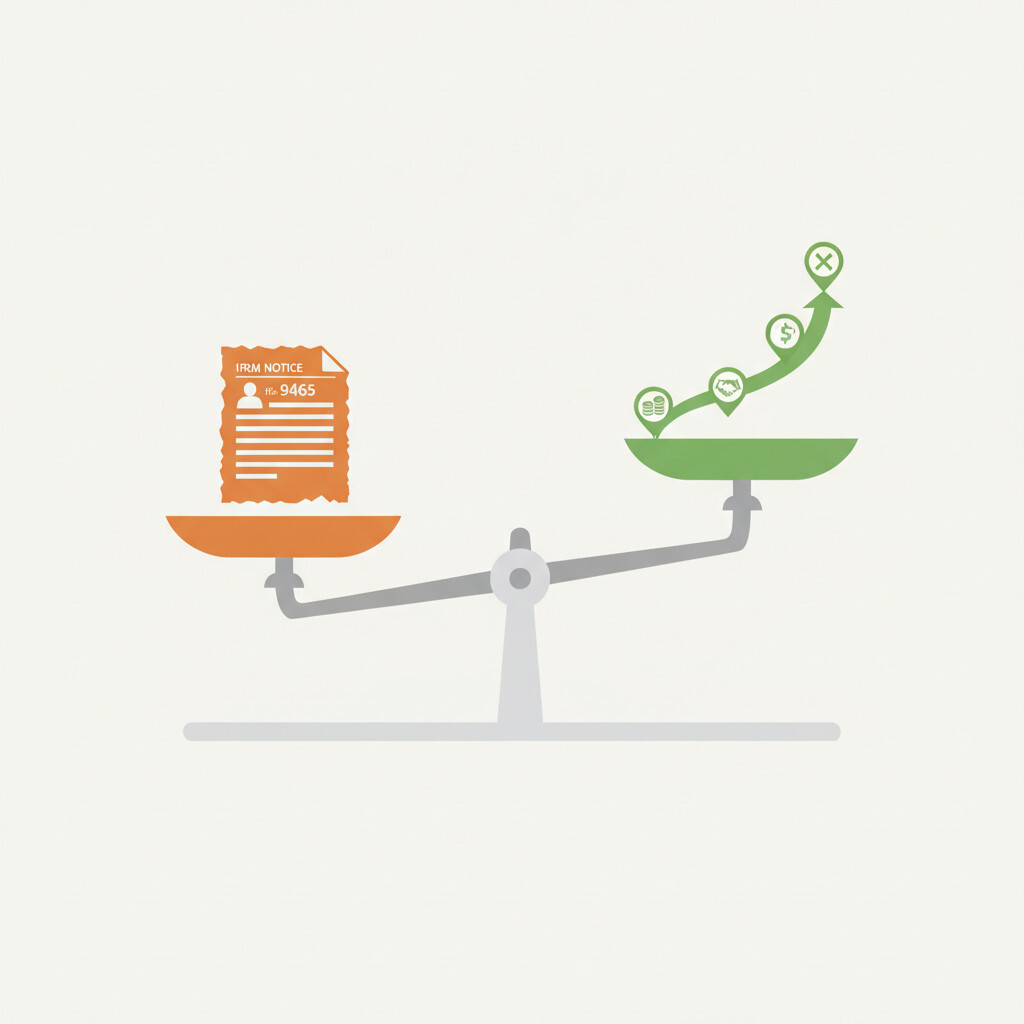
An Installment Agreement (IA) lets you pay your tax debt in monthly installments. The most common types are short-term (180 days), guaranteed (under $10K), streamlined (under $50K), and partial-pay (longer than 72 months).
| Plan Type | Balance Limit | Term | Setup Fee |
|---|---|---|---|
| Short-Term Payment Plan | Up to $100,000 | ≤ 180 days | $0 |
| Guaranteed IA | Up to $10,000 | ≤ 36 months | $0–$31 |
| Streamlined IA | Up to $50,000 | Up to 72 months | $31–$130 (online), $107–$225 (mail/phone) |
| Non-Streamlined IA | $50,001–$250,000 | Up to 84 months (or until CSED) | Same as streamlined; financial disclosure required |
| Partial Pay IA (PPIA) | Any | Until CSED expires | Same; Form 433-F or 433-A required |
Apply online via the IRS Online Payment Agreement application if you qualify (individual debts under $50K, business under $25K). Larger or more complex cases require Form 9465 plus Form 433-F (Collection Information Statement).
Use direct debit. Direct debit installment agreements have lower setup fees, eliminate missed-payment risk, and qualify you for federal tax lien withdrawal once you’ve made three consecutive payments under certain conditions. We see clients fail IAs purely because of forgotten manual payments.
What is an Offer in Compromise (OIC) and how do I qualify? 🤝
An Offer in Compromise lets you settle your tax debt for less than the full amount if you can demonstrate that paying in full would create financial hardship — based on the IRS’s calculation of your reasonable collection potential (RCP).
There are three OIC grounds:
- Doubt as to Collectibility — most common. The IRS won’t be able to collect the full amount within the statutory period.
- Doubt as to Liability — genuine dispute over whether you owe the tax. Less common; usually addressed via amended returns or audit reconsideration.
- Effective Tax Administration — you owe and could pay, but doing so would create economic hardship or be unfair given your circumstances. Highest bar.
The OIC application uses Form 656 plus Form 433-A(OIC) for individuals or 433-B(OIC) for businesses. There’s a $205 application fee (waivable under low-income guidelines) and an initial offer payment.
The IRS rejects most OIC applications. Acceptance rates have historically hovered around 30–40%. To get accepted, your offer must equal or exceed your RCP — calculated as net realizable equity in assets plus a multiple of monthly disposable income. Underbidding wastes time. Get the math right before filing.
What is Currently Not Collectible (CNC) status? ⏸
CNC (status code 53) pauses IRS collection when paying anything would create financial hardship — meaning you couldn’t meet basic living expenses if you made a payment.
CNC is not forgiveness. The debt remains, interest and penalties continue to accrue, and the IRS may file a Notice of Federal Tax Lien. But active collection actions (levies, wage garnishment) stop. The IRS reviews CNC status periodically — typically when your income increases or every 1–2 years — and may reactivate collection.
To qualify, you submit Form 433-F (or 433-A if larger). The IRS compares your monthly income against allowable living expenses (housing, transportation, food, healthcare, etc.) using national and local standards. If there’s nothing left, you generally qualify.
Can I get IRS penalties removed? 📜
Yes. The two main relief programs are First-Time Penalty Abatement (FTA) and Reasonable Cause abatement.
- First-Time Penalty Abatement — administrative waiver for taxpayers with a clean compliance history (no penalties in the prior three years) and current filing/payment compliance. Covers failure-to-file, failure-to-pay, and failure-to-deposit penalties. Request by phone, written letter, or Form 843.
- Reasonable Cause — relief based on facts and circumstances (serious illness, natural disaster, death in family, inability to obtain records). Requires documentation. Use Form 843 with a written explanation.
Penalty abatement can dramatically shrink the balance owed and is often the first move before negotiating an IA or OIC. We routinely save clients 20–40% of their balance through FTA alone when they qualify.
What is the IRS statute of limitations on collection? ⏰
The IRS generally has 10 years from the assessment date to collect a tax debt — known as the Collection Statute Expiration Date (CSED).
After the CSED, the debt is legally uncollectible. But the clock can be paused (tolled) by certain events:
- Bankruptcy filing (extends CSED by the time in bankruptcy plus 6 months)
- Pending OIC (extends CSED by the time the OIC is pending plus 30 days)
- Pending IA proposal under review
- Living outside the US for 6+ continuous months
- Collection Due Process (CDP) hearing requests
Knowing your CSED matters. A Partial Pay IA (PPIA) can let you pay only what you can afford until the CSED expires — leaving the remaining balance uncollectible.
What is the right order of operations for IRS tax debt resolution? ✅
- File all missing returns first. The IRS won’t approve any resolution until you’re in compliance with filing.
- Pull transcripts. Order Account, Wage & Income, and Return transcripts via your IRS online account to confirm balances, CSED, and prior payment history.
- Request penalty abatement. If you qualify for FTA or have reasonable cause, apply before negotiating the principal. Reduces the balance you’ll need to address.
- Choose the right resolution path. Based on your RCP and ability to pay: IA (most common), OIC (if you can demonstrate hardship and bid your RCP), or CNC (if even minimal payments are impossible).
- Stay current going forward. Default on a new tax year while in resolution and the IRS can revoke your agreement and resume collection.
Frequently Asked Questions 🗂
For the authoritative IRS guidance, see the IRS Payments page for online payment agreements, the OIC Pre-Qualifier tool, and links to Form 656 and Form 9465. Publication 594 (The IRS Collection Process) is a worthwhile read if you’re navigating this for the first time.
Facing a tax debt you can’t easily pay? SW Accounting & Consulting Corp’s resolution practice handles installment agreements, OIC submissions, CNC requests, and penalty abatements — reach out for a free initial assessment of which path fits your situation.