Illinois, Texas, and Beyond: Major State Tax Shifts You Need to Know
Let’s be real for a second—just when we thought we had our tax strategies figured out, the states decided to flip the script! If you’ve been following federal tax news, you know the One Big Beautiful Bill Act (OBBBA) brought some major changes. But as any seasoned tax pro will tell you, what happens in D.C. doesn’t always stay in the states. To be honest, keeping track of which states are “conforming” and which are “decoupling” feels like a full-time job in itself. Whether you’re a business owner in Illinois or a tech startup in New York, these 2026 updates are going to land on your desk sooner than you think. Let’s dive into the latest developments so you don’t get caught off guard! 😊
The Great Decoupling: OBBBA and the States 🤝
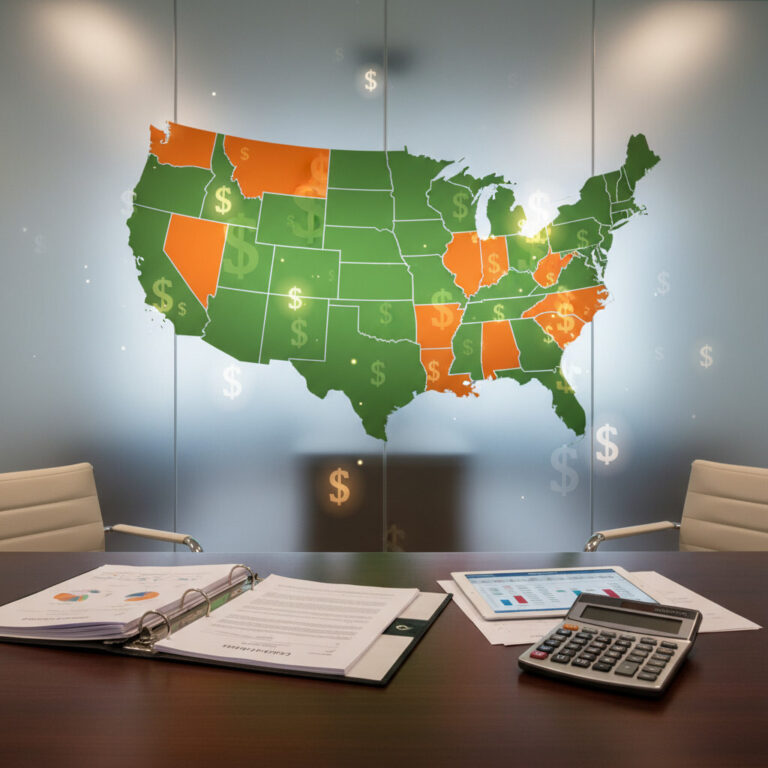
One of the biggest stories for 2026 is how states are reacting to the federal OBBBA. While the federal government offers “tax relief measures,” many states are looking at their own budgets and saying, “Not so fast.” Delaware, the District of Columbia, Michigan, and Tennessee have all issued fresh guidance on how they will—or won’t—follow federal rules.
For instance, Delaware has officially decoupled from the OBBBA’s retroactive treatment of R&D expenses (IRC Section 174A) for tax years 2022-2024. If you’re doing business there, you’ll need to follow the old TCJA rules for those years. Similarly, Michigan has issued a “reminder” newsletter detailing adjustments for everything from bonus depreciation to business interest limitations under Section 163(j).
“Decoupling” simply means a state is choosing NOT to follow a specific federal tax law. This creates a “book-to-tax” difference that you must track on your state returns.
Key Decoupling Trends for 2026
| State | Key Decoupled Provisions | Notes |
|---|---|---|
| Delaware | R&D (174A), Bonus Depr (168k) | Follows TCJA for R&D thru 2024. |
| Dist. of Columbia | Interest (163j), Prod. Prop (168n) | Temporary legislation in effect. |
| Michigan | Sections 174A, 168(n), 163(j), 179 | Updating forms for 2025/2026. |
Illinois: The Move to “Finnigan” and Other Big Shifts 📊
If you operate in Illinois, you’ve got a lot on your plate. The Department of Revenue is shaking things up with a move from the “Joyce” method to the “Finnigan” method for combined reporting. To put it simply, under Finnigan, if *any* member of your unitary group has nexus in a state, the entire group is considered taxable there. This can significantly change how you calculate your sales factor numerator!
But wait, there’s more. Illinois is also tightening the belt on “unused” bonus depreciation. If you have subtraction amounts that you couldn’t use in a previous year, the Department says you generally *cannot* carry them forward as a separate item. They must be part of your net operating loss (NOL) to survive. You know what I mean? It’s all about the procedural details!
Illinois estimated payments are also affected. The first payment after June 16 should include catch-up amounts for previous quarters if your liability increased due to these law changes.
Texas: A Massive Policy Pivot 🤠
Everything is bigger in Texas, including the policy changes. For years, the Texas Comptroller required entities to use the 2007 version of the Internal Revenue Code (IRC). Well, starting with the 2026 report year, that’s changing. Texas is moving toward the *current* federal tax law for many items, unless a specific Texas statute still points to the 2007 code.
This is a game-changer for depreciation. You might even be eligible for a one-time net depreciation adjustment in your Cost of Goods Sold (COGS). Check out this quick tool to see how Delaware’s depreciation schedule works—a similar logic of shifting percentages applies to many state adjustments!
Delaware Bonus Depreciation Estimator 🔢
The Digital Frontier: GenAI and Social Media Taxes 👩💼👨💻
The most modern update comes from the Windy City. Chicago has enacted a “Social Media Amusement Tax.” If you’re a social media giant collecting data on over 100,000 Chicagoans, you’re now on the hook for $0.50 per consumer per month above that threshold. It’s a bold move that other cities are watching closely!
And for the tech-savvy, Illinois has issued a new letter about Generative AI (GenAI). Generally, if you’re just providing a service via a cloud-based app and no software is actually downloaded, you might be exempt from sales tax. But be careful—if you provide an API or a “desktop agent” to access that AI, the state might see that as a software transfer! 🤖
Digital sourcing rules are notoriously tricky. If you provide SaaS but also offer a small “connector” app, that whole transaction could become taxable in some jurisdictions.
Conclusion: Key Summary 📝
2026 is shaping up to be a year of reconciliation between federal “relief” and state “revenue protection.” Whether it’s the shift in Texas’s IRC conformity or Illinois’s new apportionment rules, the common theme is complexity. My best advice? Don’t wait until April 14 to look at these changes. Start talking to your tax advisor now to see how “Finnigan” or “OBBBA decoupling” affects your bottom line. 😊
At a Glance: 2026 Tax Shifts
Frequently Asked Questions ❓
If you have any more questions about how these state changes might impact your specific business, feel free to ask in the comments~ 😊