OBBBA Tax Deductions: 60M Filers Claim, FY2027 IRS Budget Update
The latest Deloitte Capitol Hill briefing (April 24, 2026) gives the clearest picture yet of how the One Big Beautiful Bill Act’s signature individual provisions are landing with taxpayers — and how Treasury and Congress are translating those numbers into the FY2027 IRS funding fight. The headline: the new OBBBA tax deductions are being claimed by tens of millions of filers, with average deduction amounts large enough to materially shift tax planning for 2026 and beyond.
At SW Accounting & Consulting Corp, we’re tracking the OBBBA implementation closely — the deduction usage data tells us where IRS examiners will focus, and the budget resolution math tells us how much enforcement bandwidth they’ll have. This post breaks down both.
How many taxpayers have claimed OBBBA tax deductions in 2026? 📊
Treasury Secretary Bessent told the Senate FSGG Subcommittee that more than 60 million taxpayers have claimed at least one OBBBA deduction — with senior, overtime, and tipped-income provisions accounting for the bulk of the volume.
| OBBBA Provision | Filers Claiming | Average Deduction |
|---|---|---|
| Tipped income deduction | ~7 million | $7,000+ |
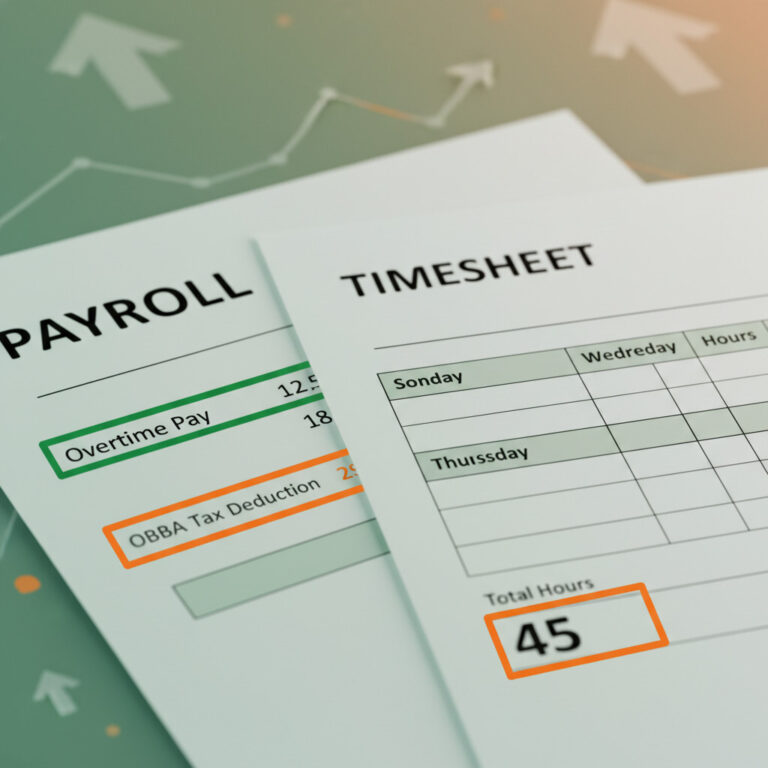
| Overtime pay deduction | ~28 million | $3,100+ |
| Senior deduction | ~34 million | $7,500+ |
The senior deduction is the volume leader — a $6,000 above-the-line deduction (or higher per the per-person limits) for taxpayers 65 and older, available for tax years 2025 through 2028 and subject to phase-out at higher incomes. The fact that 34M filers claimed it represents nearly all eligible Americans 65+ who file returns. Compare that to the tipped-income deduction’s narrower 7M filer base — concentrated in service occupations explicitly listed in T.D. 10044.
The $7,000+ average tipped income deduction is striking — that’s the bulk of the $25,000 annual cap. In our practice, we’re seeing this disproportionately benefit tipped employees in higher-cost markets (LA, NYC, SF restaurants). For payroll documentation, employers should make sure their POS-tip records are clean and reconciled with W-2 reporting — IRS data-analytics audits are likely to focus there.
What did the House Appropriations FY2027 FSGG bill propose for the IRS? 🏛
The full House Appropriations Committee approved the FSGG measure 34-28 on April 22, advancing a $10.2 billion FY2027 IRS budget — about $1 billion (9%) below FY2026’s $11.2 billion enacted level, but above the administration’s $9.8 billion request.
| IRS Funding Category | FY2026 Enacted | FY2027 House Proposal |
|---|---|---|
| Taxpayer services | ~$3.0B | ~$3.0B |
| Enforcement | $5.0B | $3.6B (-$1.4B) |
| Technology & operations | ~$3.2B | ~$3.6B |
| Total | $11.2B | $10.2B |
The single biggest line item shift is enforcement: a $1.4 billion cut, partially offset by a $400 million bump in technology and operations support. Chairman Tom Cole (R-Okla.) framed the measure as ending “the era of excess” and rolling back IRS expansion under the Inflation Reduction Act. Ranking Member Rosa DeLauro (D-Conn.) called the enforcement reduction “draconian,” arguing it would weaken compliance among high-income taxpayers and corporations.
Subcommittee Ranking Member Jack Reed (D-R.I.) cited the Treasury’s own statistic — that the IRS generates roughly $11 of revenue for every dollar spent on enforcement — to argue the cuts will reduce net federal receipts. Bessent disagreed, citing $2 billion collected from the agency’s five largest cases as evidence that focused, technology-enabled enforcement can produce results without expanded headcount.
What did Treasury Secretary Bessent tell the Senate FSGG Subcommittee? 🎤
Bessent characterized the IRS as a “digital-first agency,” pointing to lower call volumes, increased direct deposit adoption, and 11–13% higher average refunds versus 2025 — and committed to issuing section 45S paid family and medical leave guidance early this summer.
Bessent’s testimony covered four threads worth flagging for tax planners:
- Average refund up 11.2%. Comparing April 10, 2026 vs. April 11, 2025 IRS data, the average individual refund increased $342 — an 11.2% gain. Total refund dollars rose roughly 16%.
- Trump Accounts at 5.5M children. About 1.3 million minors are eligible for the $1,000 federal pilot contribution. Form 4547 (Trump Account Elections) is in the field, with contributions slated to begin July 4, 2026.
- Section 45S guidance coming. Bessent committed to issuing guidance on the OBBBA-permanent paid family and medical leave credit “early this summer” — a priority for employers using the credit since 2018.
- Direct File still suspended. Bessent reiterated that Free File (the private-sector partnership) remains the path for free filing options. Senate Democrats — particularly Sen. Reed — pressed the issue but did not prevail.
What is happening with the FY2026 budget reconciliation? 🗳
Senate Republicans passed a “skinny” FY2026 budget resolution 50-48 on April 23, focused on $70 billion in immigration and border-security funding — explicitly excluding tax provisions, despite GOP appetite for a separate tax-focused reconciliation 3.0 bill later.
The budget resolution sets up reconciliation instructions to the Senate Homeland Security and Governmental Affairs and Judiciary Committees to report $70 billion in mandatory spending for ICE and CBP border-security programs, with recommendations due to the Senate Budget Committee by May 15. Two Republicans — Sens. Rand Paul (KY) and Lisa Murkowski (AK) — voted against the resolution; no Democrats supported it.
During the vote-a-rama, Democrats forced votes on amendments addressing healthcare costs, SNAP reductions, school meal programs, tariff-driven price increases, and homeownership affordability — most failed on roughly party-line votes. Notably, none of the recorded amendments focused on tax policy, signaling that both parties view this round as a non-tax reconciliation vehicle.
Some GOP lawmakers want a third reconciliation bill specifically to address tax priorities — TCJA permanence extensions, additional OBBBA tweaks, or new business provisions. Whether that materializes depends on House vote math (Speaker Johnson’s razor-thin majority) and competing priorities heading into midterm elections. If you have a tax issue waiting on legislation, this is the vehicle to track.
What does this mean for 2026 tax planning? ✅
- Document OBBBA deductions defensively. 60M+ taxpayers claimed at least one new deduction. Substantiation will get tested. For tipped income, keep daily POS reports tied to W-2 wages. For overtime, save pay stubs and any state/federal premium-pay computations. For senior deduction, confirm AGI is under the phase-out and the taxpayer turned 65 by year-end.
- Expect technology-driven audits, not field exams. With enforcement funding dropping to $3.6B, the agency will lean on data analytics, information-return matching, and targeted compliance letters — Bessent already cited 500 letters yielding $250M earlier in the year.
- Plan around section 45S guidance. If you’re an employer using the paid family and medical leave credit, monitor Treasury’s release expected early summer 2026. Old IRS Notice 2018-71 transitional guidance has been the practical reference; new rules will likely tighten qualifying-employer definitions.
- Watch Trump Account contribution mechanics in July 2026. First-year operations are when most account-administration friction surfaces — coordinate with custodians early.
Frequently Asked Questions 🗂
For source materials, see the House Appropriations Committee FSGG bill page and the White House FY2027 budget proposal. Treasury and IRS guidance under OBBBA — including the tipped income final rule (T.D. 10044) — is on irs.gov/newsroom.
Need help with OBBBA deduction substantiation, audit response, or 2026 planning? SW Accounting & Consulting Corp’s tax team works with individuals and small businesses across Los Angeles and nationally — book a consultation.