USPS Postmark Changes: How to Avoid Late Tax Penalties in 2026
Hey there! 😊 Tax season is stressful enough without having to worry about the logistics of the mail, right? We’ve all been there—rushing to the mailbox on April 15th, breathing a sigh of relief as the letter drops into the slot.
But to be honest, that strategy might not work anymore. Due to operational changes at the USPS that started late last year, the date you drop off your mail might not be the date stamped on your envelope. This little detail could lead to big headaches (and penalties) with the IRS or the Franchise Tax Board. Don’t worry, though—I’ve dug into the details to help you navigate this change smoothly! 📨
The Big Change: What Happened at USPS? 🤔
Effective December 24, 2025, the United States Postal Service (USPS) adjusted its transportation operations. In simple terms, this means mail might not be processed at the facility where you drop it off on the same day.
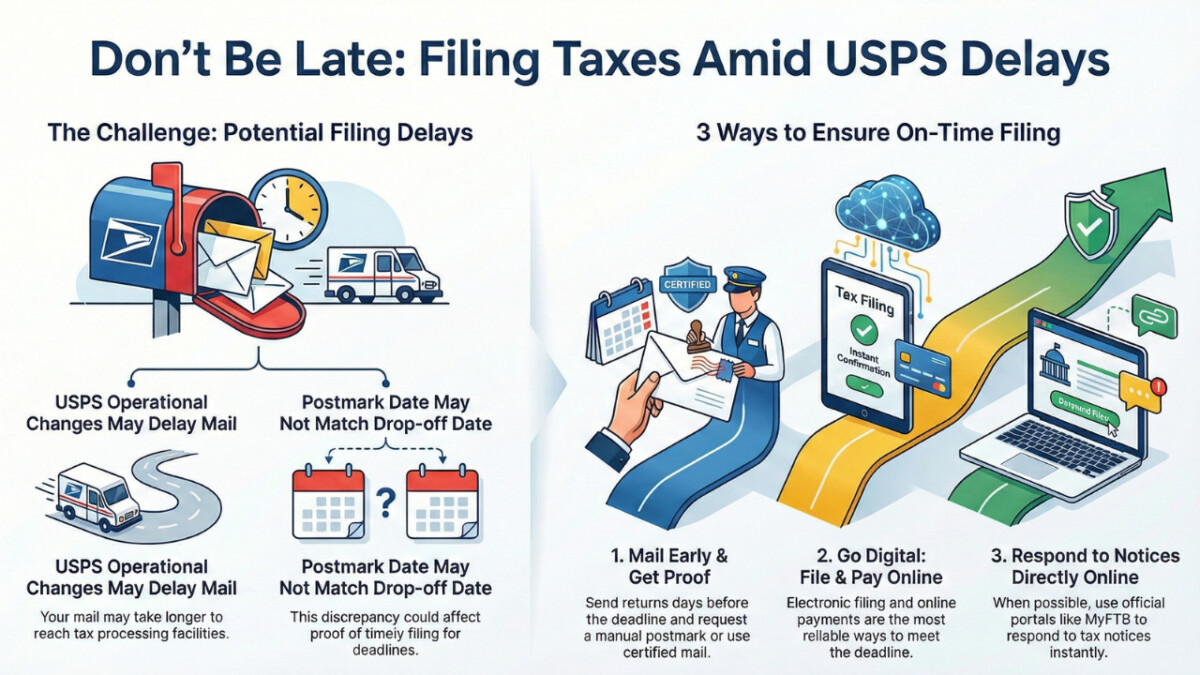
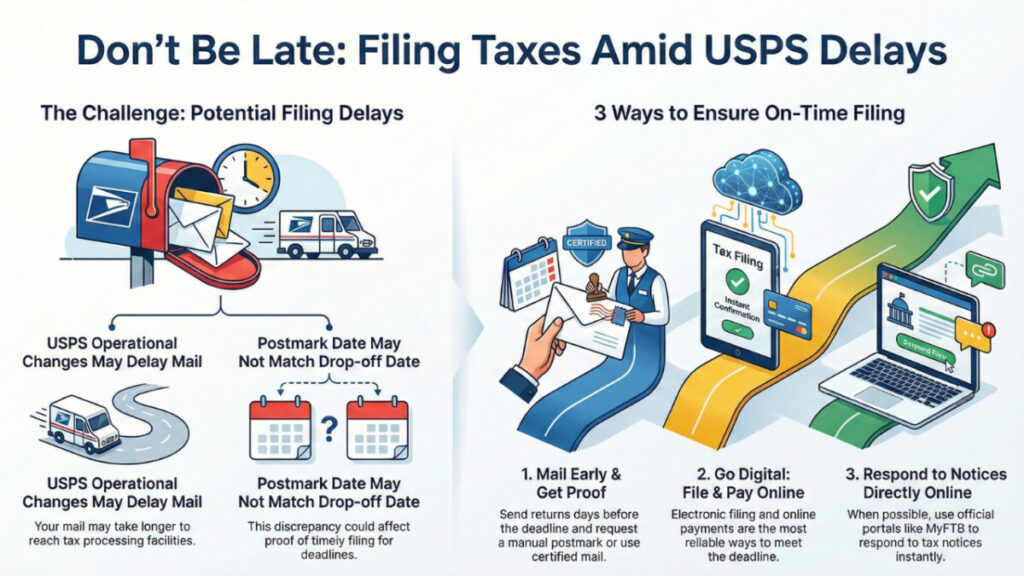
Previously, if you dropped a letter at a local post office, it often got a postmark that day. Now, mail is often transported to a regional facility for processing. The machine-applied postmark will generally reflect the date it is processed at that regional facility, not necessarily the day you put it in the box.
This delay means a letter dropped off on the deadline day might not receive a postmark until the following day (or later), making it technically “late” in the eyes of tax agencies.
How to Protect Your Filing Date 🛡️
Since tax returns and payments are time-sensitive, you need a strategy to ensure your “sent” date is locked in. Here are the best ways to avoid an accidental late filing penalty.
Option 1: The “Manual Postmark” (Highly Recommended)
If you must mail your return, do not just drop it in a blue collection box. Instead, walk into the post office retail counter.
- Bring your envelope to the clerk.
- Ask for a Manual (Local) Postmark.
- This service is free and ensures the date matches the actual day you are handing it over.
Option 2: Use Traceable Mail
Using services that provide proof of mailing is a solid backup plan. This gives you a paper trail if questions arise later.
| Service Type | Best Used For |
|---|---|
| Certified Mail | Proving you sent it and verifying it was received. |
| Certificate of Mailing | Proving exactly when you mailed the item. |
| Registered Mail | High security and strict chain of custody. |
Even if you use these services, try to mail your return several days before the deadline to be safe. Cutting it close is riskier now than ever.
Should I Mail It or E-File? Checker 🧮
Not sure if you have enough time to mail it? Use this simple checker to decide the safest route.
📅 Mailing Safety Calculator
The Ultimate Solution: Go Digital 💻
State Controllers and tax experts are all saying the same thing: E-filing is the best way to avoid this mess entirely.
By filing online, you get immediate confirmation that your return was received. You don’t have to worry about trucks, sorting facilities, or stamps. Here are the top digital options available, especially for California residents:
- CalFile: Allows most Californians to e-file their state tax return for free.
- Web Pay: Pay taxes directly from your checking or savings account.
- MyFTB: Respond to notices and view your account details online instantly.
Key Takeaways: USPS Updates
Frequently Asked Questions ❓
I hope this clears up the confusion around the new USPS rules! It’s better to take a few extra minutes to get a manual postmark or set up an online account than to deal with penalties later. If you have any other questions about the filing process, feel free to drop a comment below! Happy filing! 😊