Life Events Tax Filing: What to Update With the IRS
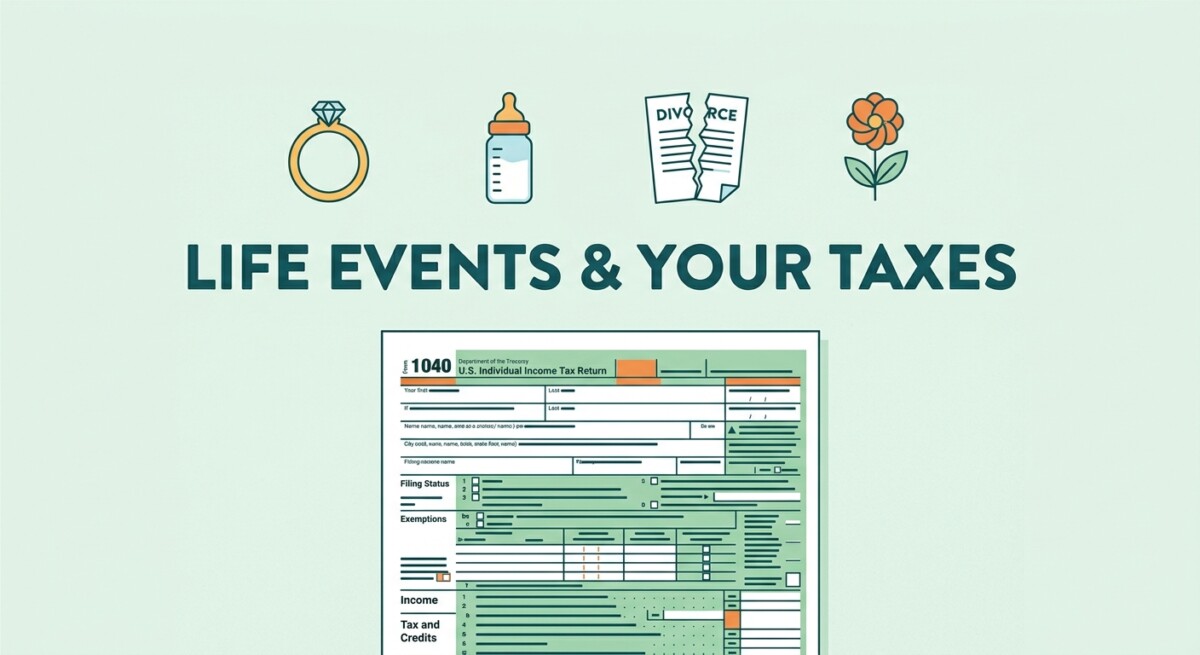
A wedding, a new baby, a divorce, the loss of a spouse or parent — these change more than daily life. Each one quietly rewrites your tax return. That is why life events tax filing planning is not something to save for tax season. The paperwork you file with the Social Security Administration, the U.S. Postal Service, your employer, and the IRS in the month the event happens is what makes the next return go smoothly.
At SW Accounting & Consulting Corp, we see the same avoidable problems every filing season in Los Angeles: a return rejected because a newly married spouse’s Social Security name has not been updated, a Child Tax Credit denied for a missing SSN, a divorced parent claiming a dependent the other parent already claimed, and a surviving spouse unsure what to file for a loved one who passed midway through the year. Here is what the IRS says to do — for each event — so your next return does not become a correction.
Getting married: what changes on your tax return? 💍
A wedding can change your filing status, tax withholding, and eligibility for certain benefits — so the IRS asks newly married couples to update three offices right away.
According to the IRS, newlyweds should report any name change to the Social Security Administration and any address change to the U.S. Postal Service, their employer, and the IRS. They should also review their federal tax withholding and update Form W-4 with their employer if needed. The IRS uses Form 8822, Change of Address, for the mailing-address update, and the SSA processes name changes through its personal record service.
Practical order of operations: SSA name change first (the IRS matches your return to the name on your Social Security card), then update payroll and the W-4, then confirm the new address is on file with both the IRS and USPS. If you and your spouse together earn substantially more or less than either of you did before, redo the withholding worksheet on the W-4 to avoid an under- or over-withholding surprise.
Birth or adoption: which credits open up? 👶
A new child can make a family eligible for the Child Tax Credit, the Adoption Credit, and the Child and Dependent Care Credit — but each credit has its own eligibility rules and Social Security number requirements.
Per the IRS, the parent (or taxpayer) and the child must each have a valid Social Security number to claim the Child Tax Credit. For adoptive families, the Adoption Credit may offset qualified adoption expenses, and working parents paying for care so they can work may qualify for the Child and Dependent Care Credit. Each credit is separate — meeting one set of rules does not automatically qualify you for another.
Two documents to gather early: the child’s Social Security card (application filed with the SSA soon after birth or once the adoption is final) and receipts for qualifying care (name, address, and taxpayer ID of the care provider). The care-provider identification is a common reason the Child and Dependent Care Credit is delayed or denied on otherwise complete returns.
Divorce or legal separation: who claims what? 📄
Divorce or legal separation affects filing status, withholding, who can claim a dependent, and eligibility for several credits and deductions.
The IRS guidance on filing taxes after divorce or separation is a good starting point. Changes in income, withholding, and filing status may require you to update Form W-4 with your employer. Only one parent can claim a given child as a dependent in the same year, and the divorce or separation agreement often specifies which parent claims which child in which years — a written record avoids duplicate claims that trigger IRS notices for both parents.
If you receive a new address, redirect mail with USPS and use Form 8822 to give the IRS your new address so refund checks and correspondence reach you. Update your name with the SSA if you resume a prior surname, and confirm the update is reflected before filing your first single-status return.
Death of a spouse or family member: what needs to be filed? 🕊️
A final individual income tax return of a deceased person is generally filed the same way as if the person were still living, with all income reported up to the date of death and any eligible credits and deductions claimed.
The IRS Deceased Person resource walks executors and surviving spouses through the final Form 1040, the treatment of income received after death, and how to sign the return. In general: report income up to the date of death on the final 1040, claim eligible credits and deductions the decedent would have claimed, and coordinate with the estate on any income received after death. If the surviving spouse’s filing status changes going forward, revisit withholding using the IRS tax-withholding resources.
Which forms should I file after each life event? ✅
Match the event to the correct agency and form — most updates are simple, but each has its own filing window.
| Life event | Update / form | Where it goes |
|---|---|---|
| Marriage / name change | SSA name change; new Form W-4 | Social Security Administration; employer |
| New address | Form 8822; USPS change of address | IRS; USPS; employer |
| Birth or adoption | Child’s SSN; W-4 update | SSA; employer |
| Divorce / legal separation | New Form W-4; Form 8822 if moving | Employer; IRS |
| Death of spouse / family member | Final Form 1040 for decedent | IRS (executor / surviving spouse) |
📌 Key Takeaways
- Report a marriage name change to the SSA before filing under the new name.
- Use Form 8822 to give the IRS a new address, and update USPS too.
- A new child may qualify you for the Child Tax Credit, Adoption Credit, or Child and Dependent Care Credit — each with its own SSN and eligibility rules.
- After divorce, decide who claims which dependent and refresh your Form W-4.
- A decedent’s final Form 1040 reports income up to the date of death and follows the deceased-taxpayer rules.
Frequently Asked Questions ❓
Q. How soon after a life event should I update my tax withholding?
The IRS recommends checking your withholding whenever you have a major life event and adjusting your Form W-4 with your employer as soon as possible so the change is reflected in the paychecks that follow.
Q. I got married. Do I have to change my name with the IRS?
You do not file a separate name-change form with the IRS. Report the name change to the Social Security Administration; the IRS matches your return to the name on your Social Security card, so keeping SSA up to date is what matters.
Q. Can both parents claim the same child after a divorce?
No. Only one parent may claim a given child as a dependent for a given tax year. The divorce or separation agreement typically specifies which parent claims the child in which years; both parents should keep a written record to avoid duplicate claims.
Q. What forms does a newborn need before I file?
Apply for the child’s Social Security number with the SSA. A valid SSN for both the parent and the child is required to claim the Child Tax Credit.
Q. Who files the final tax return for someone who died during the year?
The surviving spouse or the personal representative of the estate files the final Form 1040 for the deceased taxpayer. Income is reported up to the date of death, and eligible credits and deductions may still be claimed. The IRS Deceased Person page explains the signing and filing steps.
Q. I moved. Do I still need to file Form 8822 if I already told the post office?
Yes. USPS forwarding is limited, and the IRS asks taxpayers to file Form 8822 so notices and refunds go directly to your new address. Update your employer as well so your Form W-2 arrives on time.
Life-event paperwork is small work compared with the notices and delays it prevents. If you would like help mapping your specific event to the right IRS updates and a fresh withholding plan, contact SW Accounting & Consulting Corp. Primary sources: IRS.gov newsroom and credit pages (Child Tax Credit, Adoption Credit, Child and Dependent Care Credit, Deceased Person, Filing Taxes After Divorce), Form W-4, Form 8822, and the Social Security Administration name-change page.