Concert ticket resale tax: owe without a 1099-K? (2026)
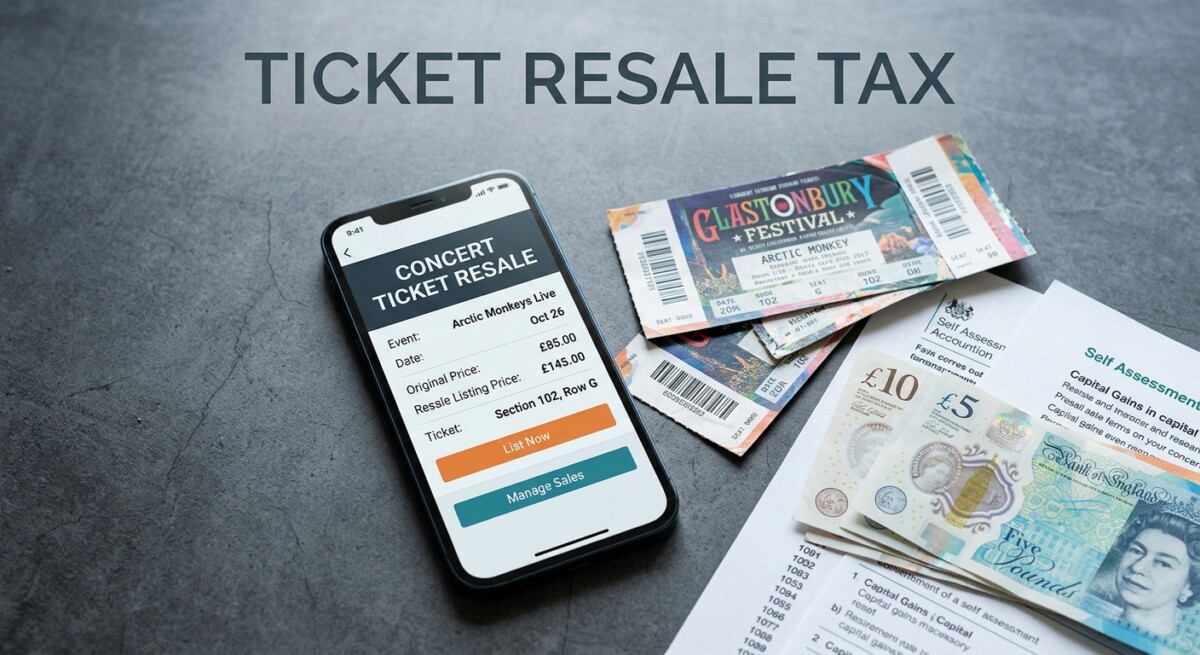
BTS is playing four sold-out nights at SoFi Stadium during Los Angeles’s official BTS Week, and resale listings have been running at multiples of face value. Plenty of fans are selling a pair they cannot use. Some bought extra on purpose. A few are running what amounts to a small business. The concert ticket resale tax answer is different for each of them, and the most common mistake is assuming that no 1099-K means no tax. This post walks through the federal and California rules for each situation, with a worked example and the records to keep.
Is concert ticket resale tax owed even without a Form 1099-K? 🎟️
Yes. The 1099-K is an information return that tells the IRS what the platform paid you. Your obligation to report a gain exists whether or not the IRS receives a copy.
Resale platforms such as StubHub, Ticketmaster, SeatGeek, and Vivid Seats are third-party settlement organizations. Under the IRS Form 1099-K guidance, they must issue Form 1099-K to a seller, and to the IRS, when the seller crosses a reporting threshold. After several years of changes, the July 2025 tax law reset the federal threshold permanently to more than $20,000 in gross payments and more than 200 transactions in a calendar year. The IRS 1099-K FAQs confirm that both conditions must be met.
That means the typical fan who sells one or two pairs will not receive a 1099-K for 2026. It does not mean the gain is tax free. The form only changes whether the IRS has a document to match against your return. The gain itself is income under the general rules, reported on your Form 1040 whether or not anyone sent you paper.
California may see it anyway
Payment platforms report to state tax agencies as well. California residents should assume the FTB can obtain payment data even when the federal threshold is not met, and report consistently on the federal and state returns.
How is concert ticket resale tax calculated when you sell a pair you could not use? 🧮
As a short-term capital gain. Proceeds minus selling fees minus your cost basis, including the fees you paid to buy, equals the taxable gain.
Tickets bought for personal use are personal-use property. When you sell personal-use property for more than you paid, the profit is a capital gain under IRS Topic 409. You held the tickets for less than a year, so the gain is short-term and taxed at ordinary income rates. Report it on Form 8949 with the totals carried to Schedule D.
A worked example for a pair of floor tickets:
| Item | Amount |
|---|---|
| Sale price received from buyer | $1,200 |
| Platform selling fee | ($120) |
| Original purchase price including order fees | ($350) |
| Taxable short-term gain | $730 |
Selling fees charged by the platform reduce your amount realized. The order fees, delivery fees, and service charges you paid when you first bought the tickets are part of your cost basis. Both reduce the gain, and both need a receipt. Per the Form 8949 instructions, enter the gross proceeds, the basis, and any adjustment so the net gain is what reaches Schedule D.
If you sold at a loss, for example paid $350 and received $200 because a show conflicted with a family event, the loss is a personal-use loss. Personal-use losses are not deductible and cannot offset gains on other sales. The tax code treats it the same way it treats selling a used couch for less than you paid.
When does flipping tickets become a business on Schedule C? 💼
When you buy with the intent to resell and do it with regularity. Then the income is business income, self-employment tax applies, and losses and expenses become deductible.
One or two sales of tickets you bought for yourself do not make a business. Dozens of purchases across multiple shows, made with the purpose of reselling, do. The IRS looks at intent, frequency, and whether the activity is carried on in a businesslike way. A seller in that position reports gross sales and cost of goods on Schedule C, pays self-employment tax of 15.3 percent on the net profit in addition to income tax, and in exchange may deduct platform fees, software, and losses on tickets that did not sell.
The classification also changes the 1099-K math. A regular reseller who crosses $20,000 and 200 transactions will receive the form, and the IRS will expect the gross amount to appear on a Schedule C, not on Form 8949. Reporting business-level volume as capital gains invites a notice.
- Casual seller. Bought for personal use, sold one or a few times. Form 8949 and Schedule D. Losses not deductible.
- Regular reseller. Bought to resell, sold repeatedly. Schedule C. Self-employment tax. Expenses and losses deductible.
- Gray zone. Bought extra “just in case” and sold them. Usually still capital gain, but the pattern across the year decides.
What if the 1099-K shows more than you actually made? 📄
Report the gross on Form 8949 and back out basis and fees so only the net gain is taxed. Never report the 1099-K total as income.
A 1099-K reports gross payments processed. It does not know what you paid for the tickets or what the platform charged you. If you receive one, enter the gross amount as proceeds on Form 8949, then enter your cost basis and use the adjustment column for selling fees. The result is the net gain. If the tickets were personal items sold at a loss, the IRS guidance provides a way to report the gross and offset it so the form is accounted for without creating taxable income.
From our practice: the platform account disappears before the audit letter arrives
Fans close resale accounts, change emails, and lose access to purchase histories. Three years later, a CP2000 notice arrives proposing tax on the full 1099-K amount because there is no basis on the return. Download the purchase confirmation and the sale settlement as PDFs the week the sale closes. That one habit turns a $1,200 income adjustment into a $730 gain.
How does California tax concert ticket resale gains? 🐻
California taxes capital gains at ordinary rates with no long-term preference, so the state cost of a resale gain can be a larger share of the gain than the federal cost.
California residents include the same gain on Form 540. Under the FTB capital gains guidance, California does not distinguish between short-term and long-term gains; both are taxed at regular rates that reach 9.3 percent for many working households and higher above that. For a short-term ticket gain the federal and state rates are both ordinary, so the combined bill on a $730 gain for a taxpayer in the 22 percent federal and 9.3 percent California brackets is roughly $228.
Nonresidents who sold tickets to a California event generally do not owe California tax on the gain from personal property unless the activity rises to a business conducted in the state. Residents of other states should follow their own state’s capital gains rules.
What records prove your concert ticket resale tax position? 🗃️
The original purchase confirmation with fees, the sale settlement showing the buyer’s payment and the platform’s fees, and the payout or bank deposit record.
- Purchase confirmation. Face value, order fees, delivery fees, date. This is your basis.
- Sale settlement. Buyer’s payment, platform fee, net payout, date. This is your proceeds and adjustment.
- Payout record. Bank or payment-app deposit, to tie the 1099-K amount to what you actually received.
- Transfer record. If you gave tickets to a friend at face value, keep the transfer to show no gain.
Summary: concert ticket resale tax in 2026
- Profit on resold tickets is taxable even when no Form 1099-K arrives.
- The 2026 threshold is more than $20,000 and more than 200 transactions; most fans will not get the form.
- Personal tickets sold at a gain: short-term capital gain on Form 8949. Sold at a loss: not deductible.
- Buying to flip repeatedly is a Schedule C business with self-employment tax and deductible expenses.
- Report gross 1099-K proceeds, then subtract basis and fees; never report the gross as income.
- California taxes the gain at ordinary rates. Save purchase and sale PDFs now.
Frequently asked questions about concert ticket resale tax ❓
Q. I sold one pair of BTS tickets and did not get a 1099-K. Do I still owe tax?
If you sold for more than you paid, yes. The 1099-K threshold controls whether the platform reports the sale to the IRS, not whether the gain is taxable. Report the net gain on Form 8949 and Schedule D.
Q. What is the 2026 Form 1099-K threshold for StubHub and Ticketmaster sellers?
More than $20,000 in gross payments and more than 200 transactions in the calendar year. Both conditions must be met. The July 2025 tax law reset the threshold permanently to that level, so most casual sellers will not receive the form.
Q. Can I deduct a loss if I sold my tickets for less than face value?
No. Tickets bought for personal use are personal-use property, and losses on personal-use property are not deductible and cannot offset other gains.
Q. Are platform fees deductible from my ticket resale gain?
Yes. Selling fees reduce your amount realized, and the fees you paid when you originally bought the tickets are part of your cost basis. Keep both receipts.
Q. When does reselling tickets become a business for tax purposes?
When you buy with the intent to resell and do it with regularity, for example dozens of transactions across multiple events. Then the income belongs on Schedule C, self-employment tax applies, and expenses and losses become deductible.
Q. I received a 1099-K for the gross amount but my profit was much smaller. What do I do?
Report the gross proceeds on Form 8949, then show your basis and fees so only the net gain is taxed. The IRS 1099-K guidance also explains how to report a form received for personal items sold at a loss so the amounts match without creating income.
This article is general information, not tax advice for your specific situation. If your resale activity is large enough that you are wondering whether it is a business, contact SW Accounting & Consulting Corp before year end; the answer changes how you keep records for the rest of 2026.