
California FTB Update: EBL, ETPTC, 15-Day, EPCRS
What changed this week
| Development | Who it affects |
|---|---|
| California 2026 Excess Business Loss Limits Set at $320,000 Single / $640,000 Joint | Noncorporate California taxpayers (individuals, trusts, estates) with substantial pass-through business losses, including partners and S-corp shareholders. |
| California Eligible Transmission Project Tax Credit (ETPTC) Is Available for 2026 | Developers, utilities, and private taxpayers participating in eligible California transmission projects financed through IBank’s Transmission Accelerator Revolving Fund Program. |
| The 15-Day Rule: Year-End Formation Timing Can Avoid the $800 California Minimum Tax | Entrepreneurs forming a new California LLC, LLP, LP, or corporation in the last two weeks of 2026. |
| IRS Refreshes the Retirement Plan Correction Program and Launches an IRA Correction Program | California businesses that sponsor 401(k) or other qualified retirement plans; CPAs and plan sponsors that discover operational failures during year-end testing; and individual IRA owners (including small-business owner-employees using SEP, SIMPLE, or traditional IRAs). |
California 2026 Excess Business Loss Limits Set at $320,000 Single / $640,000 Joint
For 2026 tax years, the California excess business loss (EBL) limitation under R&TC section 17560.5 is $320,000 for single or married/RDP filing separately and $640,000 for married/RDP taxpayers filing jointly. California has modified conformity to IRC section 461(l) and does not conform to the One Big Beautiful Bill Act changes that made the federal limit permanent at $256,000 / $512,000 for tax years beginning after December 31, 2026. For California, excess business losses are carried forward under section 461(l) itself, not treated as NOL carryforwards under IRC section 172. The FTB will publish the 2026 amounts in a future indexing memorandum.
Who it affects: Noncorporate California taxpayers (individuals, trusts, estates) with substantial pass-through business losses, including partners and S-corp shareholders.
What to do
If 2026 losses from an active trade or business are expected to run above the threshold, model California tax using the 2026 EBL amounts and the state’s loss-carryforward mechanics, not the federal NOL treatment. Also confirm the state and federal numbers separately on the 2026 California return — the state and federal thresholds now differ in both amount and carryforward rule.
Primary source: California R&TC section 17560.5 (via Legislative Counsel)
California Eligible Transmission Project Tax Credit (ETPTC) Is Available for 2026
The ETPTC, enacted by Senate Bill 254 (Chapter 119, Statutes of 2025) and codified at R&TC sections 17053.40 (personal income tax) and 23640 (corporation tax), is now available. The credit equals 20 percent of qualified expenditures — planning, design, engineering, permitting, construction, equipment, and qualifying California-withholding wages directly related to an eligible transmission project — capped at $20 million per qualified taxpayer per taxable year. It is available for taxable years beginning on or after January 1, 2026 and before January 1, 2036, with unused credit carried over for seven years. Eligibility runs through projects selected by the Transmission Infrastructure Accelerator and approved for financial assistance by the California Infrastructure and Economic Development Bank (IBank). Credit claiming reduces otherwise allowable deductions by the credit expenditures.
Who it affects: Developers, utilities, and private taxpayers participating in eligible California transmission projects financed through IBank’s Transmission Accelerator Revolving Fund Program.
What to do
Confirm your project is on the Transmission Infrastructure Accelerator list and has an IBank financial assistance approval. Track qualifying expenditures and California-withholding wages contemporaneously in a dedicated project ledger. If several affiliates in a combined reporting group work on the project, plan credit assignments under R&TC section 23663 before claiming.
Primary source: FTB — SB 254 Bill Analysis (September 10, 2025) · California SB 254 (Becker, 2025) — Bill Text
The 15-Day Rule: Year-End Formation Timing Can Avoid the $800 California Minimum Tax
Under California’s 15-day rule, a business entity (limited partnership, LLP, LLC, or corporation) is not required to file a California tax return and is not subject to the entity-level taxes and fees (including the $800 annual minimum tax) for its short taxable year if two conditions are met: the entity did no business in California during the taxable year, and the taxable year was 15 days or less. For a calendar-year filer formed on or after December 17 that stays dormant through year-end, the short period is also disregarded as the first taxable year, so the first taxable year starts January 1 of the following year. FTB Publication 3556 (LLCs) and FTB Publication 1060 (corporations) describe the rule.
Who it affects: Entrepreneurs forming a new California LLC, LLP, LP, or corporation in the last two weeks of 2026.
What to do
If you are forming an entity around year-end 2026, time Secretary of State filing (or California registration for an entity formed elsewhere) for December 17 or later and keep the entity dormant through December 31. Document carefully that no business was conducted — contracts signed, bank accounts opened, invoices issued, or payroll run can all disqualify the rule. The first taxable year will then start January 1, 2027.
Primary source: FTB Publication 3556 — Limited Liability Company Filing Information · FTB Publication 1060 — Guide for Corporations Starting Business in California
IRS Refreshes the Retirement Plan Correction Program and Launches an IRA Correction Program
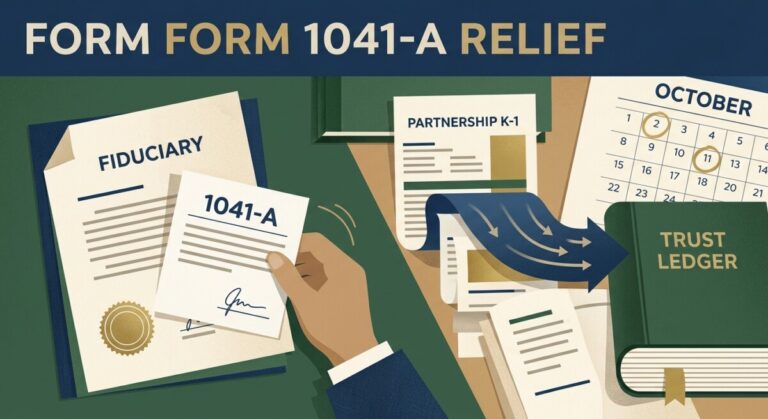
The IRS and Treasury issued two revenue procedures (IR-2026-126, October 22, 2026) that update the Employee Plans Compliance Resolution System (EPCRS) correction program for qualified retirement plans and create a brand-new correction program for individual retirement accounts (IRAs). The retirement plan update expands the kinds of operational and plan document failures that can be corrected on a self-corrected basis, and the IRA program gives IRA owners and custodians a formal path to fix contribution and distribution errors without having to seek a letter ruling.
Who it affects: California businesses that sponsor 401(k) or other qualified retirement plans; CPAs and plan sponsors that discover operational failures during year-end testing; and individual IRA owners (including small-business owner-employees using SEP, SIMPLE, or traditional IRAs).
What to do
Walk through 2026 plan operations with your TPA or recordkeeper before year-end and flag anything that could be corrected under the updated EPCRS before any audit or filing closes the window. For SEP/SIMPLE/IRA-level issues identified during year-end planning, read the new IRA correction program carefully before relying on it or filing a 1099-R correction.
Primary source: IRS News — Treasury, IRS Update Retirement Plan Correction Program and Establish IRA Correction Program (IR-2026-126)
What this means for your business
- California 2026 EBL thresholds — $320,000 single, $640,000 joint — do not match the new federal permanent limits. Compute each separately.
- The new 20 percent ETPTC can offset up to $20 million per taxpayer per year, but only for projects running through the Transmission Infrastructure Accelerator and IBank.
- Year-end entity formation: hit December 17 or later and stay dormant to save the $800 California minimum tax for 2026.
- The refreshed EPCRS plus a brand-new IRA correction program make year-end a good time to fix retirement plan and IRA errors before they become audit issues.
This week’s California FTB takeaway
Four items from the FTB’s November 2026 Tax News: California’s 2026 excess business loss limits (which no longer match federal), the new 20 percent Eligible Transmission Project Tax Credit, the 15-day rule for year-end entity formation, and the IRS’s refreshed retirement plan correction program plus a new IRA correction program.
Frequently asked questions
Q. Does California’s excess business loss limitation ever let losses become NOL carryforwards?
No. California has modified conformity to IRC section 461(l) and treats excess business losses as carryforwards under section 461(l) itself, not as NOL carryforwards under IRC section 172. That differs from the federal rule. For 2026, the California threshold is $320,000 for single or married/RDP filing separately and $640,000 for married/RDP filing jointly. Compute the California number separately on the 2026 return and watch the different carryforward mechanics in future years.
Q. Our California LLC organized on December 20, 2026 and did nothing for the rest of the year. Do we owe the $800 minimum tax?
If the LLC did no business in California during 2026 and the taxable year was 15 days or less, the 15-day rule applies: no 2026 California return and no $800 annual minimum tax. The short period is also disregarded, so the LLC’s first taxable year begins January 1, 2027. Make sure the file supports ‘no business’ — no contracts signed in the name of the LLC, no bank account opened, no payroll run, no invoices issued.
Q. What are the two IRS retirement plan announcements from October 2026, and which matters first?
The IRS issued two revenue procedures announced in IR-2026-126 (October 22, 2026). The first updates the Employee Plans Compliance Resolution System (EPCRS) for qualified retirement plans, expanding what sponsors can self-correct. The second creates a formal correction program for individual retirement accounts (IRAs), which until now had no equivalent of EPCRS. The EPCRS update matters first for plan-sponsor businesses doing year-end plan reviews; the IRA program matters for anyone who has discovered an excess contribution, missed required minimum distribution, or similar IRA error.