
Common Tax Return Mistakes (And How to Avoid Them)
Let’s be real for a second: tax season is rarely anyone’s favorite time of the year. Whether you are a seasoned filer or tackling your forms for the very first time, the pressure to get everything perfectly right can feel incredibly overwhelming. You gather your documents, stare at the boxes, and pray you aren’t leaving any money on the table.
But here is the good news: mistakes and errors can happen to the best of us, but most of them are easily avoidable when it comes to filing your federal income tax returns. Taxpayers are heavily encouraged by the IRS to review their entire return before filing to make sure it is 100% correct and complete. And yes, this is the case even if you hired a professional or used software to prepare it!
Why? Because ultimately, it’s the taxpayer’s responsibility to ensure the information on the return is completely accurate. Signing your name means you vouch for the numbers. To help you navigate this season smoothly, I have compiled a comprehensive guide to the most common errors that can be avoided. Let’s dive in and save you from those dreaded IRS delay letters! 😊
1. The Impatience Trap: Filing Too Soon ⏱️
It sounds counterintuitive, right? We are always told not to procrastinate. However, when it comes to taxes, jumping the gun can actually cause more problems than waiting until the last minute. Filing too soon is one of the most frequent mistakes the IRS sees.
Most tax documents—like W-2s from your employer or 1099s from freelance gigs and investments—should have been received by late January or early February. But sometimes, they get delayed in the mail, or a brokerage firm issues a corrected 1099-DIV in mid-March. If you file your return on February 1st and then receive a surprise 1099 form two weeks later, you have a problem.
You will likely need to file an amended return (Form 1040-X) to report the additional income, which can delay your refund by months and create a massive administrative headache. Taxpayers need to be absolutely sure they have all their tax reporting documents before filing.
The fastest and easiest way for taxpayers to view their tax records and verify what the IRS has on file is by logging on to their IRS Online Account. It’s a lifesaver for double-checking your documents!
2. Identity Crisis: Incorrect Filing Status 🧑🤝🧑
Choosing your filing status seems like it should be the easiest part of the form, but it trips up thousands of people every year. Are you Single? Married Filing Jointly? Married Filing Separately? Or perhaps Head of Household?
Your filing status dictates your standard deduction amount, your tax bracket, and your eligibility for certain lucrative credits. Be sure to select only one filing status and make sure it is the correct one for your specific life situation as of December 31st of the tax year.
For instance, many single parents mistakenly file as “Single” instead of “Head of Household,” missing out on a significantly higher standard deduction and more favorable tax brackets. On the flip side, claiming “Head of Household” when you don’t actually qualify (e.g., you didn’t provide more than half the cost of keeping up a home for a qualifying person) can trigger an audit. If you are ever confused, the IRS website has an Interactive Tax Assistant tool called “What is my filing status?” that can help with the determination.
3. The Devil is in the Digits: Inaccurate Information 🔢
Math errors and typos are the bread and butter of tax return mistakes. Taxpayers should be incredibly careful when entering any wages, dividends, bank interest, and other income they receive to make sure they report the correct amounts.
It’s easy to accidentally type $5,000 instead of $50,000, or to completely forget about that $150 of interest your high-yield savings account generated. Remember, the IRS receives copies of all your W-2s and 1099s. Their automated computer systems, known as the Automated Underreporter (AUR) program, cross-reference the numbers on your return with the numbers reported by your employers and banks.
If the numbers don’t match, the system flags it immediately. This leads to a CP2000 notice (a proposed adjustment to your taxes) and can severely delay any refund you were expecting. Take an extra five minutes to proofread every single number you input.
Don’t round your numbers unless the instructions specifically allow it. Always enter the exact amounts shown on your official tax documents. A few cents off might seem harmless, but it can cause the e-file system to reject your return.
4. Who Are You? Misspelled Names and Missing SSNs 🆔
This mistake is surprisingly common and incredibly frustrating because it is so easy to prevent. All names and taxpayer identification numbers (like your SSN or ITIN) must be provided for everyone listed on the return—that includes you, your spouse, and all your dependents.
Social security numbers and names should be entered exactly as they appear on each person’s Social Security card. If you recently got married or divorced and changed your name, but you haven’t updated it with the Social Security Administration (SSA) yet, you MUST use the name that the SSA currently has on file. If the name on your tax return doesn’t match the SSA database, the IRS will reject the return.
If there have been any recent name changes in your household, be sure to contact the Social Security Administration at SSA.gov or call them at 800-772-1213 to update their records *before* you attempt to file your taxes.
Common Demographic Errors to Double-Check
| Error Type | Description & Example | How to Fix/Prevent |
|---|---|---|
| Transposed SSN Digits | Typing “123-45-6879” instead of “123-45-6789”. | Read the number aloud while looking at the physical SSN card before submitting. |
| Hyphenated Names | Using a hyphen on the return (Smith-Jones) when the SSA card has a space (Smith Jones). | Match the exact punctuation on the Social Security card. |
| Missing Dependent SSN | Leaving a newborn baby’s SSN blank because the card hasn’t arrived. | Wait to file until you receive the baby’s SSN, or request an extension. |
5. Leaving Money on the Table: Credits and Deductions 💸
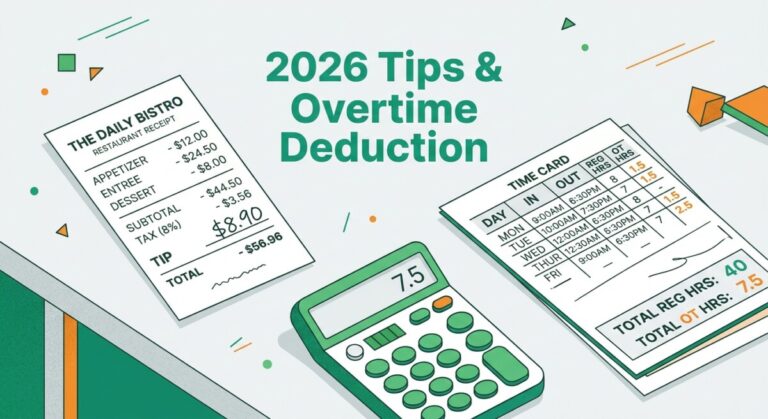
Tax laws are constantly evolving, and keeping up with them is tough. For instance, there are several new deductions and changes to certain credits for 2026. If you rely on what you did last year, you might make a costly error.
Taxpayers should make sure any deductions and credits are calculated correctly, and necessary documentation is provided. Common areas of confusion include the Earned Income Tax Credit (EITC), the Child Tax Credit, and the standard vs. itemized deduction choice. Making a mistake here doesn’t just delay your return; it could mean you get a much smaller refund than you actually deserve, or worse, you owe money you weren’t expecting to pay.
📝 Quick Check: Standard vs. Itemized
Always run the numbers both ways. Calculate your total deductible expenses (medical, state taxes, mortgage interest, charity).
General Rule: If your Total Itemized Deductions > Your Standard Deduction → Itemize! Otherwise, take the standard route to save time and lower audit risk.
6. The Final Stroke: Unsigned Returns ✍️
You’ve spent hours gathering documents, doing math, and double-checking everything. You print it out, mail it in, and… wait. Months go by. Why? Because you forgot to sign it!
An unsigned return is legally considered invalid by the IRS. It’s as if you never filed it at all. If it’s a joint return, both spouses must sign and date the form. One signature isn’t enough for a married couple filing jointly.
There are a few exceptions, of course. Exceptions may apply for members of the armed forces in a combat zone or other taxpayers who have a valid power of attorney (Form 2848) on file for a spouse who cannot sign due to medical reasons. But for the vast majority of us, grab a pen and sign the dotted line (or use your electronic PIN if e-filing)!
7. Lost in Transit: Incorrect Bank Account Information 🏦
You’ve done everything right, and you are expecting a nice refund. Taxpayers who are owed a refund should absolutely choose direct deposit. This is universally the fastest and safest way for them to get their money. No worrying about stolen mail or lost paper checks.
However, there is a massive catch: taxpayers need to make sure they use the correct routing and account numbers on their tax return. If you miss a single digit in your account number, your refund could be deposited into someone else’s account (which is a nightmare to retrieve), or more likely, the bank will reject the deposit. If the deposit is rejected, the IRS will eventually cut a paper check and mail it to the address on your return, delaying your money by several weeks.
🔢 Refund Delay Risk Estimator
Let’s see how at risk you are of a processing delay based on your filing habits.
8. The Ultimate Solution: Embrace E-Filing 💻
If you want to avoid almost all the headaches mentioned above, there is one simple solution: Stop using paper. Submitting tax returns electronically ensures significantly greater accuracy.
The e-file system, combined with modern tax preparation software, acts like a digital safety net. It automatically does the math for you, prompting you for missing information, and preventing you from submitting until crucial boxes (like your electronic signature and SSN) are filled out. Furthermore, the e-file system often detects common demographic errors instantly and rejects a tax return, sending it back to the taxpayer for correction on the spot.
This immediate feedback loop could reduce or entirely eliminate months of delays in processing a federal tax return. Plus, when combined with direct deposit, e-filing gets your hard-earned money back into your pocket faster than any other method.
Summary: Key Takeaways to Protect Your Refund 📝
Let’s wrap up everything we’ve discussed into a quick, easy-to-digest summary card you can mentally reference before you file.
Tax Filing Defense Checklist
Frequently Asked Questions ❓
Filing taxes might never be fun, but by dodging these common pitfalls, you can at least make it painless and keep your refund strictly on schedule. Double-check those numbers, verify those names, and always hit e-file if you can! Have you ever had a tax return delayed because of a silly mistake? Let’s commiserate—share your story in the comments below, or drop any lingering tax questions you might have! 😊