Wagering Losses 90% Limitation: OBBBA Section 165(d) and Slot Threshold
If you gamble — recreationally or professionally — your tax math just changed. The wagering losses 90% limitation introduced by OBBBA Section 70114(a) reduces the long-standing dollar-for-dollar offset that gamblers have relied on for decades. At the same time, the IRS is finally raising the slot machine W-2G reporting threshold from $1,200 (unchanged since 1977) to $2,000 with future inflation adjustments. Treasury’s Notice of Proposed Rulemaking REG-113229-25 implements both changes, and the comment period closes June 16, 2026.
At SW Accounting & Consulting Corp, we work with both casual and professional gamblers — including poker players, sports bettors, and high-volume slot players — who track their wins and losses for tax purposes. This guide breaks down what changed, how the math works in 2026 and beyond, and what to do before the comment deadline.
How did the wagering losses 90% limitation work before OBBBA? 🎰
Before OBBBA, IRC Section 165(d) allowed taxpayers who itemized to deduct wagering losses dollar-for-dollar against wagering gains — meaning if you won $50,000 and lost $50,000, you owed $0 in tax on the gambling activity (assuming you itemized).
The pre-OBBBA framework had three core rules:
- Losses limited to gains — a gambler could never claim a net loss for tax purposes; deductions could not exceed wagering gains.
- Itemizing required — wagering loss deductions are itemized; non-itemizers got no benefit.
- Per-session, not per-bet — gains and losses are calculated on a session basis (per casino visit), not transaction-by-transaction.
What does OBBBA change for wagering losses? 📉
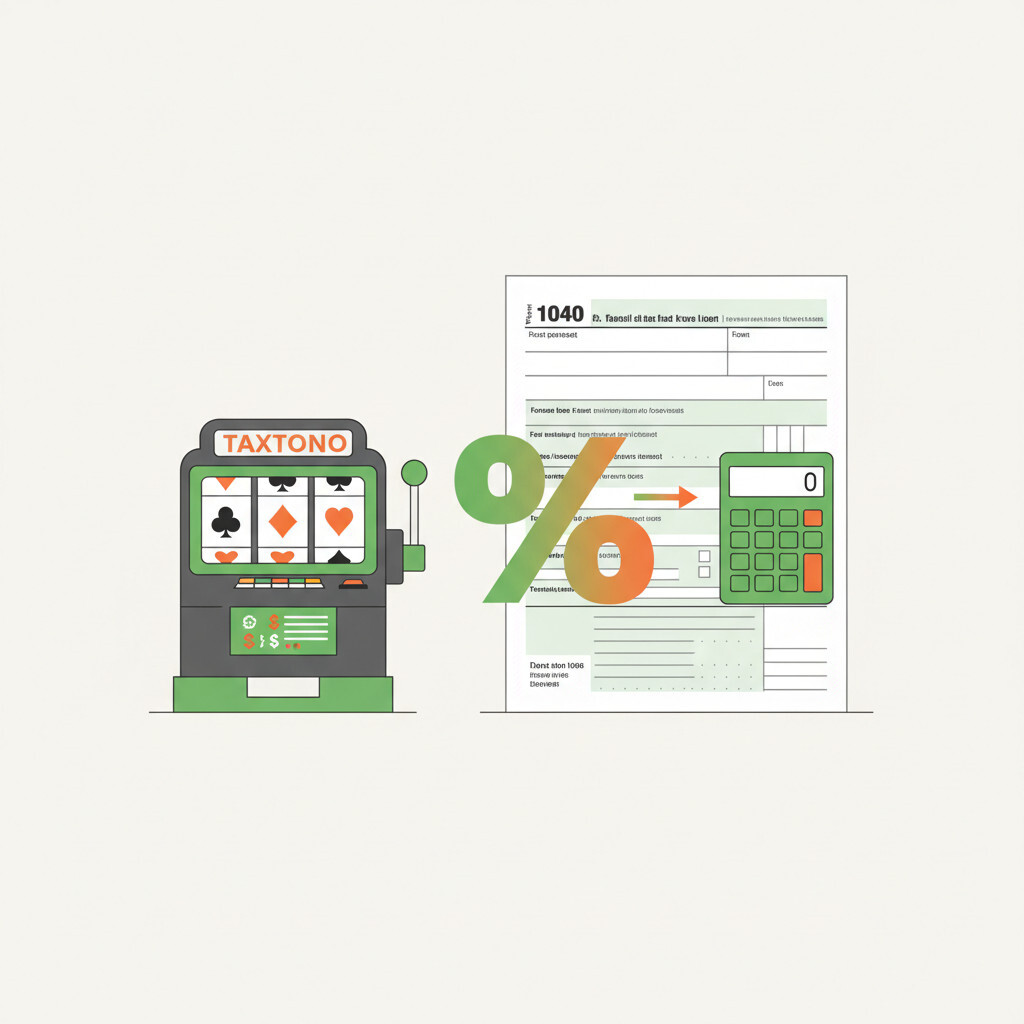
OBBBA Section 70114(a) limits wagering loss deductions to 90% of the amount lost during the year (and still only up to the amount of wagering gains) — meaning even break-even gamblers will owe tax on at least 10% of their wagering losses.
| Item | Pre-OBBBA | Post-OBBBA |
|---|---|---|
| Loss deduction cap | 100% of losses (up to gains) | 90% of losses (up to gains) |
| Net loss allowed | No | No |
| Spouses’ combined treatment | Combined | Combined per OBBBA conforming changes |
| Itemizing required | Yes | Yes |
A taxpayer wins $100,000 and loses $100,000 across 2026 sessions (perfectly break-even economics). Pre-OBBBA: $100,000 income offset by $100,000 itemized loss = $0 taxable. Post-OBBBA: $100,000 income offset by maximum 90% × $100,000 = $90,000 itemized loss = $10,000 taxable wagering income. At a 24% federal bracket, that’s a $2,400 tax bill on a break-even year — before state taxes.
What is the new $2,000 slot machine reporting threshold? 🎰
OBBBA also raised the information-reporting threshold for slot machine payouts from $1,200 to $2,000 — the first increase since 1977 — with future inflation adjustments built in.
This change has practical implications for both casinos and gamblers:
- Casinos issue fewer W-2G forms. The $1,200 threshold has been one of the most outdated dollar amounts in the Code — its real value has eroded from roughly $5,800 (in 2026 dollars) when set. The new $2,000 floor (with annual inflation adjustments) better reflects modern jackpot amounts.
- Less paperwork for moderate winners. Slot players who hit $1,200-$1,999 jackpots will no longer trigger an immediate W-2G hand-pay procedure, reducing casino floor disruption.
- Backup withholding regulations updated correspondingly. The NPRM also updates backup withholding rules to align with the new threshold.
- Reporting obligation unchanged for taxpayers. All wagering income is taxable regardless of whether the casino issues a W-2G. The threshold change affects information reporting, not tax liability.
Many recreational gamblers misunderstand W-2G as the trigger for taxability. It isn’t. If you receive $50 from a slot machine, that $50 is taxable income whether or not the casino reports it on a W-2G. The threshold change reduces paperwork; it does not reduce tax liability. Keep your own session log — date, casino, machine type, starting cash, ending cash — regardless of whether you receive a W-2G.
How should taxpayers track wagering losses going forward? 📋
Maintain a contemporaneous gambling diary documenting each session — the IRS expects this as primary substantiation, and the 90% limitation makes accurate tracking even more important since the lost 10% becomes taxable income.
For each gambling session, record:
- Date of the session.
- Location (casino name, online platform, sportsbook).
- Type of wagering (slots, blackjack, poker, sports betting, etc.).
- Buy-in or starting cash.
- Ending cash or cash-out amount.
- Net session result (gain or loss).
- Supporting documentation — W-2G forms, ATM withdrawal receipts, casino comp/tracking statements, online platform statements.
For online betting, save platform-generated annual statements which typically aggregate net results. Many sportsbooks now provide downloadable yearly summaries that satisfy IRS substantiation standards.
What about professional gamblers and Schedule C treatment? 💼
Professional gamblers report wagering activity on Schedule C, where the 90% limitation similarly applies — but the analysis interacts with self-employment tax and ordinary business expense deductibility.
For professional gamblers (those whose gambling activity rises to the level of a trade or business under Groetzinger and subsequent case law):
- Wagering gains and losses flow through Schedule C with the 90% limitation applied to losses.
- Other ordinary and necessary business expenses (travel, training, software, computer equipment, professional fees) remain fully deductible — these are not “wagering losses” subject to the 90% cap.
- Self-employment tax applies to net earnings from gambling activity.
- The pre-OBBBA full-loss-against-gains rule for professionals still effectively floors at zero (no net loss) plus now subject to the 90% cap on gross wagering losses.
How can taxpayers and professionals submit comments? 🗳
Treasury is accepting written comments through June 16, 2026. Submit electronically via the Federal eRulemaking Portal at Regulations.gov, indicating IRS and REG-113229-25.
Comments worth raising might include:
- Treatment of recreational vs. professional gamblers under the 90% limitation — clarification of how each category applies the rule on Schedule A vs. Schedule C.
- Combined-spouse wagering activity rules — particularly when only one spouse gambles or when filing separately.
- State conformity implications — many states automatically conform to federal §165(d), so state-level gambling tax exposure may shift.
- Slot threshold inflation methodology — what inflation index will be used and how rounding will be applied.
- Transition relief — any safe harbor for partially completed 2025 sessions or rollover scenarios.
Frequently Asked Questions 🗂
For the official NPRM and comment submission, see FederalRegister.gov and search for REG-113229-25, or submit comments at regulations.gov indicating IRS and the docket number. The IRS gambling income overview is at IRS.gov/taxtopics/tc419.
Need help with gambling income substantiation, professional gambler classification, or wagering loss documentation? SW Accounting & Consulting Corp’s tax team works with recreational and professional gamblers — book a consultation.