
Independent Contractor Classification 2026: DOL Rule Change
The Department of Labor has just shaken up the gig economy landscape again. If your business relies on freelancers, 1099 workers, or independent contractors, the new independent contractor classification 2026 proposed rule demands your immediate attention. At SW Accounting & Consulting Corp, our Los Angeles CPA team has been fielding dozens of calls from worried business owners since the announcement. Here is our breakdown of what changed, what it means, and what steps you should take right now.
The DOL’s Wage and Hour Division published a Notice of Proposed Rulemaking that would repeal the Biden administration’s 2024 final rule on classifying workers under the Fair Labor Standards Act. In its place, the agency proposes a new framework similar to the 2021 rule. The comment period closes on April 28, 2026.
What Is the Economic Reality Test and Why Does It Matter for Independent Contractor Classification 2026?
The economic reality test determines whether a worker is an employee or an independent contractor under federal wage and hour laws.
Unlike the IRS common-law control test used for tax purposes, this test asks: Is the worker economically dependent on the hiring entity, or truly in business for themselves? The answer determines entitlement to minimum wage, overtime pay, family leave protections, and other employee benefits under the FLSA, FMLA, and MSPA.
How Does the Proposed Rule Differ from the 2024 Biden-Era Rule?
The 2026 rule elevates two “core factors” above the rest, making outcomes more predictable when both factors align.
The Biden 2024 rule treated all six economic reality factors as roughly equal (“totality of circumstances”). The new proposal prioritizes:
- The nature and degree of control over the work. Does the hiring entity dictate how, when, and where work is performed?
- The worker’s opportunity for profit or loss based on initiative or investment. Can the worker earn more by exercising entrepreneurial judgment?
When both core factors point the same direction, the classification is expected to be straightforward. Additional factors — skill level, permanence, integrated production unit, and actual practice vs. contract terms — become relevant primarily when core factors conflict.
| Feature | 2024 Biden Final Rule | 2026 Proposed Rule |
|---|---|---|
| Framework | All factors equal weight | Two core factors elevated |
| Predictability | Less predictable | More predictable when core factors align |
| Contract vs. Practice | One factor among many | Emphasized: actual practice controls |
| Statutes Covered | FLSA only | FLSA, FMLA, MSPA |
CPA Expert Insight:
At SW Accounting & Consulting Corp, we advise clients to pay close attention to the “actual practice vs. contract” factor. We have seen many businesses draft pristine independent contractor agreements only to manage those workers like employees in daily practice. If there is a disconnect between your contracts and operational reality, the DOL will look at what actually happens — not what your legal documents say. This is where audit exposure is highest.
What Should Business Owners Do Right Now to Prepare?
Even though this is still a proposed rule, waiting is a strategic mistake. Here is our recommended action plan:
1. Audit your current worker classifications. Pull every 1099 relationship and test it against both the current and proposed frameworks. Identify gray areas where control and profit/loss factors point in different directions.
2. Review contracts against actual practice. The single most common problem we find. Your contract may say the worker sets their own schedule, but if managers assign shifts or require attendance at mandatory meetings, that disconnect works against you.
3. Document worker autonomy and entrepreneurial investment. Build a paper trail: ability to take other clients, investment in own tools, control over methods, ability to negotiate rates.
4. Consult both a CPA and an employment attorney. Worker classification sits at the intersection of tax law, labor law, and employment law. A misclassification can trigger IRS Section 530 penalties, DOL back-wage claims, California AB5 penalties, and private lawsuits.
5. Model the cost of voluntary reclassification. It is almost always cheaper to reclassify proactively than to be forced by audit. We help clients model the true cost including payroll taxes, benefits, workers comp, and overhead.
Comment Period Closes April 28, 2026
The DOL is accepting public comments for 60 days. If you are a business owner or stakeholder who wants your voice heard before the final rule is drafted, submit comments through the federal rulemaking portal. Visit the DOL Wage and Hour Division website for details.
How Does This Affect California Businesses Specifically?
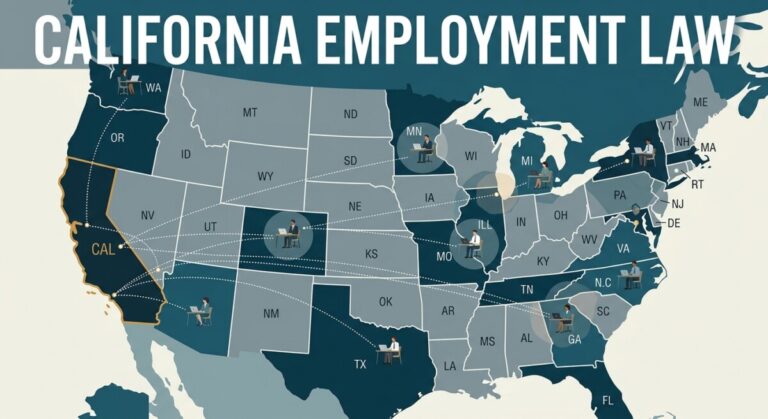
California already applies the stricter AB5 ABC test, which presumes a worker is an employee unless the hiring entity proves all three prongs. The federal proposed rule does not preempt state law — you must comply with both. For Los Angeles businesses, this dual compliance environment means testing worker relationships against both frameworks simultaneously. At our firm, we run both analyses for clients so there are no surprises from either direction.
Labor Secretary Chavez-DeRemer framed the proposed rule as protecting genuine independent contractors’ entrepreneurial spirit while maintaining FLSA worker protections.
Frequently Asked Questions
Disclaimer: This article is for informational purposes only and does not constitute legal or tax advice. Worker classification involves complex federal and state law interactions. Consult a qualified CPA and employment attorney for your specific situation.