
Headline card 'FinCEN BOI Final Rule' over a stack of U.S. corporate formation documents
|

Do I still need to file a FinCEN BOI report? (2026)

Do I still need to file a FinCEN BOI report in 2026? Almost certainly not — if your company was formed in a U.S. state. The FinCEN BOI final rule (effective August 14, 2026) exempts every domestic reporting company and every U.S. person beneficial owner from BOI reporting. Only foreign entities registered to do business…
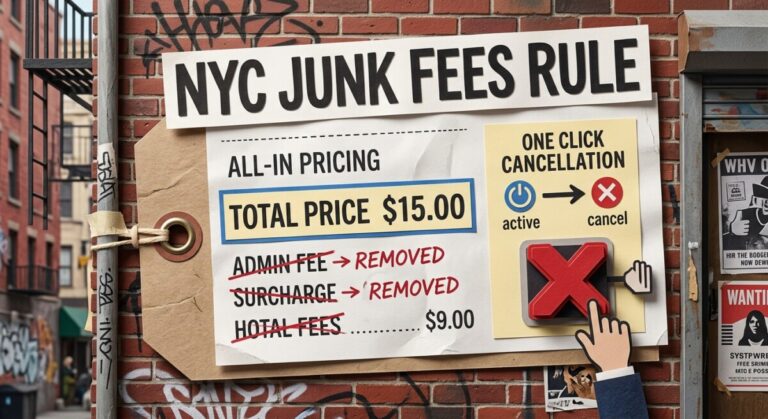
Editorial illustration of the NYC junk fees rule — all-in pricing and one-click subscription cancellation for New York City consumers
|

NYC Junk Fees Rule: Does It Apply to My Business? (2026)

Does the new NYC junk fees rule apply to my business? If you sell goods or services in New York City — whether food delivery, tickets, hotels, gyms, or SaaS subscriptions — likely yes. The city’s new NYC junk fees rule and its final Click-to-Cancel rule change how you must price and how easily customers…

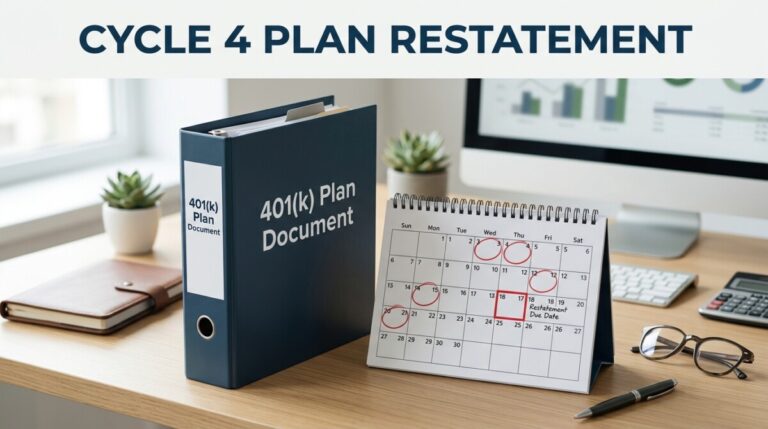
Cycle 4 plan restatement deadline — a 401(k) plan document binder beside a calendar marking September 30, 2028
|

Cycle 4 Plan Restatement Deadline: When Must You Adopt?

When is the Cycle 4 plan restatement deadline? The IRS set it at September 30, 2028. If your business sponsors a pre-approved 401(k) or profit-sharing plan, you must adopt the newly updated plan document by that date. The Cycle 4 plan restatement keeps your plan’s tax-qualified status intact. If your company offers a 401(k), profit-sharing,…

Foreign importer of record — cargo containers at a US port under tighter customs enforcement
|

Foreign Importer of Record: What EO 14411 Changes in 2026

Can a nonresident company still act as a US importer of record under the 2026 customs executive order? Yes, but on stricter terms. Executive Order 14411 of June 3, 2026 directs CBP to tighten eligibility, bonding, and disclosure rules for importers of record, with the strictest measures aimed at the foreign importer of record model….

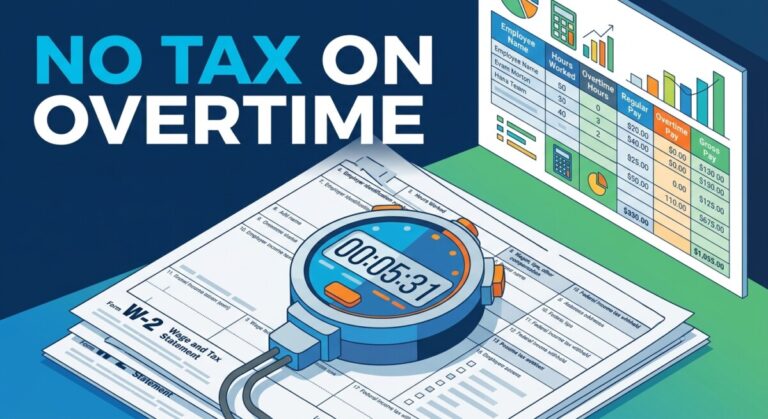
Illustration of the no tax on overtime deduction — a stopwatch on top of a Form W-2 with a payroll spreadsheet
|

No Tax on Overtime Deduction: How Much Can You Claim?

How much of my overtime pay is actually tax-free? Less than most workers think. The new no tax on overtime deduction is capped at $12,500 (single) or $25,000 (joint), phases out above $150,000 MAGI, and applies only to the FLSA overtime premium — not the entire overtime paycheck. On August 6, 2026 the IRS released…

Illustration of a parent with newborn beside a small-business owner reviewing paid family leave credit benefits
|

Do You Qualify for the Paid Family Leave Credit? (2026)

Does my business qualify for the new paid family leave credit? If you pay wages during qualifying leave — or pay premiums for a PFML insurance policy — you likely do. The paid family leave credit is now permanent under the Working Families Tax Cuts, and IRS Notice 2026-28 (Aug. 5, 2026) explains how to…

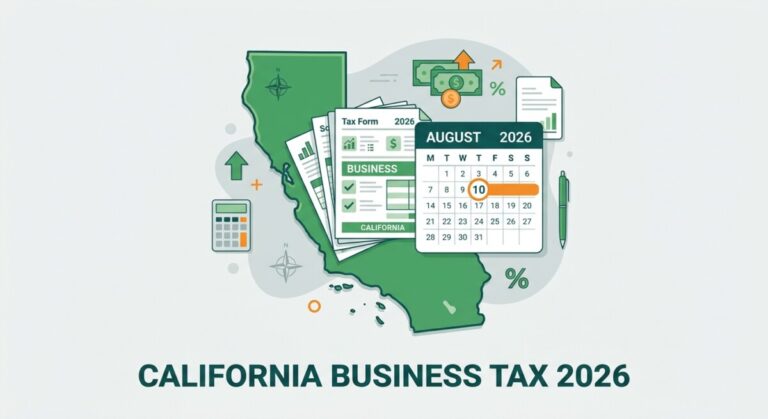
California outline over tax documents and a calendar highlighting the August 10, 2026 CCTC deadline
|

California Business Tax 2026: SB 122, SB 180 & CCTC

What changed for California business owners in 2026? The California business tax 2026 package brings SB 122 and SB 180 — extending the business credit limitation, cutting the first-year annual tax to $400 for many new entities, and stretching the California Competes Tax Credit through 2035. And the next CCTC application window closes on August…

Illustration comparing estate tax vs inheritance tax — a home passed from an older hand to a younger hand with a will document and a US map
|

Estate Tax vs Inheritance Tax 2026: Who Pays and When

Estate tax vs inheritance tax — who actually pays, and when? The estate tax vs inheritance tax distinction is simple in principle: the estate pays estate tax before assets are distributed; the beneficiary pays inheritance tax after they receive them. In 2026 the federal estate tax exemption sits at $15 million per person (IRS Rev….

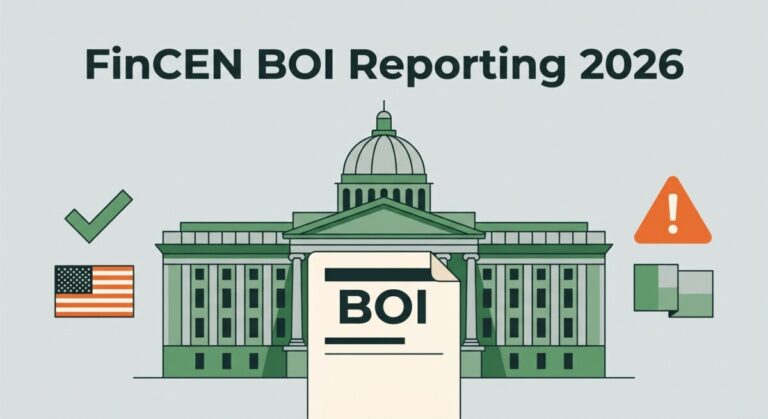
Illustration of FinCEN BOI reporting in 2026 — a Treasury building with a BOI document, a green check on a U.S. flag and an orange warning on a foreign flag
|

FinCEN BOI Reporting 2026: Interim Final Rule Update

Do U.S. small businesses still have to file BOI with FinCEN in 2026? Not right now. Under Treasury’s March 2025 interim final rule, FinCEN BOI reporting applies only to foreign reporting companies. Domestic entities and U.S. citizens are exempt while FinCEN works to finalize the rule. The Corporate Transparency Act was supposed to be one…

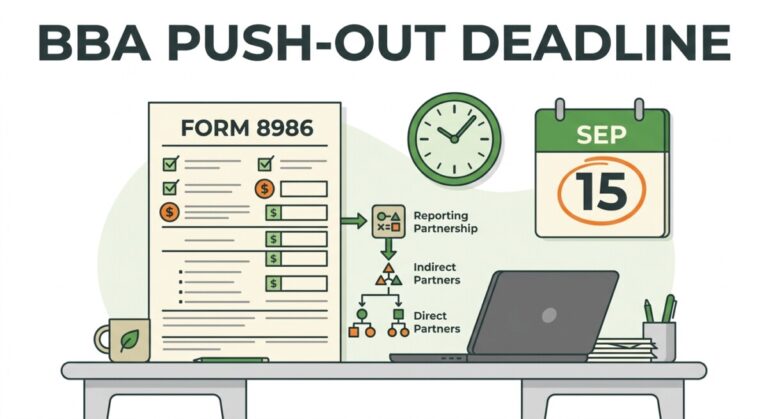
Illustration of an IRS Form 8986 with a September 15 deadline calendar and a partnership tier flow chart
|

BBA Partnership Audit 2026: Form 8986 Push-Out Deadline

When is the BBA partnership push-out deadline for a pass-through partner? If you received a Form 8986 tied to a partnership that filed an Administrative Adjustment Request (AAR) or was audited under the BBA partnership audit regime, the deadline to pay or push out further is generally September 15, 2026 — the exact date is…

Illustration of closing a California business entity — closed office door, CA flag, final tax forms
|

Close California Business Entity 2026: FTB + SOS Guide

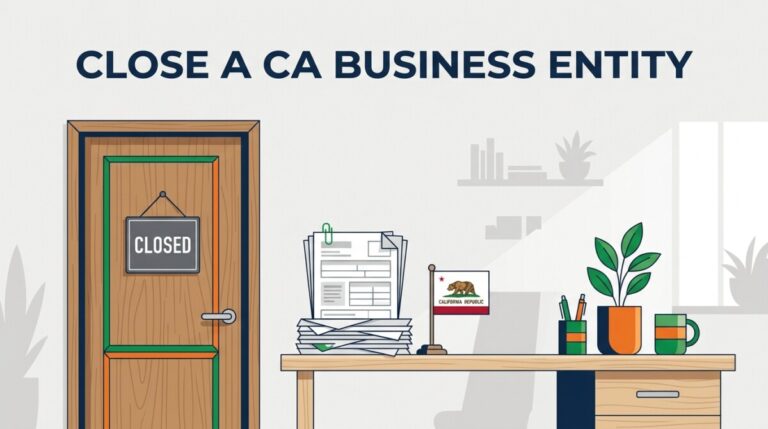
How do I close a California business entity so the $800 franchise tax stops? You must complete two parallel filings — a final tax return with the Franchise Tax Board (FTB) and a dissolution, surrender, or cancellation with the Secretary of State (SOS) — within 12 months. Missing either one keeps the entity legally alive…

Illustration of pass-through entity tax planning in 2026 — a US map, state connections, and tax filings representing PTET SALT cap workaround analysis
|

Pass-Through Entity Tax 2026: SALT Cap Workaround Guide

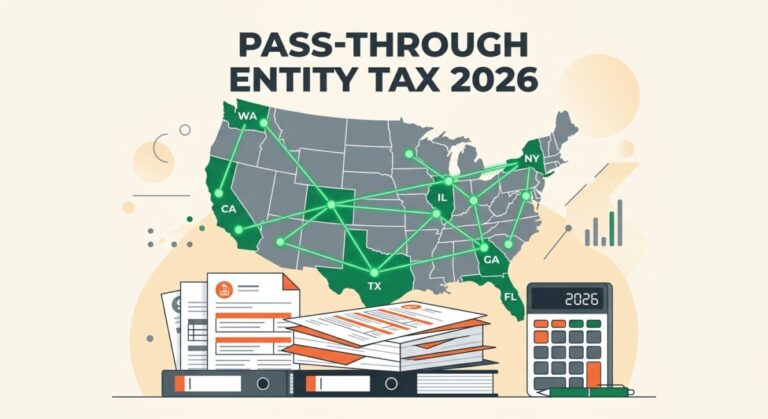
Is the pass through entity tax election still worth it after the higher SALT cap? For many owners of profitable pass-throughs in high-tax states, the answer is still yes — but the analysis is now owner-level, state-specific, and no longer automatic. The pass through entity tax (PTET) survived the 2025 SALT cap increase; the decision…

Illustration of an EIN verification letter being downloaded from the IRS Business Tax Account on a laptop
|

EIN Verification Letter: Download from IRS Business Tax Account

How do I get an EIN verification letter without calling the IRS? Designated officials on your IRS Business Tax Account can now log in and download an EIN verification letter instantly — no more calling and waiting weeks for Letter 147c in the mail. If you have ever tried to open a business bank account,…

Illustration of Foreign Filer TCC 2026 — a world map with an arrow flowing from an overseas building into a U.S. tax form
|

Foreign Filer TCC 2026: IRS Path as FIRE Retires

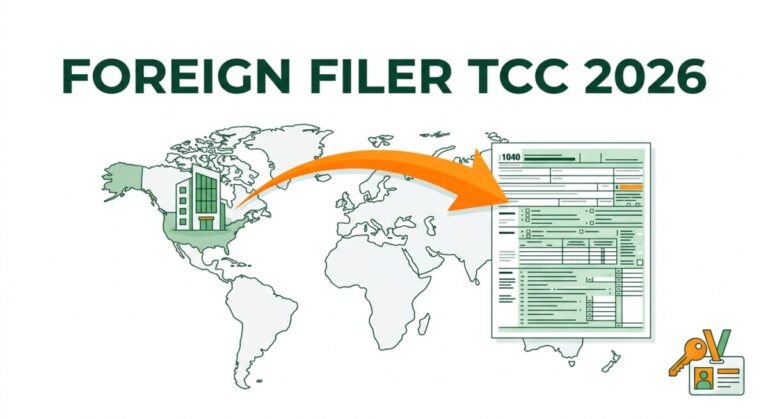
How do foreign entities e-file 1042-S and 1099 forms after FIRE is retired? Through the new IRS Foreign Filer TCC Registration System. It gives foreign filers whose authorized users have no U.S. SSN or ITIN a way to obtain a Transmitter Control Code and transmit information returns electronically through IDES. The way U.S. information returns…

Illustration of CRAT listed transactions — a charitable trust document with a caution shield and magnifying glass over an IRS envelope
|

CRAT Listed Transactions: IRS Final Rule July 2026

Are all Charitable Remainder Annuity Trusts still safe to use? Yes — but a specific subset just became a reportable tax shelter. On July 8, 2026, Treasury and the IRS issued final regulations naming certain CRAT listed transactions, requiring participants and material advisors to disclose them or face penalties. Charitable Remainder Annuity Trusts have long…

Illustration of a small business owner paying a summer seasonal employee alongside a Form 941 and a summer calendar
|

Hiring Seasonal Employees: 2026 Payroll Tax Guide

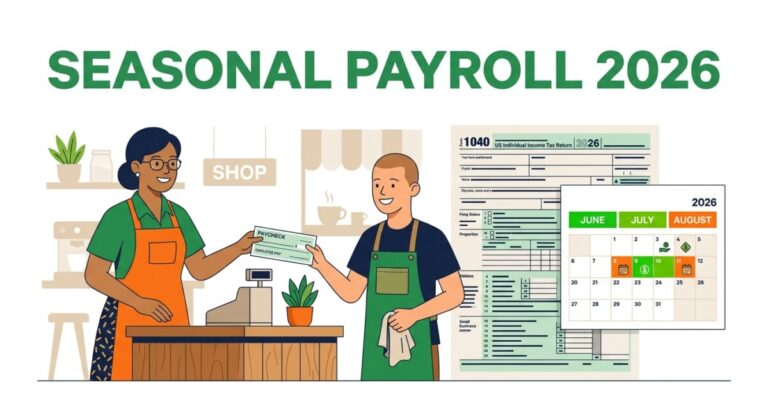
Do seasonal and part-time workers change my payroll tax obligations? No — hiring seasonal employees does not create a lighter set of federal payroll rules. Wages paid to summer, holiday, and part-time help are subject to the same federal income tax withholding, Social Security, and Medicare taxes as wages paid to your full-time staff. The…

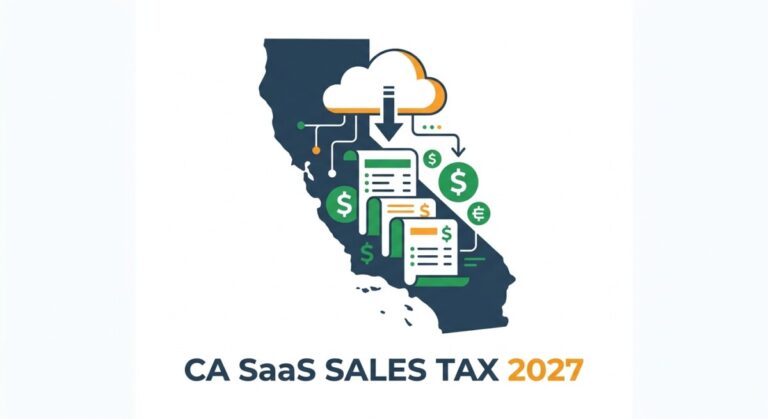
Illustration of the California SaaS sales tax under SB/AB 122 — a state outline with a cloud icon over a stack of receipts, green and orange accents
|

California SaaS Sales Tax 2027: SB/AB 122 Guide

Update — September 26, 2026: SB 122 was signed on June 29, 2026 (Stats. 2026, ch. 23), and the California Department of Tax and Fee Administration (CDTFA) confirmed in Special Notice L-1036 (September 2026) that sales and use tax applies to digital products, including SaaS, beginning January 1, 2027. The original article below, published July…

Illustration of OBBBA state conformity — a US map split into green and orange puzzle pieces over tax documents
|

OBBBA State Conformity 2026: Does Your State Follow?

Does my state follow the new federal OBBBA tax breaks? Not automatically. OBBBA state conformity varies widely — some states adopt the new federal rules on R&D expensing, bonus depreciation, and Section 179, while others decouple. A deduction you claim on your federal return may be added right back on your state return. The One…

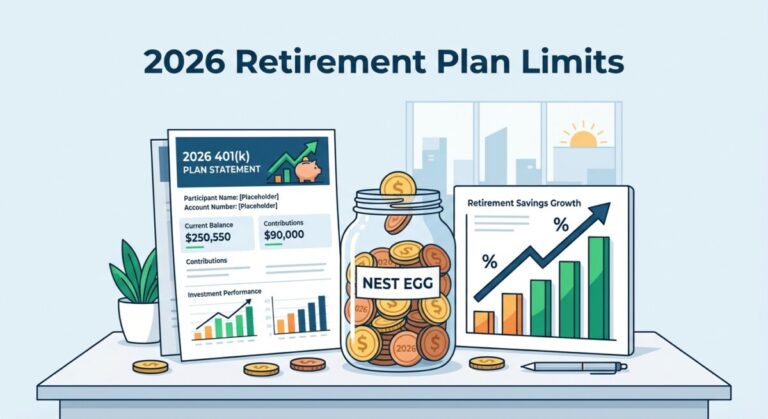
Illustration of 2026 retirement plan limits — a coin-filled nest egg jar, a rising chart, and a 401(k) statement
|

2026 Retirement Plan Limits: 401(k), Catch-Up & Roth

What are the 2026 retirement plan limits? The 401(k) elective deferral limit rises to $24,500, the age-50 catch-up to $8,000, and a new “super catch-up” lets employees aged 60–63 add $11,250. The 2026 retirement plan limits also bring a major SECURE 2.0 change: high earners must now make catch-up contributions as Roth. If you sponsor…

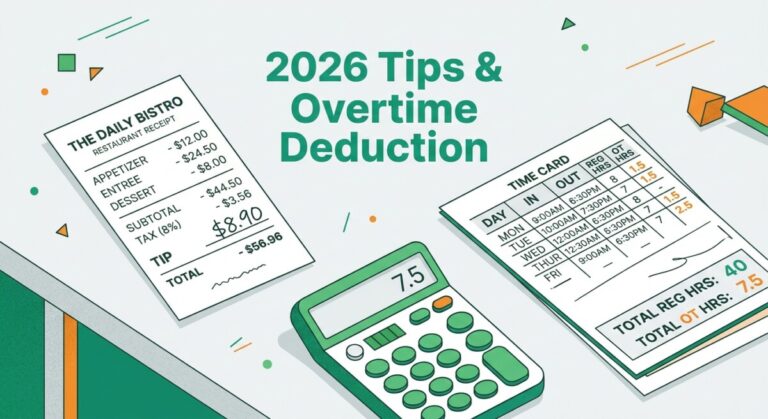
Illustration of the 2026 tips and overtime deduction — a tipped receipt, an overtime time card, and a calculator
|

Restaurant Tip Payroll 2026: Withholding, Form 8027 and the FICA Tip Credit

What are the new 2026 tips and overtime deduction rules for employers? For tax years 2025 through 2028, employees can deduct up to $25,000 of qualified tips and up to $12,500 of qualified overtime pay ($25,000 for joint filers). The tips and overtime deduction is claimed on the employee’s return, but it creates new payroll…

Illustration of pooled employer plan PEP 401k vs state auto-IRA mandate — small employer retirement compliance and fiduciary delegation
|

Pooled Employer Plan vs State Auto-IRA: PEP 401(k) Guide for Small Employers

How does a Pooled Employer Plan (PEP) compare to a state-mandated auto-IRA? A Pooled Employer Plan is a multi-employer 401(k) structure that satisfies state retirement mandates while offering meaningful advantages over state-sponsored auto-IRAs: $24,500 contribution limit (vs. $7,500 IRA), employer matching, institutional-quality investments, and fiduciary shift to the Pooled Plan Provider. For most small employers,…

Illustration of construction revenue recognition methods — percentage of completion vs completed contract for contractors
|

Construction Revenue Recognition: PCM vs CCM Methods Explained

What are the construction revenue recognition methods and when does each apply? Construction contractors choose between the percentage of completion method (PCM) — recognizing revenue proportionally as work progresses — and the completed contract method (CCM) — deferring all revenue until substantial completion. PCM is mandatory for long-term contracts held by companies with average annual…

Illustration of cannabis 280E rescheduling — Schedule III medical cannabis tax change and MSO allocation impact
|

Cannabis 280E Rescheduling: Schedule III Medical Cannabis Tax Impact

What does cannabis Schedule III rescheduling mean for IRC Section 280E? The DOJ and DEA’s April 23, 2026 order rescheduling medical cannabis from Schedule I to Schedule III removes it from § 280E’s deduction prohibition — potentially cutting cannabis operators’ effective tax burden from 50-60% of operating income to closer to normal corporate rates, and…

Section 127 educational assistance employer tuition benefit featured
|

Section 127 Educational Assistance Programs: $5,250 Employer Tuition Benefit

What is a Section 127 educational assistance program and how much can employers provide tax-free? Section 127 of the Internal Revenue Code allows employers to exclude up to $5,250 per calendar year per employee from gross income for educational assistance — covering tuition, fees, books, supplies, and (through December 31, 2025, unless extended) qualified student…

Erc disallowance form 907 irs extension 2026 featured
|

ERC Disallowance Form 907 Extension: New IRS Streamlined Process 2026

What is the new ERC disallowance Form 907 extension process? The IRS announced on April 27, 2026 (IR-2026-58) a streamlined way for taxpayers facing the 2-year refund-suit deadline after an Employee Retention Credit disallowance (Letter 105-C or 106-C) to submit Form 907 via the IRS Document Upload Tool — extending administrative review time and preserving…

Government grants accounting us gaap featured
|

Government Grants Accounting: US GAAP Treatment and Disclosures

How should businesses account for government grants under US GAAP? US GAAP has no comprehensive standard for business government grants, so entities apply an accounting policy by analogy — typically IAS 20 (deferred income or net asset reduction), ASC 958-605 contribution model, or revenue recognition — and now must comply with ASU 2024-04’s enhanced disclosure…

State tax updates april 2026 obbba conformity featured
|

State Tax Updates April 2026: OBBBA Conformity, PTET, R&D Credits

What are the most important state tax updates April 2026? Multiple states moved on OBBBA conformity (Oregon, Maine, Kentucky, New Mexico), Maine created a new PTET and 2% high-income surcharge, Wisconsin extended R&D credit carryforwards to 50 years, Kentucky added a 14.25% prediction-market excise, and Washington’s new 9.9% personal income tax on income over $1M…