How does the IRS appeal process work? (2026 guide)
Getting a letter from the IRS that says you owe more tax — or that a deduction is denied — is stressful, but it is not the end of the road. If you disagree with an IRS determination, you can request an independent review through the IRS appeal process. That right is one of the ten fundamental protections in the Taxpayer Bill of Rights, and the office that handles those reviews, the Independent Office of Appeals, is designed to be structurally separate from the IRS office that examined your return.
At SW Accounting & Consulting Corp, we walk Los Angeles taxpayers and small-business owners through appeals every filing season. Most people never file one because they do not realize how the process works or how to trigger it correctly. Here is a plain-English guide to what Appeals does, how to request a conference, and what happens once your case is in front of an Appeals officer.
What is the IRS Independent Office of Appeals? ⚖️
Appeals is a separate function inside the IRS whose only job is to resolve disputes between taxpayers and other IRS offices without going to court.
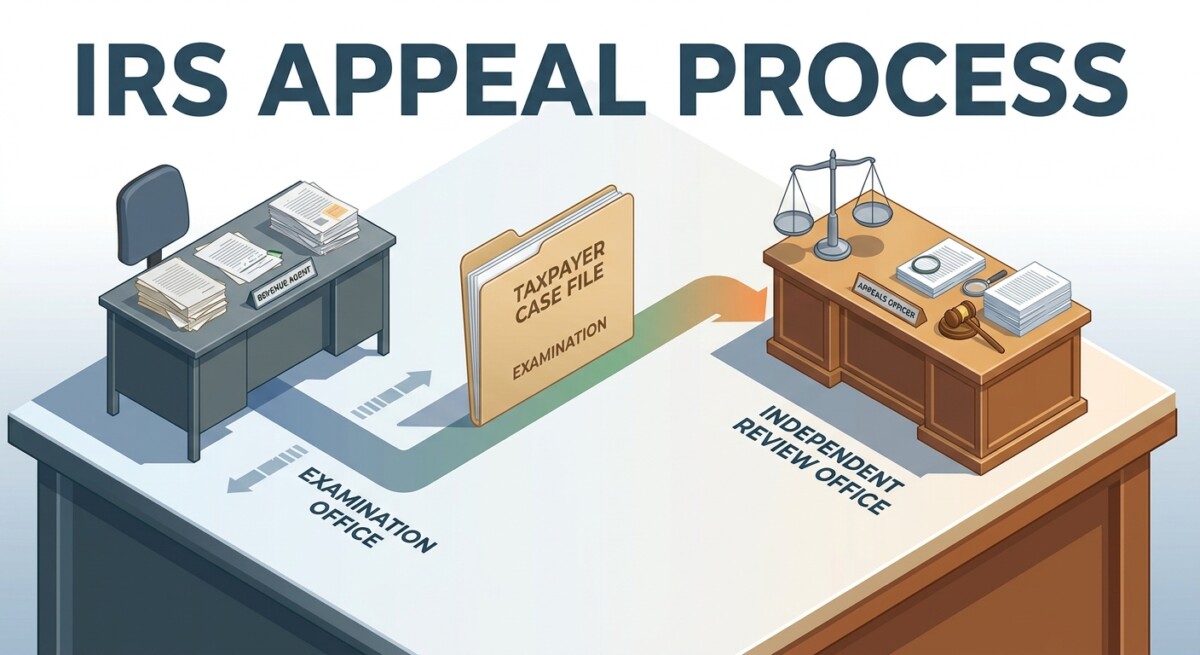
The Independent Office of Appeals reports directly to the IRS Commissioner and is walled off from the examination, collection, and other compliance functions. That structural independence is what makes an Appeals conference different from calling the office that sent your notice. Appeals officers do not audit and do not collect — they review the facts and the law and try to settle the disputed issues fairly. The IRS Appeals overview spells out the scope.
Because Appeals is independent, an officer is expected to weigh the hazards of litigation — how likely the IRS is to prevail if the case went to court — and can offer a compromise when the law or facts are unclear. That is a very different posture from the office that first proposed the adjustment.
How does the IRS appeal process actually work? 📝
You must request an appeal in writing and send it to the IRS office that issued the letter — not directly to Appeals.
Follow the sequence the IRS lays out:
- Read the letter carefully. The notice that gave you appeal rights explains what the disputed items are, the deadline to respond, and where to mail the request. Miss the deadline and you can lose the administrative option.
- Prepare a written protest or small-case request. The IRS explains the required contents on its Preparing a Request for Appeals page and in Publication 5. Include your name, address, taxpayer ID, the tax periods, the items you disagree with, and the facts and law that support your position.
- Mail the request to the IRS office that sent the letter. Do not send it directly to Appeals — that will slow the case and can keep Appeals from considering it. The originating office will try to resolve the issues first; if it cannot, it forwards the case to Appeals.
- Wait for the Appeals officer to contact you. Once Appeals receives the case, an officer will send a letter proposing a conference date. If you have not heard within 120 days, contact the IRS office you worked with last for a status update.
What happens at the Appeals conference itself? 🎥
Conferences can be conducted by phone, video, mail, or in person — you choose the format that works best.
Appeals has expanded access to video conferences and secure digital document exchange, which for most taxpayers is faster than mailing paper. During the conference the Appeals officer reviews the facts, the law, and the information both sides provide. They will explain the reasoning behind the decision and lay out the options.
Appeals will not raise new issues that were not part of the original examination and will not reopen items both sides already agreed to, except in cases of potential fraud. If you submit new information the original office did not review, Appeals may send the case back for that office to consider before Appeals rules.
How does an IRS appeal typically end? 🔚
An Appeals case usually ends one of three ways: the IRS position is upheld, the taxpayer’s position is sustained, or the officer proposes a compromise.
- IRS position upheld. If the facts and law clearly support the IRS, the adjustment stands.
- In the taxpayer’s favor. If the facts and law support your position — or courts have ruled for taxpayers in similar cases — the adjustment is dropped.
- Compromise. If the facts or the law are unclear, or courts have split on similar cases, the officer can propose a compromise: you pay part of the disputed tax and the rest is dropped.
Are there faster alternatives to a full Appeals conference? ⚡
Yes — the IRS offers several Appeals mediation programs that can resolve certain disputes without a full conference.
Programs such as Fast Track Settlement and post-Appeals mediation use a neutral IRS mediator to help both sides reach an agreement. They are voluntary, non-binding, and generally faster than the standard track. They are especially useful when the disagreement is factual (for example, valuation or reasonable cause) rather than a pure legal dispute. Whether a case qualifies depends on the type of examination, the amount in dispute, and where the case sits in the IRS pipeline.
IRS appeal process — at a glance 📊
| Step | What you do | Watch item |
|---|---|---|
| 1. Read the notice | Identify the deadline and appeal rights | Missing the response deadline forfeits the administrative option |
| 2. File a written request | Follow Publication 5 format | Tie each disputed item to facts and Code sections |
| 3. Mail to the originating office | Not directly to Appeals | Wrong address delays the case |
| 4. Appeals contacts you | Officer proposes a conference date | If nothing after 120 days, check status |
| 5. Conference | Phone, video, mail, or in person | New information may bounce case back to original office |
📌 Key Takeaways
- Every taxpayer has the right to an independent review of an IRS decision.
- Requests must be in writing and mailed to the office that sent the notice — not to Appeals directly.
- Conferences can be by phone, video, mail, or in person; the format is your choice.
- Cases usually end in upheld, taxpayer favor, or compromise; mediation programs can settle certain disputes faster.
Frequently Asked Questions ❓
Q. Who can use the IRS appeal process?
Any taxpayer who receives an IRS letter granting appeal rights can request a review by the Independent Office of Appeals. Individual filers, small businesses, and large corporations all use the same basic process, though the format of the written request (small-case request versus a formal protest) depends on the amount in dispute and the type of case.
Q. Where do I send my appeal request?
Mail your written request to the IRS office that issued the letter — the address is printed on the notice itself. Sending it directly to the Independent Office of Appeals will only delay the case and may prevent Appeals from considering it.
Q. How long does the IRS appeal process take?
Timing varies with the type of case and Appeals’ workload. The IRS asks that you allow at least 120 days after your request before checking status. Complex cases can take longer; mediation programs are generally faster.
Q. Can I appeal by video conference instead of in person?
Yes. Appeals has expanded access to video conferences and secure digital document exchange, and you can choose from phone, video, mail, or in-person formats. Video is typically the fastest option for most taxpayers.
Q. Does going to Appeals stop interest from accruing?
No. Interest continues to accrue on any unpaid tax while the case is pending. Some taxpayers choose to make a deposit to stop interest on the disputed amount; discuss the mechanics with your CPA before deciding.
Q. What if Appeals rules against me?
If Appeals sustains the IRS position, you generally still have the right to petition the U.S. Tax Court or, after paying the tax, sue for a refund in U.S. District Court or the Court of Federal Claims — provided you preserve the correct procedural steps and deadlines.
A well-prepared protest is often the difference between a full adjustment and a favorable settlement. If you have received an IRS letter you disagree with, contact SW Accounting & Consulting Corp before your response deadline. Primary sources: IRS Independent Office of Appeals, Publication 5, and the Taxpayer Bill of Rights.