Do You Qualify for the Paid Family Leave Credit? (2026)
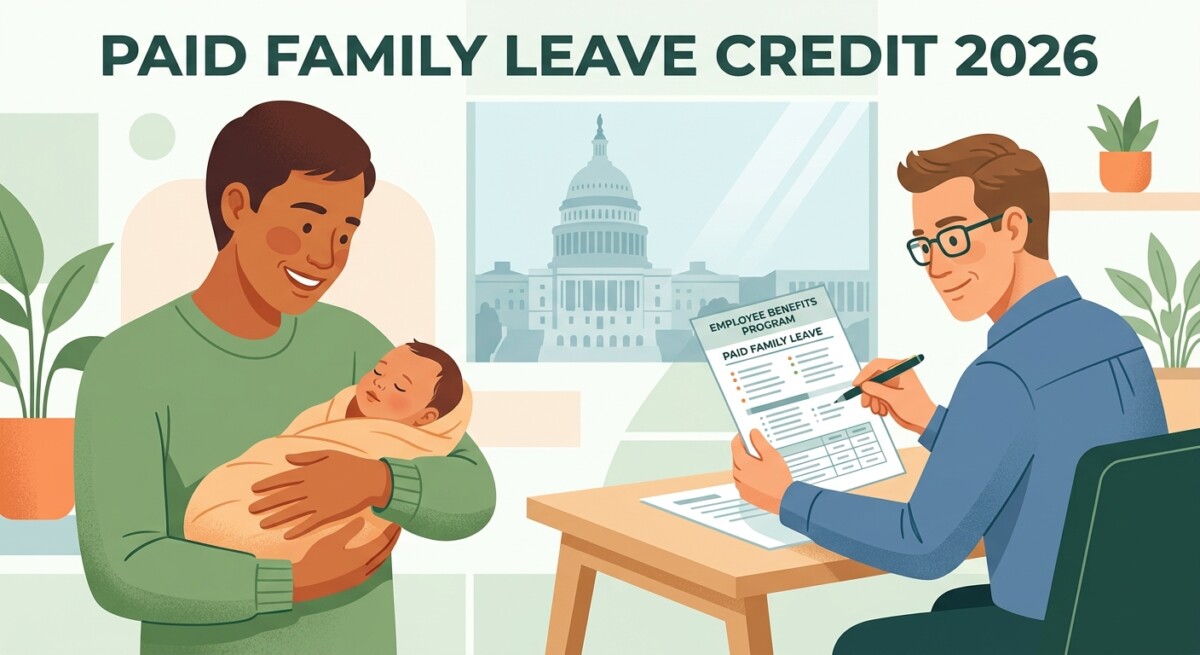
For years, the employer credit for paid family and medical leave (PFML) under Internal Revenue Code §45S has lived on a series of short-term extensions — useful, but hard to build a benefits program around when it was set to expire. That just changed. The Working Families Tax Cuts (WFTC) made the paid family leave credit permanent, expanded who qualifies, and — for the first time — lets employers claim the credit for PFML insurance premiums, not only wages paid during leave. The IRS released the interim guidance in IR-2026-86 and Notice 2026-28 on August 5, 2026.
At SW Accounting & Consulting Corp, we work with restaurant groups, dental and medical practices, and multi-location small businesses in Los Angeles — the exact employers most likely to leave this credit on the table because §45S sounded temporary and the paperwork sounded painful. It is neither, anymore. Here is what changed, who qualifies, how the wage method compares to the new premium method, and what to do before your next payroll run.
What is the §45S paid family leave credit — and what changed in 2026? 🧾
It is a federal general business credit for employers that pay employees during qualifying family and medical leave. Under the WFTC, it is permanent, eligibility is broader, and starting in 2026 you can also claim it based on insurance premiums.
The core credit is not new — IRC §45S has offered a credit equal to 12.5% to 25% of wages paid during up to 12 weeks of qualifying family or medical leave per employee per taxable year. What the Working Families Tax Cuts changed is the shape and durability of the benefit. Per the IRS release, the WFTC:
- Makes the credit permanent. No more waiting on Congress to extend it every couple of years.
- Broadens who counts as a qualifying employee. An employee is now eligible after only six months of service, and part-time employees who customarily work 20 or more hours per week can now count.
- Adds an insurance-premium method. Beginning in 2026, employers may claim the credit for premiums paid for PFML insurance policies, in addition to (or instead of) wages paid during leave.
- Clarifies state/local mandates. Leave provided under state or local mandates can count toward eligibility, but not toward the calculation of the federal credit.
Which employers and employees actually qualify? ✅
Any employer with a written PFML policy that meets the §45S rules can claim the paid family leave credit — and, under the WFTC, more of your workforce now counts.
To claim the credit, an employer must have a written policy that provides at least two weeks of paid family and medical leave annually to qualifying full-time employees (pro-rated for part-time) at a rate of at least 50% of normal wages. Leave must be for one of the FMLA-style reasons — recovering from a serious health condition, caring for a family member with a serious health condition, birth or adoption bonding, certain military-family needs.
Under the expanded rules:
- Six-month service threshold. Previously an employee generally needed a year of service; the WFTC shortens this to six months, letting newer hires count.
- Part-time inclusion. Employees who customarily work at least 20 hours per week can now be qualifying employees. That is a significant change for restaurants, retail, and multi-location practices where a large share of the workforce is part-time.
- Small-employer friendliness. The credit remains a general business credit, so it flows through partnerships and S corporations, and unused amounts carry back one year and forward up to 20.
Wage method vs. premium method: how do I claim the credit in 2026? 📊
Notice 2026-28 lets employers elect between the traditional wage-based method and the new premium-based method — and explains how to allocate premiums when the policy covers ineligible leave too.
Historically the paid family leave credit was calculated on wages paid to an employee while on qualifying leave. That still works. Starting in 2026, if you fund PFML through an insurance policy, you can instead calculate the credit on the qualifying premiums paid. That matters for two practical reasons: (1) premium-based benefits often produce a steadier annual credit than wages that spike only when someone actually takes leave, and (2) employers with insured plans no longer need to reconstruct leave-day payroll records to claim the credit.
What should employers do right now to secure the paid family leave credit? 🗓️
Update your written PFML policy, decide wage vs. premium method for 2026, and document the six-month/part-time eligibility so payroll and tax filings agree.
Concrete steps for the rest of 2026:
- Update the written policy. §45S requires a written PFML policy that satisfies the statutory minimums. Confirm it covers all FMLA-style leave reasons, states the pay rate (≥ 50% of normal wages), and includes the new six-month/part-time employee groups.
- Decide wage vs. premium method for 2026. If you use a PFML insurance policy, compute the credit both ways for the current year and elect the method that fits your funding pattern.
- Coordinate with state/local mandates. California employers should map how CA Paid Family Leave and SDI interact with the federal §45S policy — state-mandated payments do not increase the federal credit calculation.
- Set up allocation records for insured plans. If your PFML policy also covers non-qualifying leave, keep the premium-allocation records Notice 2026-28 requires so the qualifying share is defensible.
- Watch for proposed regulations. Treasury and the IRS have signaled forthcoming proposed regulations under §45S. Notice 2026-28 asks for public comments on all aspects of the amendments.
§45S at a glance: before and after the Working Families Tax Cuts 📋
| Feature | Prior §45S | Post-WFTC (2026 & forward) |
|---|---|---|
| Duration | Temporary, extended in pieces | Permanent |
| Employee service threshold | Generally 1 year | 6 months |
| Part-time employees | Limited | Included if customarily ≥ 20 hrs/wk |
| Base for credit | Wages paid during leave | Wages or qualifying PFML insurance premiums |
| Credit rate | 12.5%–25% of qualifying wages | Same range, applied to wage or premium base |
| State/local mandates | Generally excluded | Count toward eligibility, not calculation |
📌 Key Takeaways
- The paid family leave credit under §45S is now permanent.
- Employees qualify after 6 months of service; part-timers ≥ 20 hrs/wk now count.
- Beginning in 2026, employers can claim the credit on PFML insurance premiums, not only wages.
- State/local paid-leave mandates count for eligibility only — not for the credit calculation.
- Written PFML policy required; proposed regulations forthcoming (Notice 2026-28).
Frequently Asked Questions ❓
Q. Is the §45S paid family leave credit really permanent now?
Yes. The Working Families Tax Cuts made the employer credit for paid family and medical leave under IRC §45S permanent, and IRS Notice 2026-28 provides interim guidance for claiming it. Employers no longer need to plan around a scheduled expiration.
Q. Which employees can I count starting in 2026?
Employees are qualifying after only six months of service, and part-time employees who customarily work at least 20 hours per week can be counted. That is a meaningful widening for restaurants, retail, and multi-location practices with large part-time workforces.
Q. How does the new premium-based method work?
If you pay premiums for a PFML insurance policy, you can calculate the credit on the qualifying premiums instead of on wages paid during leave. Notice 2026-28 explains how to allocate premiums when the policy also covers non-qualifying leave and how to elect between the wage and premium methods.
Q. Do state-mandated PFML payments count?
Leave provided under state or local mandates can help satisfy the eligibility requirements for the federal credit, but those mandated amounts are not added to the credit calculation itself. Only wages (or premiums) attributable to the employer’s own policy count for the calculation.
Q. What credit rate applies?
The credit ranges from 12.5% to 25% of the qualifying wages (or premiums, under the new method), with the higher end applying when the employer pays a larger share of normal wages during leave. The credit is capped at 12 weeks of leave per employee per taxable year.
Q. Does the credit apply to S corporations and partnerships?
Yes. §45S is a general business credit, so it flows through S corporations and partnerships to shareholders and partners. Unused amounts can generally be carried back one year and forward up to 20 years under the general business credit rules.
If you employ Californians, run a multi-location business, or already offer a short-term disability or PFML rider, this is the year to line up your written policy and pick a method. To review whether your current PFML setup captures the expanded §45S credit, contact SW Accounting & Consulting Corp. Primary sources: IRS IR-2026-86, IRS Notice 2026-28, IRS Section 45S FAQs, and the Working Families Tax Cuts landing page.