Cannabis 280E Rescheduling: Schedule III Medical Cannabis Tax Impact
For cannabis operators and their CFOs, the federal tax math just changed dramatically. The DEA’s April 23, 2026 order rescheduling medical cannabis to Schedule III is being called the most significant federal cannabis move in 50 years — since the Controlled Substances Act. The most consequential downstream effect: cannabis 280E rescheduling removes medical cannabis from IRC Section 280E’s punitive deduction prohibition, with billions in industry-wide tax savings.
At SW Accounting & Consulting Corp, we work with cannabis operators, dispensaries, and CFO clients navigating the unique tax compliance burden under § 280E. This guide breaks down what changed, what the savings look like, the unresolved recreational cannabis question, and the SAFE Banking Act outlook.
What is IRC Section 280E and why does it matter for cannabis? 📋
IRC Section 280E disallows ordinary and necessary business deductions for any trade or business that consists of trafficking in Schedule I or Schedule II controlled substances under federal law — meaning cannabis companies, despite being state-legal, have been blocked from deducting normal operating expenses on their federal returns.
The practical impact, pre-rescheduling:
- Effective tax rate of 50-60% of operating income — even as state cannabis programs proliferated, federal § 280E left operators with disproportionate tax bills.
- Only COGS deductible — through narrow case law (CHAMP and progeny), cannabis companies could deduct cost of goods sold but not selling, general, or administrative expenses.
- Salary, rent, marketing, all non-deductible — even payroll, occupancy, advertising, professional fees were disallowed.
- Cash flow crisis — for many operators, federal tax liability exceeded book income.
How does Schedule III rescheduling change the § 280E analysis? 🔄
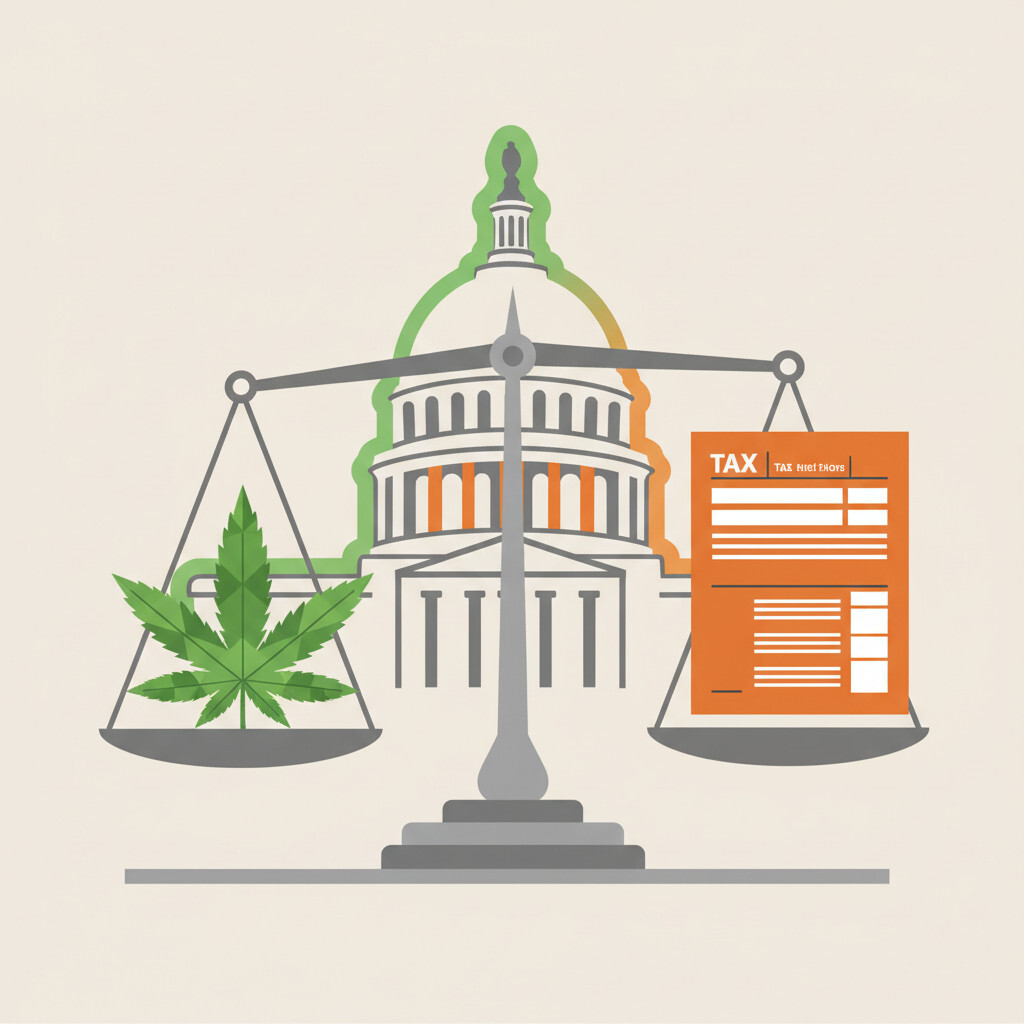
Section 280E by its terms applies only to Schedule I and Schedule II controlled substances. Once medical cannabis is officially rescheduled to Schedule III, § 280E no longer applies to medical cannabis operators — and they regain the ability to deduct ordinary business expenses under § 162.
| Item | Pre-Rescheduling (Schedule I) | Post-Rescheduling (Schedule III) |
|---|---|---|
| § 280E applicability | YES | NO |
| Salary expense deductible | No | Yes (§ 162) |
| Rent / occupancy | No | Yes |
| Marketing / advertising | No | Yes |
| Professional fees | No | Yes |
| Effective tax burden | ~50-60% of operating income | Closer to normal corporate rate |
Cannabis data platform Headset estimates the elimination of § 280E for medical cannabis could generate $1.6 billion to $2.2 billion in incremental after-tax cash flow per year industry-wide. Public operators (Curaleaf, Green Thumb Industries, Trulieve, Verano) capture a significant share. The Curaleaf CFO noted some operators will reinvest, others will de-lever or pursue share buybacks and consolidation.
What’s the difference between medical and recreational cannabis treatment? 🌿
The April 23, 2026 order rescheduled MEDICAL cannabis only. Recreational (adult-use) cannabis remains Schedule I under federal law — meaning § 280E continues to apply to recreational operators until further DEA action.
Important distinctions:
- Medical cannabis — now Schedule III. § 280E does not apply.
- Recreational/adult-use cannabis — remains Schedule I. § 280E continues to apply.
- Multi-state operators (MSOs) with both medical and recreational lines face split treatment — careful allocation and bookkeeping required.
- June 29, 2026 DEA hearing — the DEA will begin a separate hearing process on June 29 to weigh moving recreational cannabis from Schedule I to Schedule III.
For multi-state operators with both medical and recreational dispensaries, allocation of shared overhead (corporate, IT, compliance, distribution) becomes critical. Shared expenses must be split between § 280E-blocked recreational operations and § 162-deductible medical operations. Expect IRS scrutiny on cost allocation methodology — particularly for facilities, payroll, and licensing fees that serve both lines. Document allocation policy now.
What does this mean for the SAFE Banking Act outlook? 🏦
Rescheduling addresses the tax burden but does NOT unlock the cannabis industry’s access to mainstream banking and capital markets. The SAFE Banking Act remains the legislative path to that — and momentum may build now that federal cannabis policy has shifted.
What SAFE Banking would do (if/when enacted):
- Banking access — protect financial institutions from federal penalty for serving state-legal cannabis businesses. Smaller regional banks first, then potentially major banks like JPMorgan and Bank of America.
- Capital markets — unlock conventional debt and equity financing previously closed to cannabis operators.
- Insurance and ancillary services — broader vendor ecosystem becomes available.
- Cost of capital — lower interest rates as bank lending replaces high-cost cannabis-specific debt markets.
As of Q2 2026, the SAFE Banking Act has cleared the House multiple times but has stalled in the Senate. Industry leaders, including Curaleaf CFO Ed Kremer, expressed renewed hope that Schedule III momentum could finally push the Senate to act.
What should cannabis operators and CFOs do now? ✅
- Confirm effective date of rescheduling. The April 23 order initiates the rescheduling process — official Federal Register publication and effective date determine when § 280E ceases to apply. Track DEA implementation timeline.
- Update tax provision and 2026 estimated payments. If your medical cannabis business has been making § 280E-driven estimated tax payments, those may now be excessive. Recompute Q2 2026 estimated tax with § 162 deductions restored for medical operations.
- Separate medical vs. recreational books. MSOs need clean separation of revenue, COGS, operating expenses, and shared overhead by license type. Allocation methodology will face audit scrutiny.
- Review prior-year amended return opportunity. If there’s a basis for treating prior medical cannabis activity differently in retroactive fashion (e.g., based on whether DEA action is treated as clarifying vs. substantive change), consult tax counsel. Most likely effective prospectively only.
- Capital allocation decisions. Decide how to deploy freed-up cash flow: reinvest in operations, de-lever balance sheet, M&A, share buybacks, or dividends. Public-company governance and SEC disclosure requirements apply.
- Monitor SAFE Banking and recreational rescheduling. June 29 DEA hearing on recreational rescheduling is the next major catalyst. SAFE Banking Senate vote could come at any time.
Frequently Asked Questions 🗂
For DEA cannabis rescheduling proceedings, see DEA.gov. For the Federal Register publication of the rescheduling order, watch FederalRegister.gov. IRS guidance on § 280E and cannabis businesses is at IRS Marijuana Industry page.
Need help recomputing § 280E exposure, MSO cost allocation methodology, or capital allocation strategy after rescheduling? SW Accounting & Consulting Corp’s cannabis-tax team supports operators and CFOs through this transition — book a consultation.