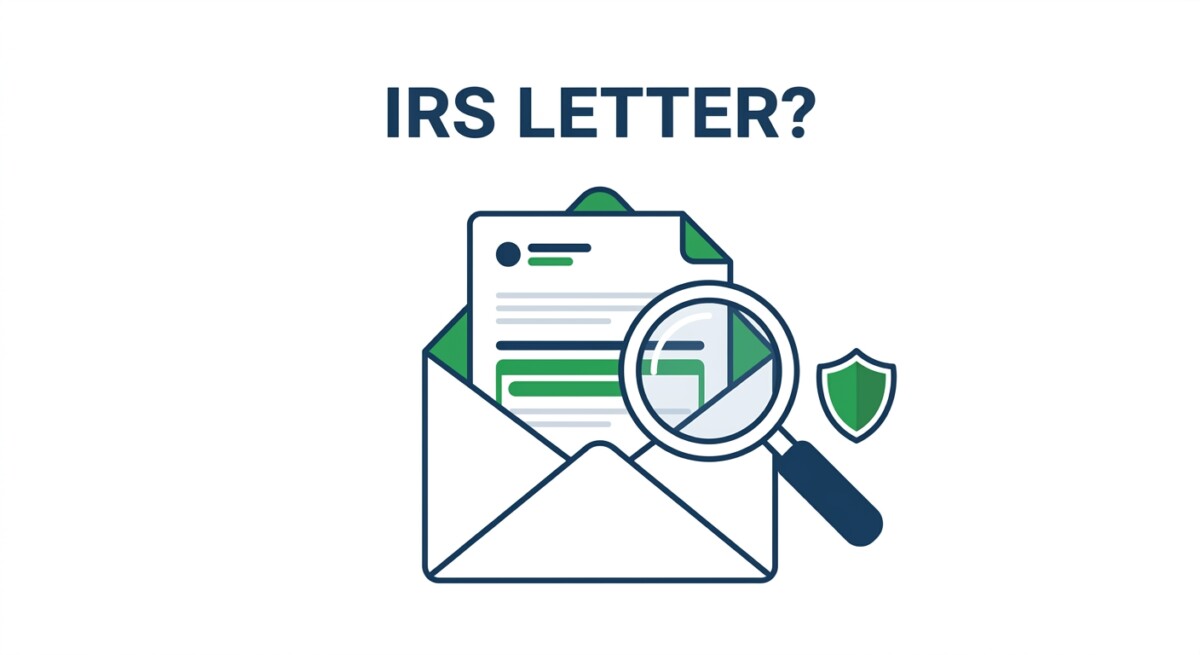
Got an IRS Letter? How to Respond and Spot a Scam
An envelope from the IRS triggers instant dread — but most of the time it’s routine, and the worst thing you can do is ignore it. Knowing how to read and respond to an IRS notice or letter turns a scary envelope into a simple checklist, and helps you spot the impostor mail that isn’t really from the IRS at all.
At SW Accounting & Consulting Corp, we field these letters for Los Angeles area taxpayers every week. Below: what IRS notices usually say, the step-by-step response, when you must act, recordkeeping, and the scam red flags.
What does an IRS notice usually say? 📬
Most letters or notices are about your federal tax return or tax account. Each notice outlines the specific issue and includes the steps you need to take. A notice may reference a change to your account, taxes owed, a payment request, or a specific issue on a return or credit.
The single most important habit: open it and read it carefully. The notice itself tells you what it’s about and what — if anything — you must do. There’s no generic “call the IRS” step; the notice is self-contained.
The step-by-step response ✅
| Step | What to do |
|---|---|
| 1. Review the information | If it’s about a changed or corrected return, compare it to your original. If you agree, note the corrections on your personal copy and keep it. |
| 2. Take any requested action | This may include making a payment. Acting promptly can minimize added interest and penalties. You can view digital copies of select notices in your IRS Online Account. |
| 3. Reply only if needed | You don’t need to reply unless specifically told to. If you must call, use the number in the upper right-hand corner and have your return and the letter handy. |
| 4. Dispute if you disagree | Follow the notice’s instructions to dispute, and include supporting information and documents for the IRS to review. |
| 5. Keep it for your records | Keep notices for at least three years from the date the return was filed — including adjustment notices. |
Typically only in three situations: (1) you don’t agree with the notice, (2) the IRS asked for more information, or (3) there’s a balance due. If none of those apply and the notice doesn’t tell you to reply, you usually just review it and file it away. A notice is not automatically a problem.
Can’t pay the balance? ⏳
If the notice shows a balance due you can’t pay in full, the IRS offers several options — payment plans, and in hardship cases an offer in compromise. Acting promptly is what minimizes additional interest and penalty charges; ignoring the notice only makes the balance grow. (Note: the IRS and authorized private debt collection agencies do send letters by mail.)
Is it real or a scam? 🚨
Two reliable tells from the IRS itself: the IRS’s first contact usually comes in the MAIL, and the IRS will NEVER contact you using social media.
- Verify the notice number — real notices reference your account and a specific issue; you can cross-check digital copies of select notices in your IRS Online Account.
- Use the official phone number — the one in the upper right-hand corner of the notice, not a number from a text or email.
- Know your rights — the IRS Taxpayer Bill of Rights and “Understanding your IRS notice or letter” resources explain what legitimate notices look like.
Frequently asked questions
No. You only need to reply if the notice specifically tells you to — or if you disagree, the IRS requested information, or there’s a balance due. Many notices are informational; review and keep them.
At least three years from the date the return was filed, including adjustment notices. Keep them with your copy of the related return.
The IRS’s first contact normally arrives by mail, and the IRS never uses social media to contact taxpayers. Verify against digital copies in your IRS Online Account and call only the number printed in the notice’s upper right corner.
Follow the dispute instructions in the notice and include documentation supporting your position. Don’t ignore it — responding within the stated timeframe protects your rights.
How can SW Accounting help? 💼
At SW Accounting & Consulting Corp, we read, decode, and respond to IRS notices for LA-area taxpayers — confirming a notice is legitimate, comparing it to your return, drafting disputes with supporting documentation, and setting up payment plans or offers in compromise when there’s a balance. Bring us the envelope before you worry about it.
📩 Have us review your IRS notice
Disclaimer: This article is for informational purposes only and is not legal or tax advice. Always consult a qualified professional regarding your specific facts. Primary sources: IRS Tax Tips on responding to IRS notices and letters; IRS “Understanding your IRS notice or letter”; IRS Taxpayer Bill of Rights; IRS Online Account.