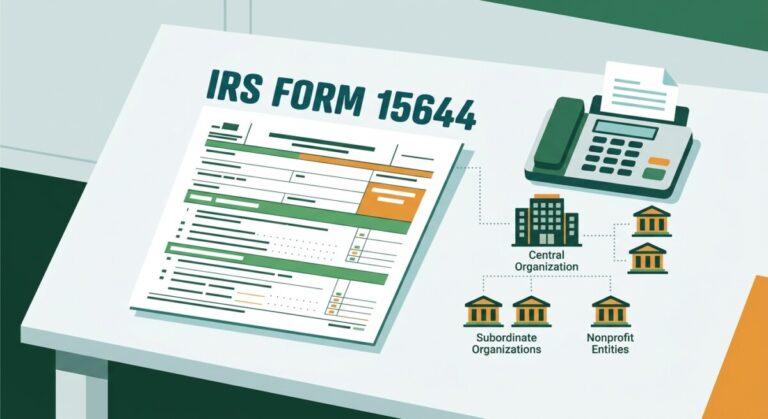

CRAT Listed Transactions: IRS Final Rule July 2026
Charitable Remainder Annuity Trusts have long been a legitimate estate and charitable planning tool. But on July 8, 2026, Treasury and the Internal Revenue Service finalized regulations that carve out a specific abusive pattern and label it a listed transaction. If you promoted, advised on, or participated in a CRAT listed transaction matching the described structure, disclosure is now mandatory — and the penalty exposure for silence is significant.
At SW Accounting & Consulting Corp, we advise Los Angeles individuals, families, and closely-held business owners who use CRATs the right way: converting appreciated property into a life annuity while benefiting charity. This post explains what the final rule actually targets, what a listed-transaction designation means, and what steps a taxpayer or advisor should take now.
What exactly did Treasury and the IRS finalize on July 8, 2026? 📜
Treasury and the IRS issued final regulations identifying a specific CRAT-plus-annuity structure as a listed transaction under the disclosure rules of §6011.
The IRS announced the rule in IR-2026-82. According to the release, “the Department of the Treasury and the Internal Revenue Service today issued final regulations identifying certain arrangements purporting to be Charitable Remainder Annuity Trusts as listed transactions. Material advisors and certain participants in these listed transactions are required to file disclosures with the IRS and are subject to penalties for failure to disclose.”
The rule is published in the Federal Register, finalizing prior proposed regulations. Importantly, this designation does not affect legitimately structured CRATs. It targets a defined pattern the IRS views as abusive.
What is the specific structure the IRS is calling abusive? ⚠️
The transaction uses a CRAT paired with a single premium immediate annuity (SPIA) to claim that most of the annuity payment is tax-free return of investment — misapplying §72 and §664.
The final regulations describe the following pattern:
- Step 1 — Contribute appreciated property. The taxpayer transfers property with a fair market value in excess of its basis — for example, interests in a closely-held business, or assets used or produced in a trade or business — to a purported CRAT.
- Step 2 — CRAT sells and buys a SPIA. The purported CRAT then sells the contributed property and uses some or all of the net proceeds to purchase a single premium immediate annuity.
- Step 3 — Claim mostly tax-free annuity payments. By misapplying the rules under IRC §§72 and 664, the taxpayer or beneficiary asserts that the CRAT annuity is taxable to the recipient only to the extent of the income portion of the SPIA payment — leaving what would otherwise be ordinary income or capital gain untaxed.
In the IRS’s view, this misapplication of §§72 and 664 attempts to eliminate ordinary income or capital gain on the sale of the appreciated property. That is the substance the IRS says the listed-transaction rule now catches — and requires participants and material advisors to disclose on Form 8886 (participants) and Form 8918 (material advisors).
What is a listed transaction, and why does that label matter? 🚨
A listed transaction is a reportable transaction the IRS has publicly identified as tax avoidance — carrying mandatory disclosure, penalty exposure, and an extended statute of limitations.
Under IRC §6011 and the regulations at Treas. Reg. §1.6011-4, participants in a listed transaction must file Form 8886, Reportable Transaction Disclosure Statement, with their return and a separate copy with the IRS Office of Tax Shelter Analysis. Material advisors must file Form 8918, Material Advisor Disclosure Statement, and maintain a list of clients under IRC §6112.
The consequences of missing those filings are significant:
- IRC §6707A: non-disclosure penalty for participants — up to $10,000 for a natural person and $50,000 for other taxpayers per failure, with higher amounts for listed transactions.
- IRC §6707: penalty on a material advisor for failure to file Form 8918 for a listed transaction — the greater of $200,000 or 50% of the gross income derived by the advisor from the transaction.
- IRC §6708: $10,000 per day (up to $100,000) for a material advisor’s failure to furnish the client list within 20 business days of a written IRS request.
- IRC §6501(c)(10): the statute of limitations on assessment stays open for one year after the required disclosure is made — so an unfiled listed transaction never truly closes.
Who has to file, and when? ✅
Both participants and material advisors must disclose — and the rule reaches back to open years, not just future returns.
Under the general listed-transaction framework:
- Participants — taxpayers whose returns reflect tax consequences from the listed transaction — file Form 8886 with each affected return, and a separate copy with the IRS Office of Tax Shelter Analysis for the first year of participation.
- Material advisors — anyone who provided material aid, assistance, or advice and received threshold-level fees — file Form 8918 by the last day of the month following the calendar quarter in which they became a material advisor.
- Prior-year exposure. Listed-transaction regulations typically require disclosure for open tax years — meaning taxpayers and advisors who participated before the final regulations may still need to file for years that are not yet closed by the statute of limitations.
- Read the effective-date section. Both taxpayers and advisors should read the “Applicability Date” section of the final regulations in the Federal Register to confirm which tax years, filings, and advisory activities are covered.
What should CRAT users and advisors do right now? 📋
Confirm whether the structure you used matches the CRAT-plus-SPIA pattern, evaluate any disclosure obligation, and preserve your documentation.
Practical steps we recommend:
- Compare structure, not name. A trust called a “CRAT” is not automatically a listed transaction. The description in the final regulations targets a specific pattern — appreciated property contributed, sold by the CRAT, SPIA purchased with the proceeds, and mostly-untaxed annuity payments claimed under a misapplication of §§72 and 664.
- Pull the tax-reporting stack. Review the CRAT’s Form 5227, any Schedule K-1s issued to income beneficiaries, and the individual returns that reported those payments — especially any position that treated a large portion of the annuity as non-taxable.
- Assess Form 8886 exposure. If the reported facts fit the listed pattern for any open year, evaluate whether Form 8886 must be filed with an amended return (and separately with the Office of Tax Shelter Analysis).
- Advisors: check Form 8918 status. Attorneys, CPAs, and financial professionals who marketed or opined on the described CRAT structure should evaluate their material-advisor status, Form 8918 filing, and IRC §6112 client-list obligations.
- Do not ignore old files. Listed-transaction rules and §6501(c)(10) mean silence does not run out the clock. Getting a corrective disclosure filed is almost always better than waiting for a summons.
Legitimate CRAT vs. abusive CRAT structure 📊
| Feature | Legitimate CRAT | Listed CRAT pattern |
|---|---|---|
| Purpose | Charitable gift + fixed annuity for life/term | Eliminate gain on appreciated property sale |
| Annuity income tax | Reported under §664(b) four-tier rules | Claims mostly tax-free using SPIA §72 rules |
| Assets sold | May sell; gain flows to tier under §664 | Sells appreciated property, buys SPIA immediately |
| IRS disclosure | Form 5227 (trust), K-1 to beneficiaries | Also Form 8886 (participant), Form 8918 (advisor) |
| Penalty exposure | Normal trust/individual rules | §§6707A, 6707, 6708, extended SOL under §6501(c)(10) |
📌 Key Takeaways
- July 8, 2026: Treasury and IRS finalize the CRAT-plus-SPIA structure as a listed transaction.
- The rule targets a specific abuse — not ordinary charitable remainder annuity trusts.
- Participants file Form 8886; material advisors file Form 8918 and keep client lists.
- Penalties under §§6707A, 6707, and 6708 are significant, and §6501(c)(10) keeps the SOL open.
Frequently Asked Questions ❓
Q. Does the new IRS rule mean charitable remainder annuity trusts are no longer allowed?
No. Legitimate CRATs continue to work under IRC §664. The final regulations only target a specific abusive structure that pairs the CRAT with a SPIA and claims that most of the annuity is tax-free by misapplying §§72 and 664.
Q. What is a listed transaction and why does it matter?
A listed transaction is a reportable transaction the IRS has publicly identified as tax avoidance. Participants must file Form 8886 and material advisors must file Form 8918, with material penalties under IRC §§6707A, 6707, and 6708 for failing to do so.
Q. Do prior years need to be reported?
Listed-transaction regulations generally require disclosure for open tax years, and IRC §6501(c)(10) can keep the statute of limitations open until proper disclosure is made. Read the “Applicability Date” section of the final regulations and consult a tax professional before assuming a prior year is closed.
Q. Who counts as a material advisor?
Generally, anyone who provided material aid, assistance, or advice regarding the transaction and received fees above the applicable threshold. That can include attorneys, CPAs, financial planners, and promoters — anyone whose involvement meaningfully shaped the structure or its tax positions.
Q. What penalties apply for failing to disclose?
Under IRC §6707A, participants face non-disclosure penalties (up to $10,000 for individuals and $50,000 for other taxpayers per failure, with higher amounts for listed transactions). Material advisors face penalties under §6707 of the greater of $200,000 or 50% of gross income, and $10,000 per day under §6708 for failing to produce a client list on request.
Q. How should Los Angeles taxpayers respond?
Review any CRAT structure created in recent years with a qualified tax professional. If the trust sold appreciated property and used the proceeds to buy a SPIA, and prior returns reported large portions of the annuity as tax-free, do not wait for an IRS notice. Evaluate Form 8886 and, if applicable, corrective filings.
If you or your clients used a CRAT arrangement in recent years and are unsure whether it fits the described pattern, contact SW Accounting & Consulting Corp for a review. Primary sources: IRS News Release IR-2026-82 and the Federal Register final rule (RIN 1545-BQ80).