SB 253 Compliance 2026: California’s Aug 10 Deadline
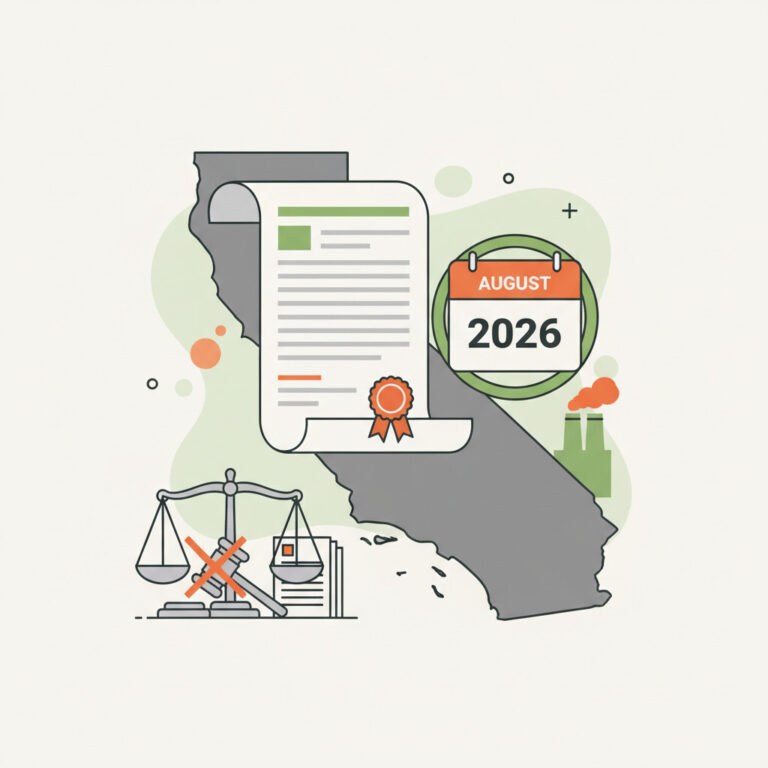
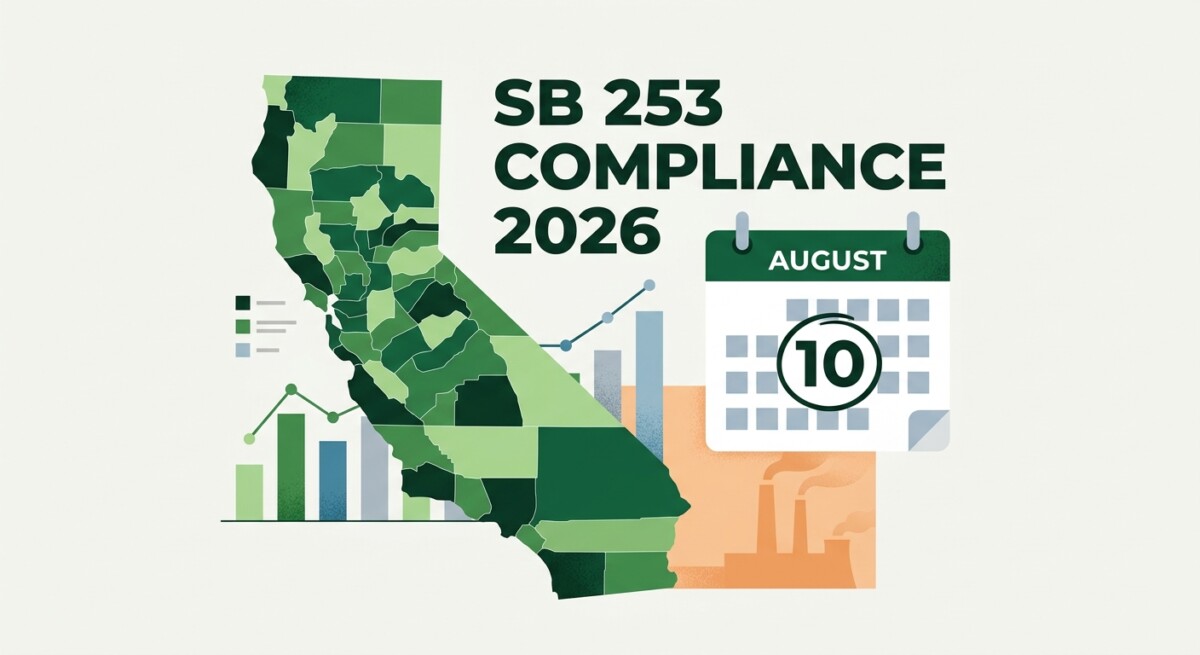
California’s first mandatory corporate climate disclosure deadline is here. The California Air Resources Board (CARB) has adopted the initial regulation implementing Senate Bills 253 and 261, and the first Scope 1 and Scope 2 emissions filings under SB 253 are due August 10, 2026. If your company clears the revenue threshold and touches the California market, SB 253 compliance is no longer optional — it is a state statutory obligation, backed by a state regulator, with civil penalties on the way.
At SW Accounting & Consulting Corp, we advise Los Angeles businesses and multistate operators that suddenly find themselves inside the scope of California’s climate rules — often through a parent company or through in-state sales they had not tracked. Here is what CARB just clarified, who is covered, what to file by August 10, and where SB 261 stands after the Ninth Circuit’s injunction.
What is SB 253 compliance, and who does it cover? 🌎
SB 253 is California’s Climate Corporate Data Accountability Act — it requires U.S. companies over $1B in total annual revenues that do business in California to disclose Scope 1, 2 and 3 greenhouse-gas emissions and obtain third-party assurance.
The statute (SB 253) applies to any entity with more than $1 billion in total annual revenues that “does business in California.” Its companion, SB 261 (Climate-Related Financial Risk Act), applies to a lower revenue threshold — $500 million — and requires a biennial climate-risk report on the company’s website. Both are administered by CARB.
Two things trip up executives who assumed the rules would not reach them. First, revenue is total revenue, not California revenue — so a national retailer or SaaS company with a small California footprint can still be in-scope. Second, “doing business in California” is defined through the California Revenue and Taxation Code and the FTB’s guidance, so the same test that decides your FTB filing obligation largely decides your CARB filing obligation.
What did CARB’s new implementing regulation clarify? 📘
The initial CARB regulation nails down the definitions — who is “doing business” in the state, how revenue is measured, and how parents and subsidiaries report.
- Doing business in California: the regulation aligns with RTC §23101. A company qualifies if it (a) is engaging in transactions for financial gain and (b) is either commercially domiciled in California or has California sales exceeding the 2024 inflation-adjusted threshold of $735,019 (per RTC §25120(e)–(f), apportioned under §25135 and §25136 as modified by §25137). Notably, CARB excludes the property-holdings and payroll prongs of §23101(b)(3)–(4).
- Revenue: defined by reference to the “gross receipts” definition in RTC §25120(f)(2), taken as the lesser of the two prior fiscal years, and covering total gross receipts globally — not just California receipts.
- Parent/subsidiary rules: each covered subsidiary and each covered parent must independently assess its obligations, but a parent may file a consolidated report covering in-scope subsidiaries. “Parent” and “subsidiary” use CARB’s Cap-and-Invest definitions in 17 CCR §95833, keyed to greater-than-50% ownership, voting power or common control.
- Exemptions: nonprofits exempt under the Internal Revenue Code, federal/state/local government entities and government-majority-owned companies, insurance companies (fully for SB 253; statutorily for SB 261), companies whose only California activity is payroll or compensation (including remote workers), and wholesale-electricity-only entities.
What must be filed for SB 253 by August 10, 2026? 🗓️
Scope 1 and Scope 2 emissions data — with CARB exercising enforcement discretion for the first reporting year for companies that were not already collecting data.
CARB’s SB 253 Enforcement Notice is the key document to read alongside the regulation itself. It states that no penalties will be imposed on companies acting in good faith during the first reporting year. Companies that were not collecting Scope 1/2 data — and had no plans to collect it — as of the notice date (December 5, 2024) are not required to submit an emissions report for 2026; they should instead file a statement to that effect in a public CARB docket.
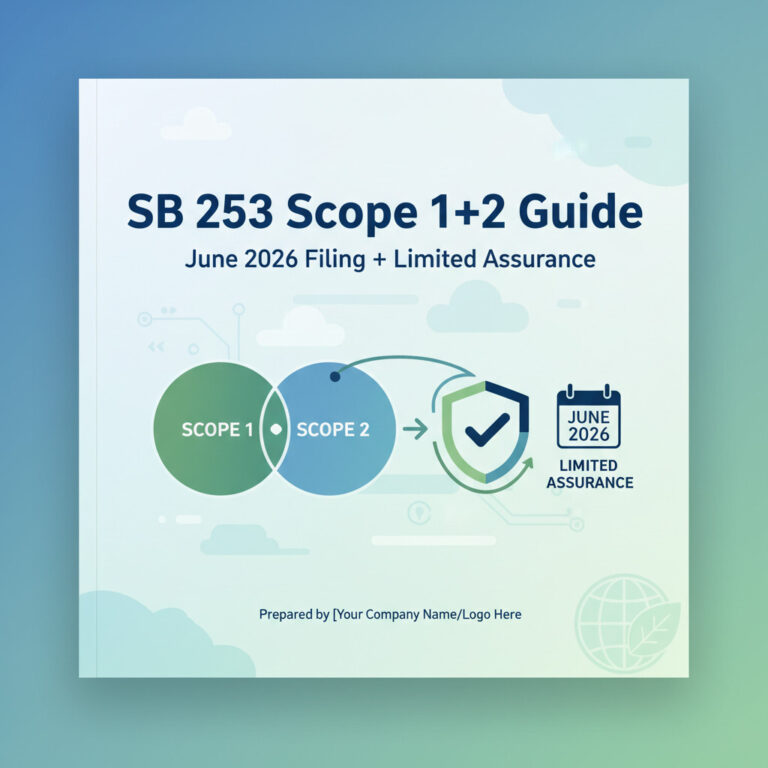
CARB has also released a draft Scope 1 & 2 emissions template to streamline first-year filings — optional for 2026, expected to be developed further for 2027. Limited assurance over Scope 1 and 2 data begins with the 2027 reporting cycle; Scope 3 disclosure and its assurance pathway will be set through a separate CARB rulemaking that is already underway. CARB’s California Climate Disclosure FAQ is the plain-English companion.
What is happening with SB 261 and the Ninth Circuit injunction? ⚖️
SB 261 enforcement is currently paused: the U.S. Court of Appeals for the Ninth Circuit issued an injunction staying enforcement pending the outcome of an appeal.
The initial SB 261 climate-related financial risk report was originally due January 1, 2026, but a Ninth Circuit injunction in late 2025 paused enforcement while the case proceeds on appeal. The court held a hearing in January 2026 but has not issued a ruling and has not published a timeline. Critically, the injunction does not extend to SB 253 — the August 10, 2026 emissions filing continues on schedule.
When and if SB 261 enforcement resumes, CARB’s guidance on minimum reporting requirements will apply. Reports must specify the framework used (the Task Force on Climate-related Financial Disclosures recommendations or IFRS S2 are the two contemplated frameworks), describe governance and risk-management processes, and identify climate-related risks and opportunities over short, medium and long horizons. Scope 1/2/3 data is not required in the first SB 261 cycle. First-year good-faith efforts are accepted.
California climate disclosure — 2026 at a glance 📊
| Item | SB 253 (emissions) | SB 261 (climate risk) |
|---|---|---|
| Revenue threshold | >$1B total annual revenue | >$500M total annual revenue |
| First filing due | August 10, 2026 (Scope 1 & 2) | Enforcement paused (Ninth Circuit) |
| Assurance | Limited from 2027 for Scope 1 & 2 | N/A (report on company website) |
| Framework | CARB template (optional in 2026) | TCFD or IFRS S2 |
| First-year discretion | Good-faith effort; late data OK | Good-faith effort (if unstayed) |
📌 Key Takeaways
- SB 253 first filing: Scope 1 & 2 emissions data due August 10, 2026.
- Threshold: more than $1B in total annual revenue (not California revenue).
- “Doing business” test follows RTC §23101 — same test the FTB uses.
- SB 261 paused under a Ninth Circuit injunction; SB 253 is not paused.
- First-year discretion: CARB will accept good-faith effort; missing data can be reported as such.
Frequently Asked Questions ❓
Q. Does SB 253 compliance apply to my company if we only have modest California sales?
Possibly. SB 253 turns on total annual revenue above $1B and “doing business in California” under RTC §23101. If your California sales exceed the 2024 inflation-adjusted threshold of $735,019, or if the entity is commercially domiciled in California, you can be in scope even with a small California footprint.
Q. What exactly is due on August 10, 2026?
Scope 1 (direct emissions) and Scope 2 (indirect emissions from purchased electricity, steam, heat or cooling) data covering the first reporting period. Companies that were not collecting the data as of December 5, 2024 may instead file a statement in CARB’s public docket for the first year.
Q. Do I need third-party assurance for the 2026 filing?
No. Limited assurance over Scope 1 and Scope 2 data starts with the 2027 reporting cycle. Assurance requirements for 2030 reporting will be defined in a separate CARB rulemaking.
Q. Is SB 261 still in effect?
Enforcement of SB 261 is currently stayed by a U.S. Court of Appeals for the Ninth Circuit injunction pending an appeal. The court held a January 2026 hearing but has not issued a ruling. SB 253 is unaffected and its August 10, 2026 deadline stands.
Q. How do parent and subsidiary companies handle SB 253 compliance?
Each covered entity assesses its own obligation. A parent may file a consolidated report covering in-scope subsidiaries, using the parent/subsidiary control tests in 17 CCR §95833 (broadly, greater-than-50% ownership, voting power or common control).
Q. What are the penalties for non-compliance?
CARB is authorized to impose civil penalties under the statute, but has stated it will exercise enforcement discretion for the first reporting year for good-faith filers. That grace does not extend beyond the initial cycle, so companies should treat 2026 as the year to stand up the data pipeline.
California’s climate disclosure regime is one of the fastest-moving compliance items on the 2026 calendar for large multistate businesses. If you would like a scoping call to determine whether your company is in scope, or help building the Scope 1/2 data collection process before the August 10 deadline, contact SW Accounting & Consulting Corp. Primary sources: California SB 253 and SB 261; CARB Enforcement Notice; and 17 CCR §95833.