
California Employment Law 2026: The Complete Guide for Employers
Happy New Year, 2026! 🎉 If you manage a business or work in HR in the Golden State, you know that ringing in the new year also means ringing in a new set of employment laws. It can be a lot to keep track of, right? 😅
Don’t worry, we’ve got you covered. This year brings significant changes to leave policies, pay transparency, and minimum wage rates that affect employers of all sizes. Let’s dive into the updates you need to implement immediately to ensure your workplace is compliant and running smoothly.
Expanded Leave Entitlements 🗓️
California has broadened the scope of Crime Victim Leave. Previously more restricted, the law now allows employees who are victims of certain crimes—or have family members who are—to take unpaid leave to attend any related judicial proceeding.
The definition of “family member” has expanded! It now includes an employee’s grandparent, grandchild, domestic partner, and any designated person. Make sure your leave policy reflects this inclusivity.
Additionally, because employees can use paid sick leave for reasons covered by crime victim leave, your Paid Sick Leave policies must officially cover this expanded entitlement. It’s time to update those handbooks!
Pay Equity & Transparency Updates ⚖️
The state is tightening the definitions around equal pay. The law now clarifies that “sex” includes gender identity and expression. Furthermore, protections now extend to pay disparities between any sexes, not just opposite sexes.
When analyzing pay equity, you must now consider “total compensation.” The definition of wages has been updated to include:
- Stock options
- Profit-sharing
- Life insurance
- Hotel accommodations
Job Posting Requirements
For employers with 15 or more employees, the pay transparency law has a specific new nuance. You must now provide a good-faith estimate of the pay rate or range you reasonably expect to offer upon hire. This is a shift from simply stating the range “for the position,” aiming to give candidates a more realistic view of their starting salary.
Personnel Records & Data Storage 📂
Transparency isn’t just for pay. Current and former employees now have the right to access personnel records related to their education and training, in addition to performance records.
If you have 100+ employees and deal with Pay Data Reporting, you must store any demographic info collected for these reports separately from the employee’s general personnel file. Implement this separation by January 1, 2026.
“Stay or Pay” Ban & WARN Notices 🚫
A major protection for employees this year is the prohibition of “Stay or Pay” agreements. These are provisions that require employees to pay a fee or repay a debt to an employer if they terminate their employment early. As of January 1, 2026, these are generally prohibited in employment contracts.
WARN Act Update: If you are issuing layoff notices under Cal/WARN, you must now include information about coordinating services with a workforce development board. These services must be arranged within a specific timeframe to assist affected workers.
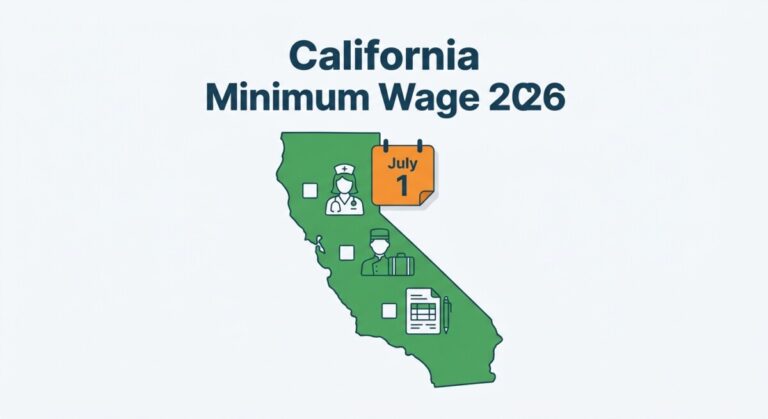
2026 Minimum Wage & Exempt Salaries 💰
The baseline for compensation has shifted up. Here are the critical numbers for 2026:
💵 State Standards
Standard Minimum Wage: $16.90 per hour
Exempt Salary Threshold: $70,304 per year
Remember, if your business operates in a city with a specific local ordinance, you must pay the higher of the two rates.
Local Minimum Wage Highlights
Many cities have rates significantly higher than the state minimum. Here is a quick reference table for some key locations:
| Location | 2026 Rate |
|---|---|
| West Hollywood (non-hotel) | $20.25 |
| Mountain View | $19.70 |
| Sunnyvale | $19.50 |
| Berkeley / San Francisco | (Check local listings, often updated July 1) |
| San Jose | $18.45 |
| Oakland | TBD |
2026 California Law Snapshot
Frequently Asked Questions ❓
Navigating California’s employment laws can feel like a full-time job in itself, but staying informed is half the battle. Take some time this week to review your current policies against these new rules. If you have any questions about how these changes might affect your specific business, feel free to drop a comment below! 😊