
Does ASU 2026-03 change fair value sale restrictions?
On September 9, 2026, the FASB issued Accounting Standards Update No. 2026-03, an amendment to Topic 820 that quietly rewires how a significant slice of the fund industry measures net asset value. For investment companies within the scope of Topic 946, fair value sale restrictions are no longer treated as a characteristic of the holder that must be ignored. They are now baked into the measurement itself, with a required disclosure of the discount. If you run the financial reporting for a fund that holds lock-up stock, private-round equity, or IPO allocations with contractual holdbacks, this Update decides how your December 2027 statements will look — and whether September’s early-adoption window is worth taking.
How does ASU 2026-03 change fair value sale restrictions? 📐
It creates a Topic 946-only exception to Topic 820. Investment companies within Topic 946 must now reflect a contractual sale restriction in the fair value of the equity security and disclose the amount of the discount. Every other reporting entity continues to apply the pre-existing rule that ignores the restriction.
Under the guidance that has been in place since Accounting Standards Update 2022-03, Topic 820 treats a contractual restriction on the sale of an equity security as a characteristic of the reporting entity that holds it, not of the security itself. A fund holding a locked-up share and a fund holding an identical, freely tradable share of the same issuer therefore measured fair value at the same market price. The 2022-03 amendments also barred entities from recognizing the restriction as a separate unit of account, on the view that Topic 820 was principled and internally consistent.
Stakeholders never fully accepted that answer for investment companies. In April 2026, the Board received an agenda request arguing that the 2022-03 approach overstates net asset value, distorts management-fee and performance calculations, and produces different outcomes for shareholders who purchase, redeem, or remain in the fund depending on when the restriction lapses. The Board added the project in May, exposed a proposal on July 1, 2026, and finalized ASU 2026-03 in September. The amendments are narrow by design: they neither disturb Topic 820 for operating-company holders nor create a new unit of account. They add a targeted exception to the measurement rule for Topic 946 funds, and they add a disclosure.
The technical hook is new paragraph 820-10-35-36BBB. When an investment company within the scope of Topic 946 cannot sell an equity security on the measurement date because of a contractual sale restriction, the fund shall incorporate the effect of the restriction by applying a discount, and the discount shall reflect the amount that market participants would demand because of the restriction. The rule applies whether the restriction attaches to the entity holding the security or to the security itself. Restrictions arising from other economics the fund has entered into — for example, pledging shares as collateral — are excluded.
Which investment companies fall under Topic 946 and the new rule? 🏦
Registered investment companies, business development companies, and private investment funds that meet the Topic 946 criteria. Non-fund reporting entities — including operating companies that hold restricted stock and insurance-company general accounts — are outside the scope of ASU 2026-03.
Topic 946 defines an investment company by a combination of purpose, activity, and characteristics: it obtains funds from investors for investment-management services, holds a portfolio of investments for current income, capital appreciation, or both, manages the portfolio on a fair value basis, and reports investments in its financial statements at fair value. Most mutual funds, closed-end funds, exchange-traded funds, business development companies, private equity and venture funds, and hedge funds meet those criteria. The scope of ASU 2026-03 tracks Topic 946 exactly — no new definitions, no exceptions.
The mismatch this creates is intentional. A public operating company that holds locked-up shares received in an acquisition continues to value them at the unrestricted market price under Topic 820. A fund that holds identical shares must now apply a discount. The Board concluded that the market-participant perspective inside a Topic 946 portfolio — where the fund’s own investors buy, sell, and remain based on NAV — is different enough from the general Topic 820 case to justify divergent measurement. The scoping decision is discussed in the Basis for Conclusions as a matter of decision-usefulness for the fund’s shareholders.
When do the amendments take effect, and is early adoption worth it? ⏳
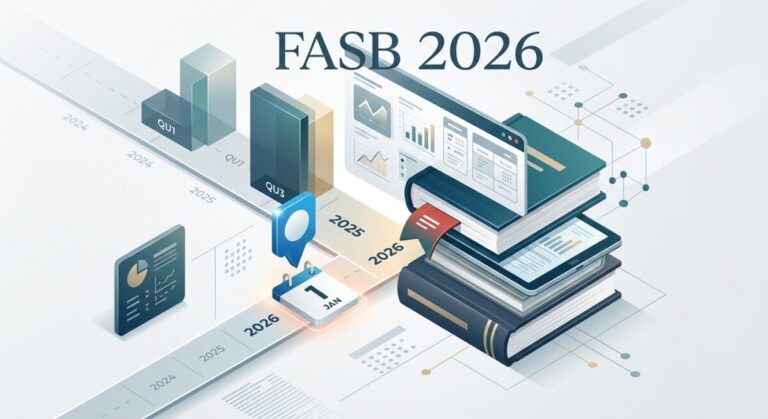
Effective for annual reporting periods beginning after December 15, 2027, and interim periods within those annual periods. Early adoption is permitted on or after September 9, 2026 — the issuance date — with a prospective transition and any adjustment recognized in current-period earnings.
| Milestone | Date | What it means |
|---|---|---|
| Issuance date | September 9, 2026 | ASU 2026-03 is issued. Early-adoption window opens. |
| Earliest permitted adoption | September 9, 2026 | A Topic 946 fund can adopt on any date on or after this date. |
| Mandatory effective date | Annual periods beginning after December 15, 2027 | For a calendar-year fund, this is the year beginning January 1, 2028, with interim periods inside that year. |
| Transition method | Prospective | The fund applies the discount to all equity securities held at the adoption date; adjustments are recognized in current-period earnings. |
| Transition disclosure | First period of application | The fund discloses the amount recognized as an adjustment to earnings when it first applies the pending content. |
Whether to early-adopt is largely a shareholder-communication question. For a fund whose restricted-position discounts are already the subject of shareholder discussion, early adoption in a 2026 or 2027 interim period signals that management is willing to reflect the lock-up in reported NAV before it is required. Because the transition is prospective and the adjustment lands in current-period earnings rather than as a beginning-of-year cumulative restatement, the mechanics are straightforward. For a fund whose valuation policies have long excluded restriction discounts, the case for waiting until the mandatory date is stronger — the same population of positions gets one clean transition entry, and the audit committee sees the effect in a single period.
Prospective, not retrospective
The Update does not permit a full-retrospective transition. On the adoption date, the fund revalues each in-scope equity security using the new rule and books the resulting adjustment to current-period earnings — not to opening net assets. Prior-period financial statements are not restated. Any comparative-period commentary in management’s discussion should make that clear.
How should funds measure the discount and disclose fair value sale restrictions? 💹
Measure the discount as what a market participant would demand for the restriction, using inputs such as remaining duration, volatility, and observed transactions. Disclose the fair value, nature and remaining duration of the restriction, circumstances that could cause the restriction to lapse, and — for Topic 946 funds — the amount of the discount included in fair value.
The Board deliberately did not prescribe a single valuation model. What it did do is amend paragraph 820-10-55-52B to illustrate the discount for a fund holding Class A shares subject to a lock-up. In the illustration, the fund starts from the observable market price of the unrestricted Class A shares and applies a discount that reflects the remaining duration of the restriction, expected volatility over that period, and any protective features (for example, the ability to accelerate the release under specified events). A fund that already uses an option-pricing or protective-put approach to size the restriction-driven discount has a defensible framework; a fund that has been recording lock-up positions at the unrestricted price does not, and needs one before adoption.
Disclosure under amended paragraph 820-10-50-6B is now more granular for Topic 946 funds. For every equity security subject to a contractual sale restriction, the entity discloses:
- The fair value of the equity security.
- The nature and remaining duration of the restriction — for example, a 180-day underwriter lock-up expiring on a specific date.
- The circumstances that could cause the restriction to lapse — for example, a waiver, an early-release event, or the expiration of the stated period.
- For investment companies within the scope of Topic 946: the amount of the discount attributable to the contractual sale restriction that is included in fair value.
Restrictions arising from a separate transaction — such as shares pledged as collateral in a borrowing that is already disclosed under other Topics — remain out of scope. So do regulatory restrictions on the reporting entity (as opposed to contractual restrictions on the security itself), which have always been treated as a characteristic of the holder.
From our practice: valuation memoranda and audit trail
In our practice, the sooner the fund controller and the valuation service provider agree on a written protocol — the inputs they will use, how they will source volatility, how they will treat protective releases — the smoother the first reporting cycle. Auditors will ask for the discount to be tied to a market-participant view, not a house policy. A one-page valuation memorandum per restricted position, refreshed each measurement date, is the audit trail we recommend our fund clients build now rather than on the eve of adoption.
What should CPAs, fund controllers, and audit committees do this quarter? 🧭
Inventory the in-scope positions, refresh the valuation policy, decide whether to early-adopt, brief the audit committee on the disclosure change, and coordinate with the fund administrator so the amended presentation flows through NAV computation.
- Build a positions inventory. Every equity security in the portfolio that is subject to a contractual sale restriction — lock-ups, IPO holdbacks, private-round transfer restrictions — belongs on one list, with the current fair value, the restriction terms, and the expected release date.
- Refresh the valuation policy. The policy needs to spell out how the fund will size the discount for each restriction type, what data sources feed the volatility input, and how the discount will be documented at each measurement date.
- Decide on early adoption before year-end. Coordinate with the audit committee, the auditor, and the fund’s investors before selecting an early-adoption date. Any adjustment lands in current-period earnings; investors deserve advance notice.
- Update the disclosure templates. The financial-statement disclosure now includes the discount amount for Topic 946 funds. Draft the disclosure format and the footnote language before the first reporting period, not during audit fieldwork.
- Coordinate with the fund administrator. If the administrator strikes NAV, the discount must flow through the administrator’s valuation feed. Test the workflow on a shadow basis in an interim period so the first live cycle is not the first test.
ASU 2026-03 in five points
- Investment companies within Topic 946 must incorporate contractual sale restrictions in the fair value of equity securities and disclose the discount amount.
- The rule adds an exception to Topic 820; non-fund reporting entities continue to ignore the restriction under the 2022-03 approach.
- Effective for annual periods beginning after December 15, 2027; early adoption on or after September 9, 2026 is permitted.
- Transition is prospective — the adjustment goes through current-period earnings, not opening net assets. Prior periods are not restated.
- The disclosure package covers fair value, restriction terms, lapse triggers, and — for Topic 946 funds — the discount amount included in fair value.
Frequently asked questions about FASB ASU 2026-03 ❓
Q. What did FASB ASU 2026-03 actually change?
The Financial Accounting Standards Board added an exception to Topic 820, Fair Value Measurement, for investment companies within the scope of Topic 946. Those entities must now consider a contractual restriction on the sale of an equity security when measuring the security’s fair value, and must disclose the amount of the discount attributable to the restriction. Every other reporting entity continues to apply the pre-existing Topic 820 rule that treats a contractual sale restriction as a characteristic of the holder, not of the asset.
Q. Which entities are affected by ASU 2026-03?
Only investment companies within the scope of Topic 946, Financial Services — Investment Companies, that hold equity securities measured at fair value and are subject to contractual sale restrictions. Registered investment companies, business development companies, and private investment funds that meet the Topic 946 criteria are the practical population. Operating companies, insurance-company general accounts, and pension plans are not affected by the new discount-and-disclose rule.
Q. When does ASU 2026-03 take effect?
For annual reporting periods beginning after December 15, 2027, and interim reporting periods within those annual periods. Early adoption is permitted on any date on or after September 9, 2026, the issuance date of the Update. A fund that early-adopts must apply the amendments prospectively from the adoption date, with the effect of adoption booked to current-period earnings.
Q. How should a fund measure the discount for a contractual sale restriction?
The discount must reflect the amount that market participants would demand because of the restriction. Common inputs are the remaining duration of the restriction, the volatility of the underlying security, expected trading activity when the restriction lifts, and the terms of similar transactions observed in the market. The discount is applied to the unrestricted market price under Topic 820’s fair value framework; it is not a separate unit of account, and it is not derived from the reporting entity’s own liquidity preferences.
Q. What has to be disclosed under the amended Topic 820?
For every equity security subject to a contractual sale restriction, an entity must disclose the fair value, the nature and remaining duration of the restriction, and the circumstances that could cause the restriction to lapse. Investment companies within the scope of Topic 946 must additionally disclose the amount of the discount attributable to the contractual sale restriction that was included in fair value. Securities pledged as collateral and covered by other disclosures are outside the scope of the requirement.
Q. Does ASU 2026-03 change how operating companies value restricted stock they hold?
No. For a non-investment-company holder, Topic 820 continues to treat a contractual sale restriction as a characteristic of the holder rather than of the asset. Those entities measure fair value using the market price of the unrestricted security and do not apply a discount for the restriction. The amendments are deliberately scoped to Topic 946 investment companies, which is where FASB concluded that the current measurement was overstating net asset value and distorting performance and management-fee outcomes.
This article is general information, not accounting or audit advice for your fund. Adoption decisions turn on your fund’s positions, valuation policy, and shareholder communications. Contact SW Accounting & Consulting Corp for a fund-specific review of ASU 2026-03 and the disclosure changes ahead.