IRS Tax Relief for Washington Storms: New May 1, 2026 Deadline
To be honest, the severe storms, flooding, and high winds that started hitting Washington State back on December 9, 2025, have been absolutely devastating. If you’re in the thick of it, the last thing you probably want to think about right now is paperwork and taxes. I completely get it. Dealing with damage to your home or business is stressful enough without the IRS breathing down your neck.
But here’s some genuinely good news: The IRS has stepped up with some significant relief. They aren’t just giving us more time; they’re offering tools that can actually help with your financial recovery. Let’s break down exactly what this means for you and how you can take advantage of it. 😊
Mark Your Calendars: May 1, 2026 📅
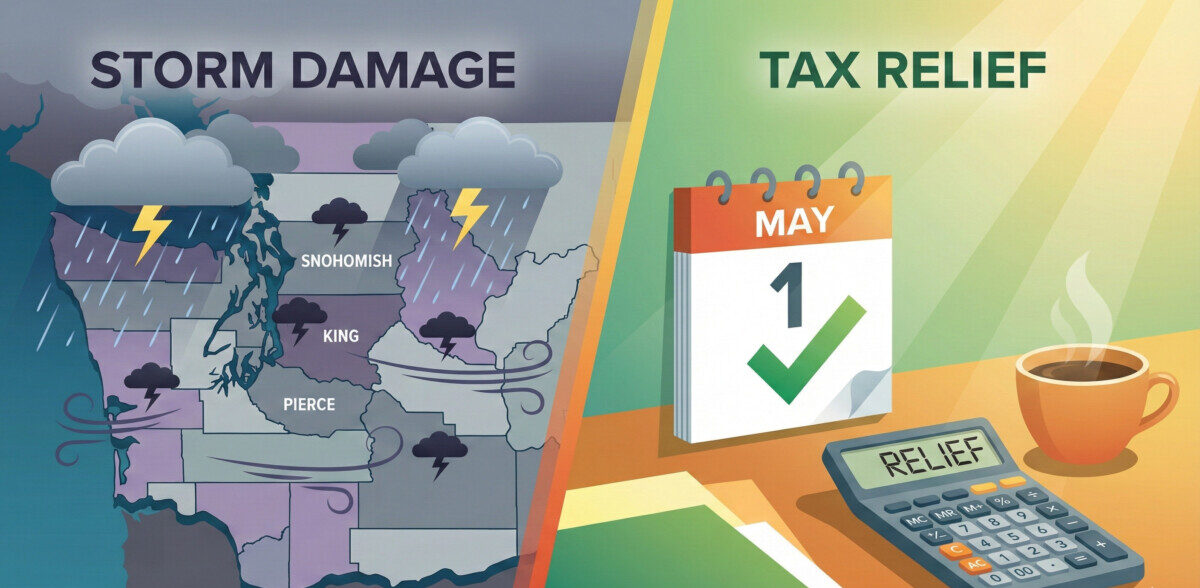
If there is one date you need to burn into your memory, this is it. The IRS has officially postponed various tax filing and payment deadlines.
Starting from the disaster onset date of December 9, 2025, pretty much any deadline that falls between then and now has been pushed all the way to May 1, 2026. This isn’t just a few days; it’s a major extension designed to give you breathing room.
This extension covers your 2025 individual and business returns (normally due in April), IRA/HSA contributions for 2025, and those quarterly estimated tax payments that would have been due in January and April.
Who Automatically Qualifies? 🗺️
You might be wondering, “Do I have to apply for this?” The great news is that for most people, the relief is automatic. If your address of record with the IRS is located in any of the 17 counties designated by FEMA, you don’t need to lift a finger.
Interactive Eligibility Checker
Not sure if your county is on the list? Use this quick tool to check if you are in an automatic relief zone.
Also, keep in mind that “affected taxpayer” is a broad term. It includes relief workers assisting in the area and people living outside the zone whose necessary tax records are trapped inside the disaster area.
While most deadlines are May 1st, there is a catch for payroll and excise tax deposits. Deposits due between December 9 and December 24, 2025, are only extended until December 29, 2025. Don’t miss this shorter window!
Turning Losses into Tax Relief 📉
The IRS isn’t just about deadlines; they have mechanisms to help you recoup some losses. One of the most powerful tools is claiming Casualty Losses. This is for damage to personal property (like your home or car) that insurance didn’t cover.
The Strategic Choice: 2024 vs. 2025
You actually have a choice that can put money back in your pocket faster. You can claim these losses on:
- The 2025 Return: The one you file normally in 2026.
- The 2024 Return: By filing an amended return for the prior year.
Why go back to 2024? Because filing an amended return now could get you a refund much faster than waiting until next year. It’s a strategic move worth discussing with a tax pro.
When claiming these losses, you must write the FEMA disaster declaration number at the top of your forms. Write this down: 3629-EM. This number unlocks the specific relief for this storm.
Accessing Your Emergency Funds 💰
If you’re strapped for cash to rebuild, your retirement savings might be a lifeline. Typically, taking money out of a 401(k) or IRA early hits you with a nasty 10% penalty. However, thanks to Qualified Disaster Distributions, that penalty is waived.
Even better? You don’t have to pay the income tax on that withdrawal all at once. You can spread the tax bill over three years. This prevents a huge tax hit while you’re trying to recover.
Tax Relief at a Glance
Frequently Asked Questions ❓
Recovering from a storm is never easy, but taking control of your financial path can give you a little more peace of mind. Whether it’s making a quick phone call or deciding to amend your last tax return for quick cash, take that one small step today. We’ll get through this! If you have any specific questions about the timeline, feel free to drop them in the comments below! 😊