Did the IRS deny your Kwong refund claim? What now?
A client walked into our Los Angeles office last week with an envelope from the IRS, a disallowance letter inside, and one question: is this it? The letter was short, formal, and did not even reference the court case the client’s refund claim was built on. This is now a common story. The National Taxpayer Advocate reported this week that the IRS has mailed denial and ‘no consideration’ letters on Kwong refund claim filings even while the underlying legal questions remain unresolved in federal court. The Taxpayer Advocate has formally urged the IRS to halt further denials and review the letters already sent. This post walks through what the Kwong line of cases is actually about, what one of these IRS letters does — and, just as important, what it does not do — and what a taxpayer who received one should do before a critical two-year clock runs out.
What is the Kwong refund claim issue in plain English? 📘
Kwong is a 2025 Court of Federal Claims decision that extended the deadline to sue the IRS for a refund during the COVID-19 federally declared disaster. The ruling has created a path for taxpayers whose refund suits would otherwise be time-barred.
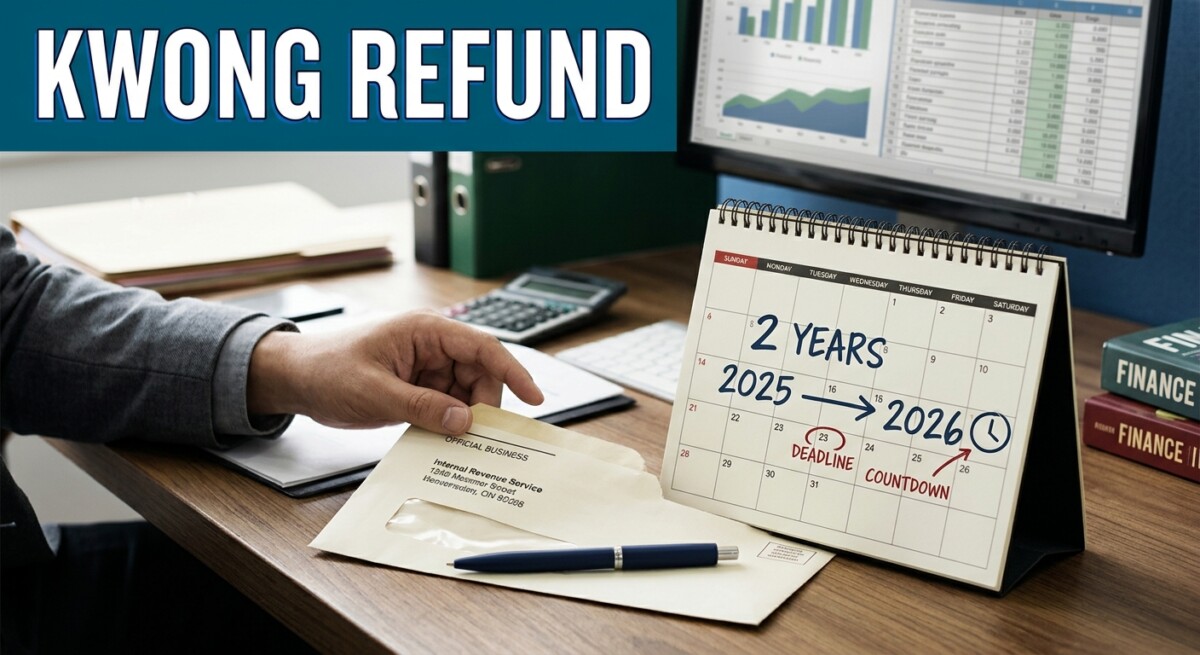
Under IRC Sec. 6532(a)(1), a taxpayer who has filed a refund claim and received a formal notice of disallowance from the IRS has two years from the date of that notice to file a refund lawsuit in the U.S. Court of Federal Claims or a U.S. District Court. Miss that window, and the right to sue is generally gone — no matter how good the refund claim is on the merits.
In Kwong v. United States, 179 Fed. Cl. 382 (2025), the Court of Federal Claims held that the two-year suit-filing deadline in Sec. 6532(a)(1) was automatically postponed under IRC Sec. 7508A(d) during the COVID-19 federally declared disaster period. That postponement ran from January 20, 2020 through July 10, 2023. On the court’s reading, the clock did not run for anyone during that window. The taxpayer in Kwong had filed suit on February 23, 2023 — a date that would have been late under the pre-postponement reading of the statute, but which the court found to be timely once the Sec. 7508A(d) postponement was applied.
The practical significance is large. The National Taxpayer Advocate has reported that the IRS has received more than 275,000 Forms 843 asserting Kwong-related positions. That is a sliver of the universe of taxpayers who, in theory, could have been affected during the pandemic years when examinations stalled, correspondence lagged, and prior claims sat unresolved.
What is actually in these IRS Kwong denial letters? ✉️
Two kinds of letters are going out: a formal notice of claim disallowance that starts the two-year lawsuit clock, and a ‘no consideration’ letter that declines to process the claim without reaching the merits. They do very different things.
A Form 843, Claim for Refund and Request for Abatement is the vehicle most Kwong-related protective claims have used. When the IRS acts on a Form 843, it generally either processes the claim (and allows or denies it on the merits) or sets it aside without processing. The letters now circulating fall into two buckets with very different consequences:
| Letter type | What it says | What it does |
|---|---|---|
| Notice of claim disallowance | The IRS has reviewed the claim and is denying it in whole or in part on substantive grounds. | Starts the two-year clock under Sec. 6532(a)(1) to file a refund lawsuit. Miss the deadline and the right to sue is generally lost. |
| ‘No consideration’ letter | The IRS is declining to process the claim at all — commonly because it believes the claim is time-barred, duplicative, or outside the agency’s authority. | Does not, on its own, start the two-year suit-filing clock, because there is no formal disallowance. But it may be the only communication a taxpayer ever receives — the claim sits in limbo unless the taxpayer pushes back. |
The Taxpayer Advocate’s concern is that both letter types are being issued using screening criteria that may not account for the legal questions Kwong is still litigating. In other words, the IRS is applying an older, narrower reading of the deadlines even while courts work through whether that reading is correct. Taxpayers who received these letters cannot assume the IRS has considered — let alone rejected — the Kwong argument on the merits of their file.
What should a taxpayer do first after receiving a Kwong letter? 🧭
Do not throw it away, do not assume it ends the case, and do not wait to see if something else arrives. Calendar the two-year date on the letter, preserve every piece of correspondence, and get professional eyes on the file.
- Date the letter and calendar the deadline. If the letter is a formal notice of claim disallowance, the two-year suit-filing clock under Sec. 6532(a)(1) runs from the date on the notice. Count it in two places (your calendar and your CPA’s) and treat it as a hard deadline, not a target.
- Figure out which kind of letter it is. A notice of claim disallowance and a ‘no consideration’ letter look similar on the surface but have very different procedural consequences. If the letter is unclear, do not guess. Treat it as a disallowance (the stricter deadline) until a tax professional confirms otherwise.
- Pull the full file. The original return at issue, the Form 843, any transcripts, every piece of IRS correspondence, and any proof of mailing. Kwong turns on dates. The file needs to tell a dated story.
- Do not rely on ongoing IRS discussions to pause the clock. As the Taxpayer Advocate has reminded taxpayers, continued conversations with an IRS examiner generally do not stop the two-year lawsuit window from running after a formal disallowance.
- Decide whether to request reconsideration, appeal, or sue. Each path has its own deadlines and strategic trade-offs. The decision depends on which letter arrived, the strength of the underlying refund claim, and the amount at stake.
The silent trap: discussions do not stop the clock
A taxpayer who gets a notice of claim disallowance, writes back politely, and waits for the IRS to re-examine the case can lose the right to sue entirely. The two-year window in IRC Sec. 6532(a)(1) keeps running during that correspondence. File a protective suit before the deadline if the matter is not fully resolved.
What is the IRS supposed to do with claims tied to live litigation? 🏛️
The Internal Revenue Manual generally supports holding action on protective claims while related litigation is pending — which is exactly what the Taxpayer Advocate has asked the IRS to do with Kwong-related filings.
The Internal Revenue Manual provides guidance to IRS employees on how to handle claims that depend on the outcome of unresolved litigation. In broad terms, the manual contemplates that protective claims — those filed to preserve a taxpayer’s position while the governing law is being clarified in court — should generally be held, not disposed of prematurely, while the controlling legal questions are open.
That is the gap the Taxpayer Advocate has identified. On the one hand, the IRS has sent formal disallowance and ‘no consideration’ letters that are now starting clocks or sitting unresolved on taxpayers’ files. On the other hand, the Court of Federal Claims has already ruled in favor of a Kwong-style position in one case, and related issues remain in active litigation. The Advocate has asked the IRS to identify the taxpayers who received these letters, review the determinations, update the screening criteria, and take corrective action where appropriate.
For the individual taxpayer, that policy conversation is useful background — but it does not change the fact that the two-year clock on an actual disallowance letter still runs. Watching the policy debate is not a substitute for calendaring the deadline.
From our practice: build the dated story first
In our Los Angeles practice, every refund-deadline case gets a one-page dated chronology before anything else happens. Date of original return. Date the refund claim was filed. Date the IRS acknowledged it, if at all. Date of any disallowance or ‘no consideration’ letter. Date of every follow-up letter from the taxpayer or the IRS. Kwong lives or dies on that chronology. A client with a clear timeline has options. A client with a shoebox and a feeling that ‘something was mailed last spring’ is already behind.
Who is most likely to be affected by the Kwong refund claim ruling? 👥
Taxpayers whose refund claims or lawsuit deadlines would have run out between January 20, 2020 and July 10, 2023 are the clearest candidates. That includes a lot of individuals, small businesses, and employers who had pandemic-era disputes.
Likely categories to review carefully:
- Individuals with 2016–2019 refund claims. Claims whose two-year suit deadlines fell inside the postponement window are the paradigm Kwong fact pattern.
- Employers with Employee Retention Credit disputes. Many ERC refund claims and disallowance letters landed during or just after the postponement period and have been the subject of extensive IRS correspondence.
- Small businesses with pandemic-era employment tax claims. Overpaid payroll tax deposits, Form 941-X filings, and related refund requests from 2020–2022 often sat for extended periods during IRS backlogs.
- Taxpayers whose prior refund lawsuits were dismissed as untimely. A dismissal based on the pre-postponement reading of Sec. 6532(a)(1) may be worth a second look depending on the specific procedural history.
- Executors and trustees administering estates with open refund issues. Fiduciaries carry the same deadline risk, often with less insight into the correspondence history than the original taxpayer had.
What are the practical takeaways for taxpayers and CPAs? 🧾
Treat Kwong letters as time-critical events, not routine mail. Build a dated chronology, decide protective versus substantive strategy up front, and resist the urge to let discussions substitute for calendar entries.
- A letter from the IRS that uses the words ‘disallowed,’ ‘denied,’ or ‘notice of claim disallowance’ is a dated event with legal consequences. Open it the day it arrives.
- A ‘no consideration’ letter is not nothing. It usually means the IRS has set the claim aside without ruling on it — leaving the taxpayer to decide whether to push for a decision or move directly to litigation.
- Keep every envelope, every page, every certified-mail receipt. In a Kwong case, dates on paper are the file.
- If the two-year suit-filing deadline is approaching and the dispute is unresolved, a protective lawsuit may be necessary to preserve the right to sue. The decision should be made with professional guidance well before the deadline, not in the final week.
- If a taxpayer has already received a Kwong letter and the facts fit the Taxpayer Advocate’s concerns, the Advocate’s office itself can sometimes help pause or revisit the determination through the regular Taxpayer Advocate Service intake process.
Summary: Kwong refund claim letters and the two-year clock
- Kwong v. United States, 179 Fed. Cl. 382 (2025) read Sec. 7508A(d) to postpone the two-year suit-filing deadline in Sec. 6532(a)(1) during the COVID-19 federally declared disaster, January 20, 2020 through July 10, 2023.
- The IRS has received more than 275,000 Forms 843 asserting Kwong-related positions and is now mailing both formal disallowance letters and ‘no consideration’ letters.
- A disallowance letter starts a two-year clock to sue; a ‘no consideration’ letter does not, but may leave the claim indefinitely unresolved.
- Ongoing discussions with the IRS generally do not pause the two-year suit-filing clock.
- The National Taxpayer Advocate has urged the IRS to hold Kwong-related claims while the underlying legal questions remain open and to review letters already sent.
Frequently asked questions about Kwong refund claim denials ❓
Q. What is a Kwong refund claim?
A Kwong refund claim is a protective or substantive refund claim that relies on the Court of Federal Claims decision in Kwong v. United States, 179 Fed. Cl. 382 (2025). That ruling held that the two-year window in IRC Sec. 6532(a)(1) for filing a refund lawsuit after an IRS disallowance was automatically postponed under IRC Sec. 7508A(d) during the federally declared COVID-19 disaster period from January 20, 2020 through July 10, 2023. Taxpayers whose claims would otherwise be time-barred filed Form 843 asserting that reasoning.
Q. I received an IRS ‘no consideration’ or disallowance letter on my Kwong claim. Does that end my case?
No. The National Taxpayer Advocate has specifically warned that these letters should not be read as the end of the matter. A formal notice of claim disallowance starts the two-year clock under IRC Sec. 6532(a)(1) for filing suit, but it does not resolve the underlying legal question that Kwong is still litigating. You should preserve the letter, calendar the two-year suit-filing deadline from the date on the notice, and get a tax professional to review your options before that date — which may include filing in the Court of Federal Claims or a U.S. District Court.
Q. Does ongoing correspondence with the IRS pause the two-year lawsuit deadline?
Generally no. The Taxpayer Advocate has reminded taxpayers that continued discussions with the IRS after a formal notice of claim disallowance do not stop the two-year clock in IRC Sec. 6532(a)(1). Taxpayers who assume the clock has paused because an IRS examiner is still writing back can lose the right to sue entirely. Treat the date on the notice as a hard deadline and calendar accordingly.
Q. How many Kwong-related claims has the IRS received?
The National Taxpayer Advocate reported that the IRS has received more than 275,000 Forms 843 asserting Kwong-related positions. That figure represents a small fraction of the taxpayers who could potentially benefit from the ruling. Many Kwong claims have been protective — filed to preserve rights while the underlying law continues to be litigated — rather than claims the IRS has fully adjudicated on the merits.
Q. Does Rev. Proc. 2020-46 self-certification help with a Kwong claim?
No. Rev. Proc. 2020-46 self-certification applies to a different problem — a missed 60-day rollover deadline for retirement distributions — not to the Sec. 6532(a)(1) suit-filing deadline that Kwong addresses. There is no comparable self-certification path for the Kwong issue; the mechanism Kwong relies on is the automatic postponement under IRC Sec. 7508A(d), which applies by operation of law once a federally declared disaster is in effect.
Q. Should I file a Kwong protective claim now if I think I may be affected?
Timing is case-specific, but the National Taxpayer Advocate has urged potentially affected taxpayers to consider filing refund or protective claims rather than wait. The window to file a protective claim depends on each taxpayer’s facts and on how the IRS and the courts ultimately resolve the open legal questions. Our general approach in our Los Angeles practice is to review the taxpayer’s original filing dates, prior refund claims, and the IRS correspondence file before deciding whether a Kwong protective claim is appropriate for that taxpayer, and to document the filing in a way that supports both administrative and judicial review.
This article is general information, not tax or legal advice for your situation. Refund claim strategy, especially around the Kwong line of cases, depends on specific dates, correspondence, and procedural history. If you have received an IRS letter on a pending refund claim, contact SW Accounting & Consulting Corp for a confidential review before the two-year window on your file closes.