Is SaaS taxable? US state SaaS tax (2026)
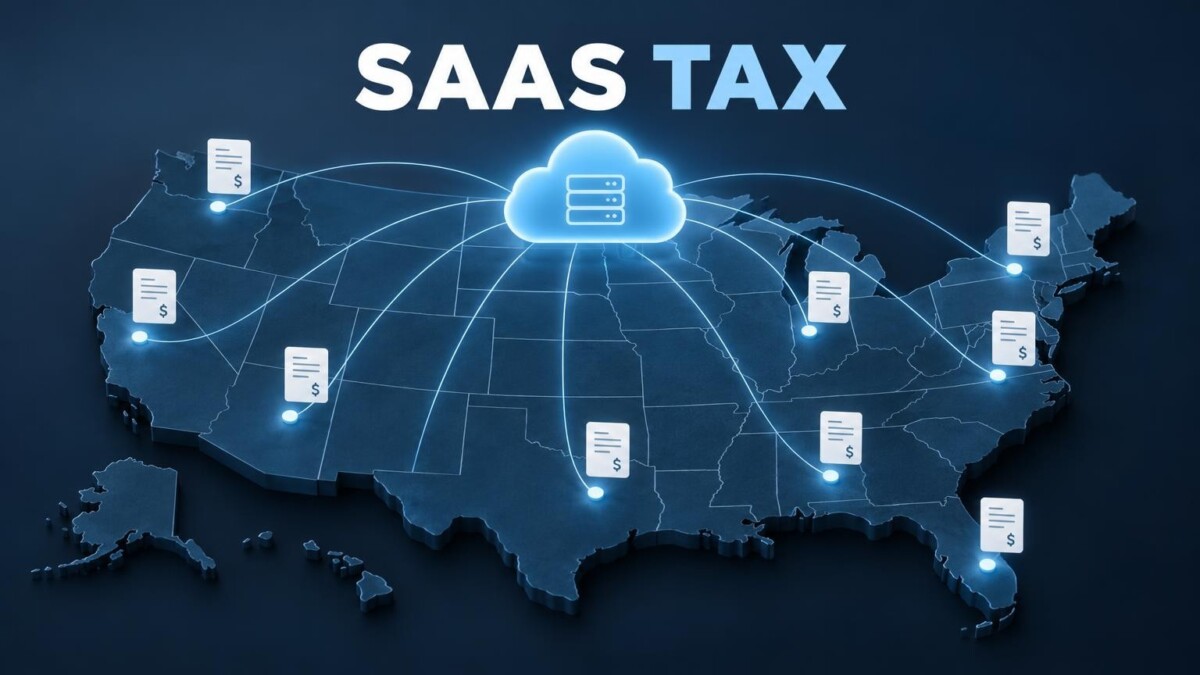
Software and SaaS clients almost never raise sales tax on their own. The assumption is that software is either taxed everywhere or taxed nowhere, and neither is close to the law. Roughly half the states tax SaaS, the other half do not, and the states that do tax it reach that result by at least three different theories: SaaS as software, SaaS as a service, and SaaS as its own defined category. For a company selling a single product across all fifty states, the same subscription can be fully taxable in one state, partially taxable in the next, and completely exempt in the third. This article walks through the primary-source rules that drive those outcomes, the bundling trap that decides the answer on most invoices, and the economic nexus threshold that catches SaaS companies earlier than they expect.
Why is SaaS taxability different in every state? 🗺️
Because no federal rule defines SaaS for sales-tax purposes. Each state writes its own definition and chooses whether that definition reaches hosted software, and the choices do not line up.
Sales and use tax is a state tax, not a federal tax, so the question “Is SaaS taxable?” is not one question. It is a set of state-by-state questions, each answered by a statute, a regulation, or a departmental ruling. Four patterns cover most of the map:
- SaaS as prewritten software. States that treat prewritten (canned) software as tangible personal property, and then extend that treatment to software accessed remotely, tax SaaS the same as a downloaded copy. New York is the clearest example. 20 NYCRR §526.7(e)(4) defines prewritten computer software as tangible personal property, and New York Tax Bulletin TB-ST-128 (Computer Software) confirms that the sale of a license to remotely access prewritten software is taxable the same as a sale of the software itself.
- SaaS as a data processing service. Texas does not treat SaaS as software. It treats it as a data processing service under Tex. Tax Code §151.0101 and Texas Comptroller Rule 3.330 (Data Processing Services). Twenty percent of each charge is exempt by statute, so Texas effectively taxes 80% of a SaaS fee.
- SaaS as remotely accessed software. Washington uses a separate concept — Remotely Accessed Software, or RAS — defined and taxed under WAC 458-20-15503 (digital products and RAS). RAS is taxable regardless of where the server sits, as long as the end user is in Washington.
- SaaS exempt by regulation. California currently taxes software only when it is transferred on tangible storage media. CDTFA Regulation 1502 explains that electronically delivered software and software accessed over the internet are not subject to sales or use tax. SaaS billed with no shipped media is not sales-taxable in California today.
A fifth category — carve-out states that define SaaS directly in statute — is where Tennessee sits. Tenn. Code Ann. §67-6-233, added in 2015, taxes the access and use of software sourced to the location of the customer, and the Tennessee Department of Revenue SaaS guidance explains how to apply that rule to recurring subscriptions. Tennessee is also one of the clearest sourcing rules in the country, because the statute is explicit that the location of the user, not the location of the server, controls.
Which states tax SaaS, and how? 📋
A cross-section of the most common patterns, pulled from each state’s own statute, regulation, or departmental guidance.
| State | SaaS taxable? | Primary-source rule |
|---|---|---|
| New York | Yes — taxed as prewritten software | 20 NYCRR §526.7(e)(4); TB-ST-128 |
| Texas | Yes — taxed as data processing (80% of charge) | Tex. Tax Code §151.0101(a)(12); 34 TAC §3.330 |
| Washington | Yes — taxed as Remotely Accessed Software (RAS) | WAC 458-20-15503 |
| Tennessee | Yes — sourced to the user’s location | Tenn. Code Ann. §67-6-233 |
| California | No — electronic delivery is not taxable | CDTFA Regulation 1502 |
| Chicago (local) | Yes — Personal Property Lease Transaction Tax on cloud use | Chicago Lease Tax Ruling No. 12 |
The pattern matters, not the row count. A client selling the same subscription into each of these jurisdictions is applying four different tax theories to one product. In New York the question is whether the user has a license to the software. In Texas the question is what portion of the charge is data processing. In Washington the question is where the user sits. In California the question is whether anything physical shipped. In Chicago the question is whether the Illinois state analysis is even the right analysis, because Chicago imposes a separate local tax under Chicago Personal Property Lease Transaction Tax Ruling No. 12 at 11%.
The same product, four tax theories
A SaaS company selling into New York, Texas, Washington, and California is not running one sales-tax determination. It is running four different ones: tangible personal property, data processing, RAS, and “nothing shipped.” The exposure rarely sits in picking the wrong rate. It sits in applying the wrong theory and never noticing.
How do bundled subscriptions change the answer? 🧾
A subscription that packages taxable and exempt pieces for one non-itemized price is almost always taxed on the full price unless the invoice separates the components.
Most states follow the bundled transaction rule in Streamlined Sales and Use Tax Agreement §327 (bundled transactions). When a single non-itemized price covers taxable and non-taxable products, the entire sale is treated as a sale of the taxable item, with narrow exceptions. The two exceptions that come up most often are a true-object test (the non-taxable portion dominates and the taxable piece is incidental) and a de minimis or price-test exception (the taxable portion is below a stated percentage of the whole).
A SaaS subscription frequently bundles several components: software access (the SaaS itself), hosting, customer support, periodic professional services, and sometimes a downloadable component or a connected device. Which of those pieces are taxable depends on the state. What does not depend on the state is this: an invoice that lists one price for “Enterprise Plan” with nothing separately stated gives the auditor nothing to work with, and most state bundling rules then default to taxing the whole charge at the taxable component’s rate.
The invoice is the audit document
A company that bills one flat subscription price with no component itemization cannot reach the better bundling answer even in states that would allow it. The exposure is not the rate; it is that the invoice does not carry the data needed to defend a better rate. Separately stating software access, hosting, support, and professional services on the invoice preserves the option in most states and costs nothing to implement.
California maintenance and support charges on prewritten software are governed by a separate set of rules in CDTFA Publication 119 (Warranties and Maintenance Agreements), which distinguishes between mandatory and optional support contracts and between separately stated and bundled support. The analysis is the same: the invoice decides the answer more often than the product.
When does a SaaS company cross economic nexus? 🧮
When the Wayfair thresholds in each state are met. Subscription revenue accumulates month over month, so SaaS companies trip these thresholds earlier than one-time sellers of the same size.
Before 2018, a state could not require a seller to collect sales tax unless the seller had a physical presence in the state. The Supreme Court overruled that rule in South Dakota v. Wayfair, 585 U.S. 162 (2018). After Wayfair, a state can impose a collection duty on a seller whose only connection with the state is a quantum of economic activity above a threshold defined by the state. The decision validated South Dakota’s $100,000 or 200-transaction threshold, and most states adopted similar numbers.
Two things change the Wayfair math for SaaS specifically. First, recurring revenue compounds. A customer base of a few hundred subscribers spread evenly across the country can push a modest company over a $100,000 or 200-transaction threshold in several states within one year. Each monthly invoice is usually a separate transaction for threshold purposes, so a 200-transaction state is crossed by roughly seventeen monthly subscribers. Second, several states have since dropped the 200-transaction leg, keeping only the dollar threshold, and some have raised the dollar amount above $100,000. The threshold in every state the company sells into has to be checked against the state’s current statute, not the 2018 numbers.
- Pull a state-by-state revenue and transaction map. By state, 12-month rolling subscription revenue and the count of monthly invoices. Both legs need to be compared to the current threshold in each state.
- Register where the threshold is crossed. Nexus starts the day the threshold is crossed in most states, with collection usually required the following month or quarter.
- Revisit sourcing. SaaS sourcing varies — Tennessee is user location, Washington is end-user location, New York is where the customer accesses the software. Charging the wrong rate on the right invoice creates its own exposure.
- Review historical periods. If economic nexus was crossed three years ago and never registered, voluntary disclosure programs in most states can limit the lookback to three or four years with penalties abated.
What does the SaaS tax conversation look like with a client? 🧠
Short questions about product delivery, invoice structure, and customer footprint — not a formal study. The answers decide which states need a closer look.
Most SaaS clients have never had this conversation. The questions that get a firm most of the way in a single working session are mechanical:
- How is the product delivered? Hosted, downloaded, or some mix by plan? A single plan that offers a downloadable component to some customers and not others usually produces at least two different tax answers in the same state.
- Where do the largest customer segments sit? Three or four states usually produce 80% of the revenue. Those are the states where the taxability call matters most.
- What does the invoice look like today? One flat line, or hosting + support + services separately stated? The invoice structure is the lever.
- Has nexus been measured against subscription revenue specifically? One-time-sale benchmarks understate what SaaS customers accumulate.
From our practice: the answer is almost always on the invoice
In our practice, a few hours of invoice redesign and a state-by-state map of the top customer locations pay back faster than any formal study. The study is rarely the problem. The problem is a product billed in a format that cannot represent the right answer even in states where the right answer is available.
Summary: SaaS sales tax in the US
- Roughly half the states tax SaaS; the rest do not. The states that tax it use at least four different theories.
- New York taxes SaaS as prewritten software under 20 NYCRR §526.7(e)(4) and TB-ST-128.
- Texas taxes SaaS as a data processing service at 80% of the charge under 34 TAC §3.330.
- Washington taxes remotely accessed software under WAC 458-20-15503; Tennessee taxes SaaS and sources it to the user’s location under Tenn. Code Ann. §67-6-233.
- California does not currently tax electronically delivered software or SaaS; CDTFA Regulation 1502 requires a tangible transfer.
- Bundled subscription pricing usually defaults to the taxable component rate unless the invoice separately states each piece.
- Economic nexus thresholds after Wayfair are crossed faster by SaaS than by one-time sellers of equivalent size, because subscription revenue and transaction counts compound monthly.
Frequently asked questions about SaaS tax ❓
Q. Is SaaS taxable in every state?
No. Roughly half the states tax SaaS in some form; the rest do not. New York treats SaaS as prewritten software, which is tangible personal property, and taxes it under 20 NYCRR §526.7(e)(4) and TB-ST-128. Texas taxes SaaS as a data processing service (80% of the charge) under Comptroller Rule 3.330. Tennessee taxes it under Tenn. Code Ann. §67-6-233. Washington taxes remotely accessed software under WAC 458-20-15503. California currently does not tax electronically delivered software or SaaS; CDTFA Regulation 1502 requires a transfer of tangible media before sales tax applies.
Q. Does California tax SaaS?
Not as sales tax. CDTFA Regulation 1502 says the sale of a prewritten program is taxable only when the program is transferred on tangible storage media, such as a disk. Electronically delivered software and software accessed remotely are not subject to California sales or use tax under the current regulation. Local option taxes on telecommunications or utility services can still reach some digital transactions, so the full invoice has to be reviewed, but the base SaaS fee is not sales-taxable in California today.
Q. What creates economic nexus for a SaaS company?
The Supreme Court held in South Dakota v. Wayfair that a state can require remote sellers to collect sales tax based on economic activity alone, without a physical presence. Each state sets its own threshold. The common pattern after Wayfair is $100,000 in gross sales or 200 separate transactions in the state during the prior or current calendar year, measured in a state’s own statute. A few states use higher dollar thresholds and have dropped the transaction count. Recurring subscription revenue accumulates month over month, so SaaS companies cross these thresholds faster than one-time sellers of equivalent size.
Q. Is a bundled subscription that mixes taxable and exempt pieces fully taxable?
Often yes, unless the invoice separates the pieces. Most states follow the bundled transaction rule in Streamlined Sales and Use Tax Agreement §327: when taxable and non-taxable products are sold for one non-itemized price, the entire charge is treated as the taxable item unless the non-taxable portion is the true object and meets a de minimis or price-test exception. Separately stating hosting, support, and professional services on the invoice preserves the better outcome in most states.
Q. How is Texas different from other SaaS states?
Texas does not treat SaaS as software at all. It treats it as a data processing service under Tex. Tax Code §151.0101(a)(12) and Comptroller Rule 3.330. Twenty percent of the charge is exempt by statute, so Texas taxes 80% of a SaaS fee rather than the full amount. The exemption is automatic and should not be itemized on the invoice; it is calculated at the state rate applied to 80% of the sales price.
Q. What about Chicago’s lease tax on cloud software?
Chicago imposes a Personal Property Lease Transaction Tax on nonpossessory computer leases, including cloud-based software accessed by Chicago customers. Chicago Personal Property Lease Transaction Tax Ruling No. 12, effective 2016 and administered by the Chicago Department of Finance, treats cloud computing as a lease of personal property to the extent the customer uses it in Chicago. The rate is currently 11% for nonpossessory computer leases. The Chicago tax is a local transaction tax, separate from Illinois state sales tax, and is sourced by the location of the user, not the server.
This article is general information, not tax or legal advice for your situation. SaaS taxability turns on the exact product, invoice structure, and customer footprint, and each state updates its rules on its own schedule. Contact SW Accounting & Consulting Corp for a confidential state-by-state review.