Who Can Garnish Your Social Security Benefits? Complete Guide
If you’re a retiree depending on Social Security as your primary income, the idea that someone could take a chunk of that check is alarming. And right now, the alarm is getting louder: the Trump administration recently resumed social security garnishment for delinquent student loans and raised Social Security overpayment withholding from 10% to 50%. Understanding exactly who can garnish your benefits — and how to protect yourself — has never been more important.
At SW Accounting & Consulting Corp, we advise retirees and pre-retirees in Los Angeles on how to safeguard their income streams. In this guide, we break down every creditor authorized to garnish Social Security, the dollar limits that apply, and four concrete steps you can take today to protect your benefits.
What Federal Law Says About Social Security Garnishment 🛡️
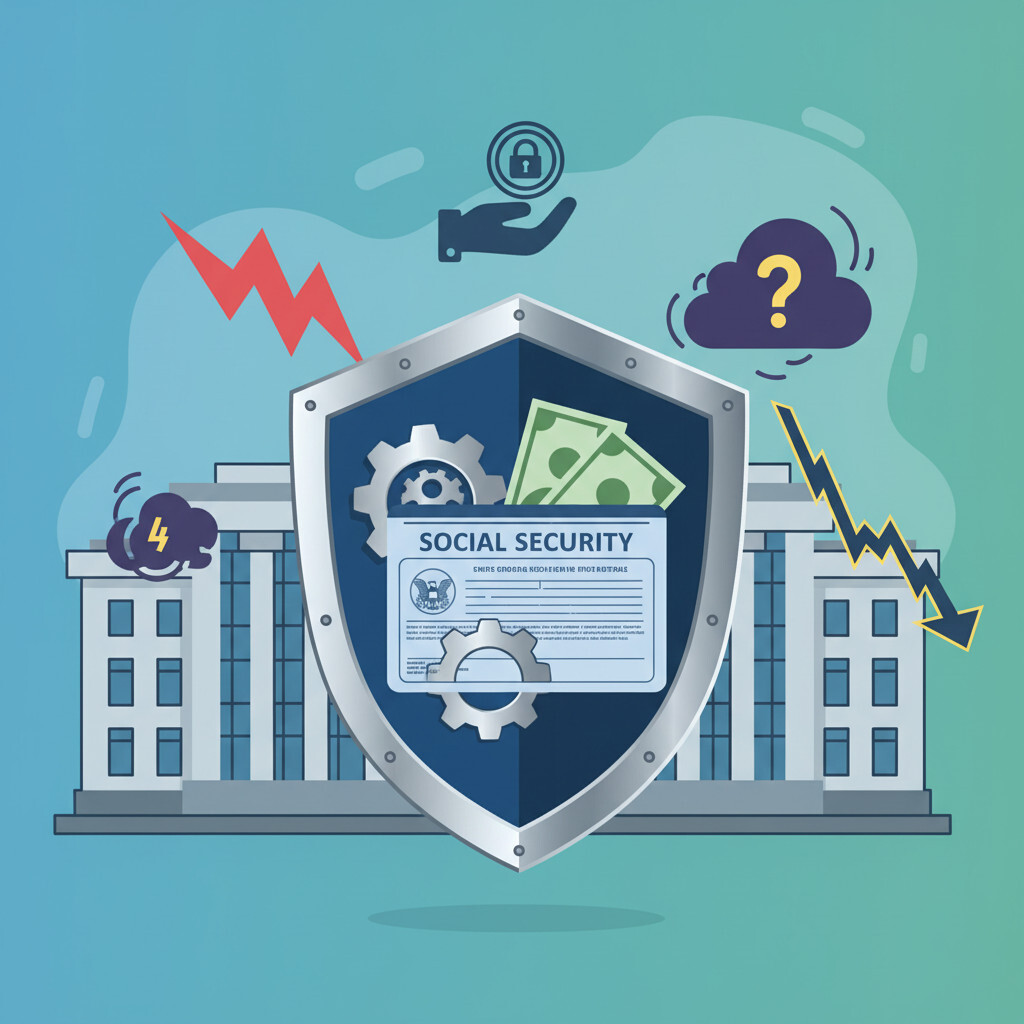
Federal law broadly protects Social Security benefits from commercial creditors under Section 207 of the Social Security Act, but carves out specific exceptions for government agencies and court-ordered obligations.
Section 207 of the Social Security Act states that Social Security benefits are exempt from garnishment, levy, or attachment by most creditors. This means that credit card companies, medical bill collectors, personal loan lenders, and similar private parties generally cannot touch your monthly check — even if they obtain a court judgment against you.
Additionally, the federal Consumer Credit Protection Act (CCPA) provides an extra layer of protection once benefits hit your bank account — though that protection has critical limitations depending on how you receive your payments, as we’ll explain below.
The key takeaway: private creditors are almost always blocked. The real risks come from federal government agencies and domestic obligation courts.
Which Federal Agencies Can Garnish Your Social Security? 🏗️
Four types of federal creditors have statutory authority to garnish Social Security retirement benefits: the SSA, the IRS, the Department of Education, and the U.S. Treasury through the Treasury Offset Program.
| Creditor | Max Garnishment | Reason |
|---|---|---|
| Social Security Administration (SSA) | Up to 50% | Overpayment recovery |
| Internal Revenue Service (IRS) | Up to 15% | Unpaid federal income taxes |
| U.S. Dept. of Education | Up to 15% (min. $750/mo left) | Defaulted federal student loans |
| Treasury (via TOP) | Up to 15% | Various federal agency debts |
| Child Support / Alimony (state courts) | Up to 60-65% | Court-ordered family obligations |
SSA Overpayment (up to 50%): If the Social Security Administration paid you more benefits than you were entitled to, it can withhold up to 50% of your ongoing benefits to recover that debt. This rate was raised recently — previously it was 10% — so many retirees are now seeing far steeper withholdings.
IRS for Unpaid Taxes (up to 15%): The IRS has authority under the Federal Payment Levy Program to garnish up to 15% of your Social Security benefits for unpaid federal taxes — with no court order required. This is one of the most common forms of Social Security garnishment we see in our practice.
Department of Education for Student Loans (up to 15%): If you defaulted on a federal student loan, the Department of Education can garnish up to 15% of your benefits. Crucially, a rule requires that you be left with at least $750 per month — a threshold set in 1996 that has never been adjusted for inflation.
Treasury Offset Program (up to 15%): The Treasury Department can offset Social Security benefits to collect delinquent debts owed to various other federal agencies — including SNAP overpayments, Small Business Administration debts, and VA non-disability debts.
The $750/month minimum floor for student loan garnishments was set in 1996 and has never been inflation-adjusted. In today’s dollars, $750 barely covers basic living expenses in most parts of the country — and in California, it’s not even close. If you’re near retirement with federal student loan debt, addressing that debt before retirement is critical.
Can Court-Ordered Child Support or Alimony Garnish Social Security? 👪
Yes — state family courts can require garnishment of Social Security benefits for delinquent child support and alimony, at rates up to 60-65% of your benefits.
State child support enforcement agencies can garnish Social Security retirement benefits to satisfy court-ordered child support. The maximum is 60% of your benefits — or 65% if you’re more than 12 weeks behind on payments. Similarly, overdue court-ordered alimony can also lead to garnishment of your Social Security check.
Additionally, if a criminal court orders restitution to a victim, your Social Security benefits can be garnished to fulfill that obligation.
In our Los Angeles practice, we frequently see clients surprised to learn that the IRS can garnish Social Security without going to court first. This is different from private creditors, who always need a court judgment. If you owe back taxes, the IRS can initiate a levy against your Social Security benefits through the Federal Payment Levy Program with relatively short notice. Setting up an IRS installment agreement before you reach Social Security age is one of the most important tax-planning steps we advise our clients to take.
What’s the Difference Between Garnishment and Bank Levy for Social Security? 🏦
Garnishment intercepts your benefit before it reaches you; a bank levy seizes funds from your bank account after deposit — and the rules governing each are different.
Private creditors cannot garnish your Social Security check before it’s paid to you — that protection is absolute for non-government, non-family-court creditors. However, once your benefit is deposited into your bank account, private creditors may attempt a bank levy under certain conditions.
Federal regulations require banks to automatically protect at least two months’ worth of Social Security benefits from garnishment after they’ve been directly deposited. This “look-back” rule means your bank must identify and shield this protected amount before honoring a levy. However, if your account contains more than two months of benefits — or if funds are mixed with non-benefit income — the excess is potentially vulnerable.
Paper checks receive less protection than direct deposit. If you receive your Social Security by paper check and cash it or deposit it manually, the automatic two-month lookback protection may not apply in the same way.
How Can You Protect Your Social Security Benefits from Garnishment? ✅
Four key steps — using direct deposit, opening a dedicated account, responding to notices, and managing outstanding debts — provide the strongest protection for your benefits.
Step 1 — Use Direct Deposit or a Benefit Debit Card: Social Security payments received via direct deposit or a Treasury-issued prepaid debit card (Direct Express Debit Mastercard) are subject to the two-month automatic lookback protection. Paper checks do not carry this same protection. If you’re not already on direct deposit, switching is one of the simplest things you can do.
Step 2 — Open a Dedicated Account: Keep your Social Security benefits in a separate bank account used solely for those deposits. If funds are mixed with wages, gifts, or other income, it becomes harder to identify the protected dollars — and potentially jeopardizes the protection. A dedicated account removes any ambiguity.
Step 3 — Don’t Ignore Legal Notices: If you receive a garnishment notice from a federal agency or a court, respond promptly. Many garnishments can be negotiated or reduced — especially SSA overpayments and IRS debts. You may be eligible for a waiver of an SSA overpayment if repayment would cause financial hardship, or you can request a reduced withholding rate.
Step 4 — Proactively Manage Outstanding Debts: The best time to deal with a tax debt, student loan default, or SSA overpayment is before you retire — when you have more income flexibility. Setting up an IRS installment agreement, rehabilitating a federal student loan, or appealing an SSA overpayment decision before retirement removes the garnishment risk entirely.
Key Takeaways
- Only federal agencies (SSA, IRS, Education Dept., Treasury) and family courts can garnish Social Security — private creditors cannot.
- The SSA can now withhold up to 50% of your benefits for overpayments; the IRS can take up to 15% for back taxes.
- Direct deposit provides the strongest legal protection — paper checks are more vulnerable.
- A dedicated bank account for Social Security deposits simplifies identifying and protecting your funds.
- Address federal debts (tax debt, student loans, SSA overpayments) before retirement to eliminate garnishment risk entirely.