
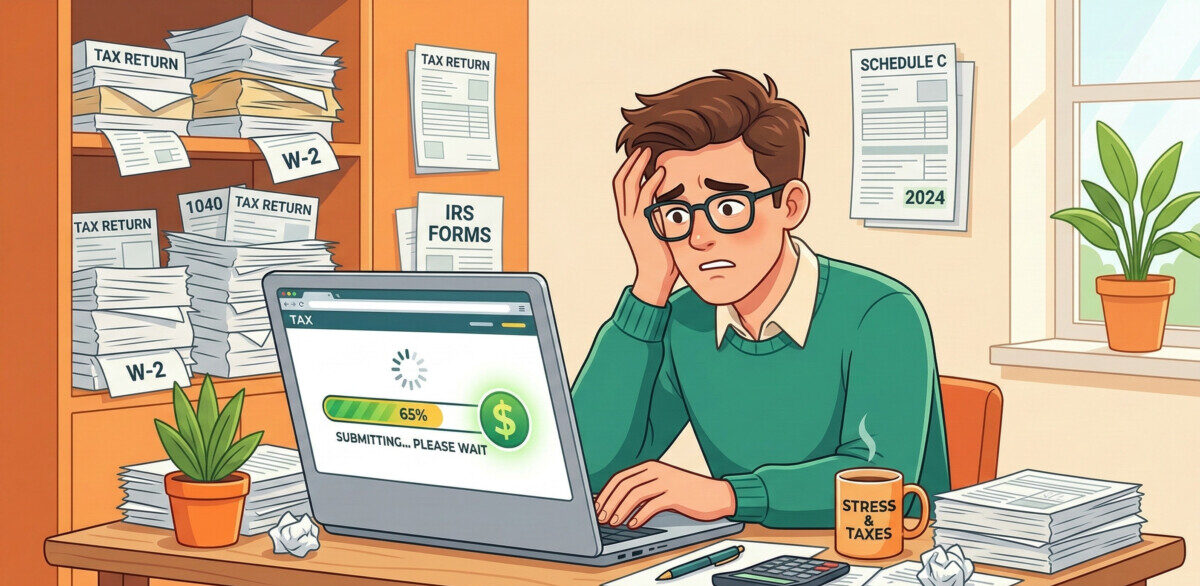
2025 Tax Refund Delays: Why Your Money Might Be Late (And How to Fix It)
Let’s be honest—we all look forward to that annual tax refund. Whether you were counting on a quick influx of cash to finally pay for that upcoming home renovation, book a long-overdue family vacation, or just pad your emergency savings account, the wait can be agonizing. But this year, you might need to pack a little extra patience. 😊
A recent January 26 report from the Treasury Inspector General for Tax Administration—an independent watchdog that keeps an eye on government financial operations—has issued a stark warning. The processing of some tax returns could face severe delays this year. Why? It boils down to a perfect storm of IRS staffing shortages, towering backlogs from previous years, and new federal mandates regarding how payments are issued.
If you’re wondering whether your return is going to sail through the system or get stuck in bureaucratic limbo, you’re in the right place. Let’s break down exactly what’s happening at the IRS this season and how you can protect your refund.
The Reality of the 2025 Tax Season 📉
To understand the scope of the problem, we have to look at the numbers. The IRS expects to receive a staggering 164 million tax returns for the 2025 tax year before the April 15 deadline. Handling that volume of paperwork and digital data is a monumental task even under the best conditions.
However, conditions are far from ideal. According to the internal memo, the IRS is not starting with a clean slate. They still need to process nearly 2 million unresolved tax cases left over from previous years. Imagine trying to start your workday when your desk is already buried under a mountain of unfinished assignments from last week—that is the reality the IRS is facing right now.
To make matters worse, they are attempting to clear this massive backlog with a workforce that has shrunk by roughly 27%. A smaller team handling a larger backlog while trying to keep up with the current year’s influx of 164 million returns is a mathematical recipe for delays.
The Treasury Inspector General for Tax Administration (TIGTA) conducts independent audits and investigations to protect the integrity of the tax system. When TIGTA issues a warning about delays, it is based on hard internal data, not just speculation. You can trust that these warnings are highly accurate.
Who is Most Likely to Face Delays? 🐢
So, which returns are most likely to be held up in this bottleneck? The simple answer is: Anything that requires manual handling. Because the IRS is operating with a 27% smaller workforce, any return that cannot be processed automatically by their computer systems will fall into a manual review queue. And that queue is moving very slowly.
High-Risk Categories for Tax Delays
| Filing Type / Issue | Why It’s Delayed | Risk Level |
|---|---|---|
| Paper Filings | Requires manual data entry by an IRS employee. | Very High |
| Amended Returns (1040-X) | Always requires manual review to compare changes against the original. | Very High |
| Identity Verification | Flagged by fraud filters; requires taxpayer to verify identity via letter or portal. | High |
| Mismatched Income | The income you reported doesn’t match the W-2 or 1099 submitted by your employer/client. | High |
| EITC or ACTC Claims | By law, the IRS cannot issue these refunds before mid-February to prevent fraud. | Guaranteed Delay |
If you fall into any of the categories above, you should adjust your financial expectations accordingly. Straightforward, error-free e-filed returns with direct deposit are still likely to be processed on time—especially if you are an early filer who submits before the peak filing season hits in March and April.
Even if you file electronically and perfectly, there are legal exceptions. If you claim the Earned Income Tax Credit (EITC) or the Additional Child Tax Credit (ACTC), the IRS is legally barred from issuing your refund before mid-February. This is a fraud-prevention measure mandated by the PATH Act. Do not panic if you don’t see your funds immediately if you claim these credits!
The End of Paper Checks? 🛑
Perhaps the most surprising reason for delays this year comes from a new executive order requiring federal agencies to phase out paper checks. The government is actively pushing to modernize payments, and they are using a somewhat aggressive tactic to encourage taxpayers to switch to digital banking.
Last year, roughly 6 million refunds—which is about 7% of the total—were issued by traditional paper check. This year, if you opt for a paper check, you are almost guaranteed a significant delay.
Here is how it works: The IRS will intentionally freeze paper check refunds for six weeks. During this window, they expect the taxpayer to log in and supply their bank account information for a direct deposit. If, after those six weeks, no bank information is provided, only then will the agency finally print and mail a paper check.
That means if you rely on paper checks, your refund wait time just increased by a minimum of a month and a half, not counting the time it takes the postal service to deliver it.
Actionable Steps: How to Avoid Tax Refund Delays 🛡️
Now that we know the pitfalls, let’s talk about solutions. How can you ensure your return bypasses the manual processing nightmare and gets deposited into your account as quickly as possible?
- E-file with Direct Deposit: This is the golden rule. Filing electronically with direct deposit remains the absolute most reliable way to avoid delays this tax season. It bypasses the paper processing room and the new 6-week paper check freeze.
- Double-Check Your Documents: Before hitting submit, meticulously review all forms. Ensure your W-2s, 1099s, and any other income documents match exactly what you are reporting. A simple typo of $50,000 instead of $5,000 will trigger a mismatched income flag and throw your return into the manual review pile.
- Verify Your Bank Info: Check your routing and account numbers twice. If the IRS attempts a direct deposit to a closed or incorrect account, the bank will reject it, and the IRS will be forced to convert it to a paper check (triggering the 6-week delay).
- Set up an IRS Online Account: Having an online account gives you direct access to your tax records and allows you to quickly view any notices or identity verification requests that might require your immediate attention.
Finally, once you file, take advantage of the IRS’s “Where’s My Refund?” tool. You can usually see updates as soon as 24 hours after e-filing, or about four weeks after submitting a paper return.
🔢 Refund Wait Time Estimator
Select your filing method and circumstances below to see if you should expect delays.
Conclusion: Key Takeaways 📝
The 2025 tax season is going to be a bumpy ride for anyone relying on outdated filing methods. Between the 2 million case backlog, the 27% reduction in IRS staff, and the aggressive phase-out of paper checks, the margin for error is incredibly thin this year.
Take control of your return by reviewing your documents carefully, providing your bank account routing numbers, and submitting your taxes electronically. If you do that, you’ll be giving yourself the absolute best chance of getting your money on time so you can fund that vacation, renovation, or savings account without the headache.
Have you experienced IRS delays in the past, or do you have any specific questions about direct deposit? Let me know in the comments below, and I’ll do my best to help! 😊