Trump Accounts Guide 2026: $1,000 Deposit and Section 530A Rules
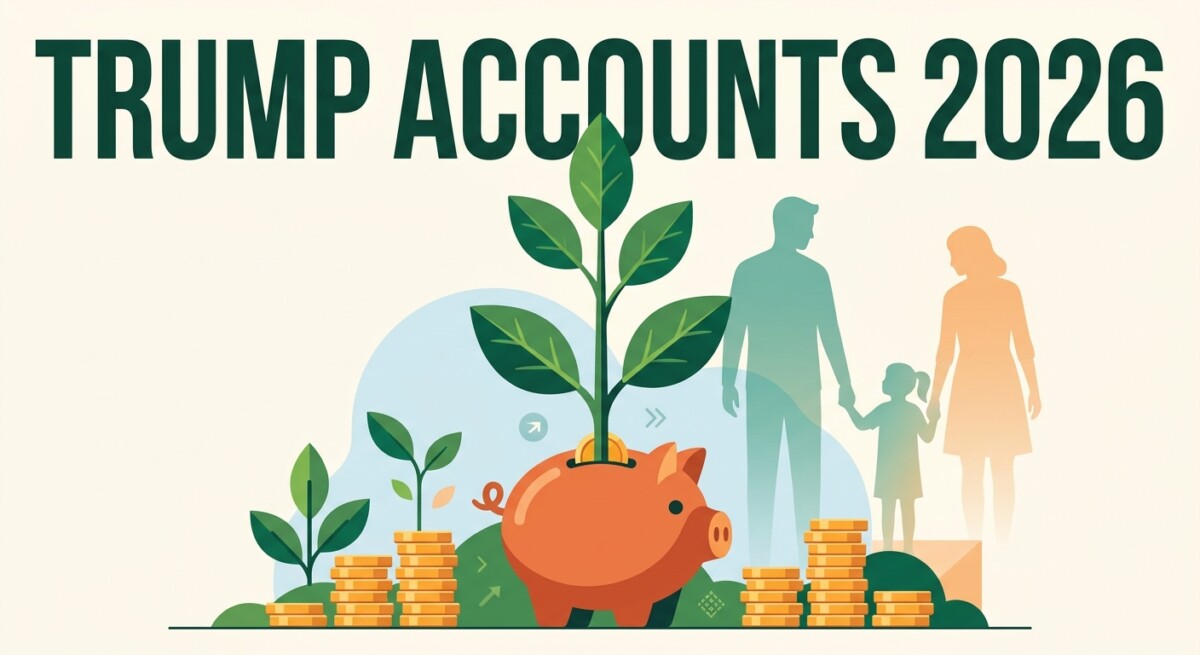
Starting July 4, 2026, families can begin contributing to a new type of tax-advantaged investment account for children — officially called a Section 530A account, but marketed as a Trump Account. If your child was born on or after January 1, 2025, the federal government will seed the account with $1,000 as long as basic identification requirements are met. This Trump Accounts guide lays out how the accounts work, who qualifies, what families and employers can add, and where the account overlaps or diverges from a 529 plan.
At SW Accounting & Consulting Corp, we help Los Angeles families and business owners fit new savings vehicles into a broader plan — 529s, custodial accounts, Roth IRAs for teens, and workplace benefits. Section 530A is genuinely new, and the pieces most likely to trip families up are the kiddie-tax interaction at age 18, the employer contribution channel, and the fact that qualified withdrawals still get taxed at ordinary rates (unlike a 529).
What is a Trump Account under IRC Section 530A? 👶
A Trump Account is a federally authorized custodial investment account for a U.S. child, created by the One Big Beautiful Bill Act (P.L. 119-21) and codified at IRC Section 530A. It is designed to build long-term wealth in low-cost stock index funds and behaves like a traditional IRA once the child turns 18.
Unlike a plain savings account, contributions to a Trump Account are invested in low-cost, broad-market stock index funds. Parents or legal guardians open and manage the account until the child reaches age 18. From that point on, the account functions much like a traditional individual retirement account: earnings continue to grow tax-deferred, and withdrawals are generally taxed at ordinary income rates and can be subject to early-withdrawal penalties depending on how and when the money is used.
The statutory framework — enacted with the OBBBA on July 4, 2025 — placed the accounts inside a new Internal Revenue Code section (§530A), separate from 529 plans and Coverdell ESAs. The Treasury and the IRS have launched an official enrollment site so families can open the account before contributions and government deposits go live on the July 4, 2026 activation date.
Who qualifies for the $1,000 federal deposit? 💵
The one-time $1,000 federal contribution is available for children born between January 1, 2025 and December 31, 2028 who have a valid Social Security number.
The government seed deposit is a limited-window benefit. Three practical requirements apply:
- Birth window: the child must be born between January 1, 2025 and December 31, 2028.
- Valid SSN: the child must have a Social Security number on file. Families should verify SSN issuance with the Social Security Administration before starting the enrollment process.
- Account opened in time: parents or guardians should register the account so the federal deposit can be credited once contributions activate on July 4, 2026.
To open the account, a parent or legal guardian completes Form 4547 to elect Section 530A treatment and then activates enrollment through the official site. Only one Trump Account is permitted per eligible child.
How much can families and employers contribute? 💼
Total annual contributions from all private sources are capped at $5,000, with employers able to contribute up to $2,500 of that on a non-taxable basis. Contributions from charities and state or local governments do not count against the annual cap.
The contribution rules layer three sources:
- Family, friends, and employers combined: capped at $5,000 per year per account.
- Employer channel: employers may contribute up to $2,500 per year to a Trump Account for an employee’s or employee’s child’s account. Amounts within the employer sub-cap are not treated as taxable wages to the employee.
- Charities and state/local governments: may contribute additional amounts that do not count against the annual $5,000 private cap.
For business owners, this is a genuinely new benefit design — a small dollar figure with high perceived value that can be added to a total compensation package, especially for younger workforces with young families. Payroll and benefits documentation should be updated to reflect the Section 530A employer contribution as a separately tracked, tax-favored item.
Trump Account vs 529 plan — which one for my child? 📚
A 529 plan wins on tax treatment for college costs; a Trump Account wins on flexibility of end-use because the funds are not tied to qualified education expenses.
Both accounts are designed for a child, but they solve different problems. A 529 delivers federal tax-free growth and tax-free withdrawals for qualified education expenses — that is a real advantage for families whose goal is college tuition. Many states also grant an income-tax deduction or credit for 529 contributions. A Trump Account, by contrast, grows tax-deferred (not tax-free), and withdrawals are generally taxable at ordinary rates when used for non-retirement purposes — but the funds can be directed to a broader set of goals such as a first home, starting a business, or continued investment through an IRA-style structure after age 18.
Practical framing for many families: if the goal is education, prioritize the 529. If the goal is long-term wealth or optionality for a young adult, add the Trump Account on top. Both can be funded in the same year within their own limits, and the Trump Account’s employer channel is unique to Section 530A.
How do Trump Account withdrawals and taxes work at age 18? 🎂
Before age 18, withdrawals are generally not permitted. Beginning in the year the child turns 18, the account operates similarly to a traditional IRA, and distributions are subject to income tax and potentially to early-withdrawal penalties depending on how the funds are used.
Some families will want to convert Trump Account balances into a Roth IRA after the child turns 18 to lock in future tax-free growth. That is where the kiddie-tax trap appears: converted amounts are treated as unearned income. Under current law, unearned income above the annual threshold — $2,700 for 2026 — for a child (and, in certain cases, for a young adult still claimed as a dependent through age 23 or 24 while a full-time student) is taxed at the parents’ marginal rate rather than the child’s lower rate.
The takeaway: the mechanical conversion is straightforward, but the tax cost is not automatic. Spreading a Roth conversion across multiple tax years — or waiting until the child is no longer a dependent — is often the difference between a modest tax bill and a surprisingly large one.
Trump Account vs 529 at a glance 📊
| Feature | Trump Account (Sec 530A) | 529 Plan |
|---|---|---|
| Federal seed | $1,000 for eligible 2025–2028 births | None |
| Annual contribution cap | $5,000 combined; $2,500 employer sub-cap | Up to federal gift-tax annual exclusion (5-year election available) |
| Growth | Tax-deferred | Tax-free |
| Qualified withdrawals | Taxed at ordinary rates; IRA-style after 18 | Tax-free for qualified education expenses |
| End-use flexibility | Broad — education, first home, business, IRA-style rollover | Narrow — qualified education (K-12 caps and apprenticeship expansions apply) |
📌 Key Takeaways
- Trump Accounts are the new IRC Section 530A child investment accounts created by the OBBBA (P.L. 119-21).
- A $1,000 federal deposit is available for eligible children born January 1, 2025 through December 31, 2028 with a valid Social Security number.
- Annual contributions are capped at $5,000, including up to $2,500 from employers on a non-taxable basis.
- The account behaves like a traditional IRA starting at age 18 — plan any Roth conversion around the kiddie tax.
Frequently Asked Questions ❓
Q. When can I actually open and fund a Trump Account?
Parents and guardians can register in advance and complete Form 4547, but contributions and the federal $1,000 seed deposit go live on July 4, 2026 under IRC Section 530A.
Q. Which children qualify for the $1,000 federal contribution?
Children born between January 1, 2025 and December 31, 2028 with a valid Social Security number qualify. Families whose child does not yet have an SSN should complete that step with the Social Security Administration before enrollment.
Q. Can grandparents and employers both contribute?
Yes. Family members, friends, and employers can all contribute, up to a combined $5,000 per year per account. Within that cap, employers can add up to $2,500 that is not treated as taxable wages to the employee.
Q. Are Trump Account withdrawals tax-free like a 529?
No. Growth inside the account is tax-deferred, not tax-free, and withdrawals are generally taxed as ordinary income. A 529 remains more efficient for qualified education expenses, but the Trump Account is more flexible on end-use.
Q. What happens when the child turns 18?
The account begins to operate similarly to a traditional IRA. Distributions may be taxed at ordinary rates and can be subject to early-withdrawal penalties depending on the use. A Roth IRA conversion is possible but should be modeled against the kiddie tax.
Q. Should I open a Trump Account instead of a 529 plan?
In most cases the answer is “both, not either.” A 529 remains the most tax-efficient vehicle for education expenses, while the Trump Account adds flexibility for a first home, a business start, or long-term investing. Coordinate the two rather than choose between them.
Trump Accounts are a genuinely new savings vehicle, and the interaction with 529 plans, Roth IRAs, and the kiddie tax can quickly get complex. If you would like help designing a coordinated childhood-savings plan for your family or setting up a Section 530A employer contribution benefit for your team, contact SW Accounting & Consulting Corp. Primary sources: the One Big Beautiful Bill Act (P.L. 119-21), the Internal Revenue Code at Cornell Law School — Legal Information Institute, the Internal Revenue Service, and the Social Security Administration.