Pop-up shop sales tax in California: what do vendors owe?
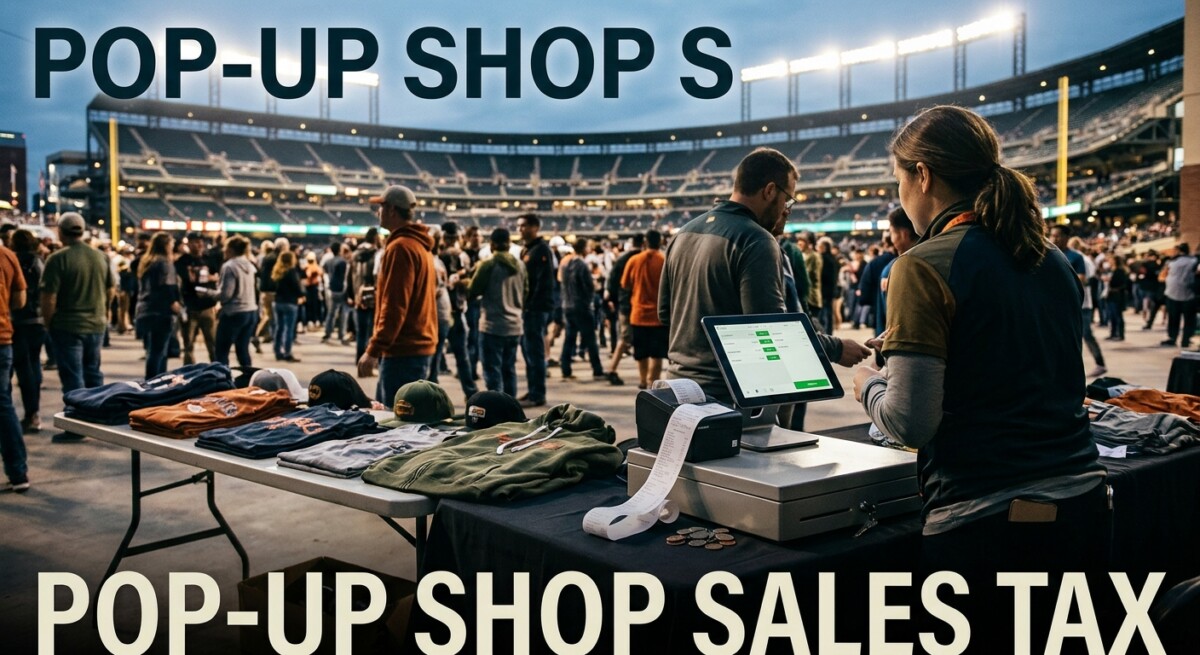
BTS Week has filled Inglewood and Koreatown with pop-up shops, fan-run merch tables, food vendors, and one-weekend retail events. Some are established stores opening a second location for the week. Some are out-of-state and overseas brands testing Los Angeles. Some are first-time sellers with a folding table. The pop-up shop sales tax rules do not distinguish between them, and neither do CDTFA field agents who walk large events with a clipboard. Here is what a temporary vendor has to do before, during, and after the event.
Do you need a seller’s permit for a pop-up shop that lasts one weekend? 🧾
Yes. One day or ninety, retail sales of tangible goods in California require a seller’s permit. CDTFA issues a free temporary permit for sales at one location for 90 days or less.
The California Department of Tax and Fee Administration requires a seller’s permit for anyone making retail sales of tangible personal property in the state. Under the CDTFA temporary seller rules, a business that will sell at one location for 90 days or less can apply for a temporary permit online. There is no fee. Out-of-state and foreign businesses can apply. Most event organizers require the permit number before assigning a booth, because organizers who allow unpermitted vendors can face their own liability.
Selling without a permit exposes you to the tax itself, a penalty, and interest, and it starts the relationship with CDTFA on the wrong foot. If you already hold a regular California seller’s permit for your store, you do not need a separate temporary permit; you add the temporary location to your account and report the sales on your regular return, allocated to the event’s district.
Fan-run merch tables are not exempt
Fans selling handmade goods, prints, or trading cards at a meetup are retailers under California law once the activity is more than occasional. CDTFA treats more than two sales in a 12-month period as a business requiring a permit. Occasional-sale rules protect a garage sale, not a merch table at a stadium event.
Which pop-up shop sales tax rate applies near SoFi Stadium? 📍
The rate where the customer takes possession of the goods. Inglewood is 10.25 percent under the CDTFA table effective July 1, 2026. The City of Los Angeles is 9.75 percent.
California’s sales tax is a statewide base plus county and city district taxes. The rate that applies to a sale is the combined rate at the point of sale, meaning where the customer takes possession. Your home store’s address does not matter. Under the CDTFA rate table effective July 1, 2026:
| Sale location | Combined rate |
|---|---|
| Inglewood (SoFi Stadium, Kia Forum) | 10.25% |
| City of Los Angeles (Koreatown, Downtown) | 9.75% |
| Santa Monica, Culver City | 10.75% |
If your point-of-sale is set to a Koreatown address and you sell in Inglewood, you under-collect by half a percent on every transaction. CDTFA does not care what you collected; it cares what was due. The difference comes out of your margin. Change the location in your POS before the first sale and confirm the receipt shows the right rate. If you sell at two events in different cities, change it again.
Report the sales on Schedule A of your return, allocated to the district where the event took place. The local share of the tax goes to Inglewood, not to your home city, and CDTFA cross-checks district allocations against the locations on your permit.
Do giveaways, samples, and influencer gifts owe use tax? 🎁
Yes. Goods you bought for resale without paying tax and then handed out free are subject to use tax on your cost.
Merch pop-ups give away a lot of product: promotional stickers, samples, gifts to staff, and units handed to influencers for content. Under the CDTFA use tax guidance, when you buy inventory with a resale certificate and then use it for a purpose other than resale, you owe use tax on your cost of the item. Giving it away is a use. So is opening it for display and discarding it.
At a pop-up where a third of the units go out as promotions, the use tax is not trivial. Keep a giveaway log by day with unit counts and your cost, and report the total on the same sales and use tax return. A vendor who reports sales but no use tax at an event known for giveaways is a routine audit selection.
From our practice: the giveaway log is the audit defense
In our practice, CDTFA examiners at retail audits reconcile inventory in, inventory out, and sales. The gap is presumed to be unreported sales unless you can show what happened to the units. A daily log that says “120 units given away, cost $3.40 each, use tax reported” turns a presumed sale at full price into a documented use at cost. The same log protects you on damaged and returned merchandise.
If you also sell online during the event, who collects the tax? 💻
It depends on the channel. Marketplaces collect on marketplace orders. You collect on your own site and on every in-person sale, even one rung through a marketplace’s card reader.
If online sales are a year-round business rather than an event add-on, our e-commerce seller accounting page covers sales tax nexus, registrations and payout reconciliation for Amazon, TikTok Shop and Shopify sellers.
- Marketplace orders (Amazon, eBay, Etsy). Under California’s Marketplace Facilitator Act, the marketplace is the retailer for sales it facilitates and collects and remits the tax. You do not collect on those orders, but you still report them as marketplace sales on your return.
- Your own website (Shopify, WooCommerce). You collect. If you hold a California permit for the pop-up, your online sales shipped to California customers during the same period go on the same return, allocated to the customer’s delivery address.
- In-person sales through a marketplace’s card reader. Still your sale. Using a marketplace’s payment device at a physical booth does not make the marketplace the seller of that transaction.
- Out-of-state brands. Opening a pop-up creates physical presence in California. Once you have physical presence, your online sales to California customers are taxable regardless of whether you crossed the $500,000 economic nexus threshold.
Are food vendors under different pop-up shop sales tax rules? 🌮
Yes. Hot prepared food is taxable. Cold food to go generally is not, unless the vendor provides seating or charges admission.
Food vendors near the stadium run into a separate set of rules. Under Publication 22, hot prepared food products are taxable regardless of where they are eaten. Cold food sold to go, such as packaged snacks, bottled drinks other than carbonated beverages, and cold sandwiches, is generally exempt unless sold at a place where the vendor provides seating, or where admission is charged. A food truck outside SoFi selling hot meals charges tax on everything. A booth selling sealed snacks may not. Publication 61 lists the exemptions.
The 80/80 rule adds a wrinkle. If more than 80 percent of your sales are food and more than 80 percent of those are taxable, you may treat all food sales as taxable unless you elect otherwise and keep separate records. Most event vendors are better off taxing everything and keeping the records simple.
What happens after the pop-up closes? 📦
File by the date on the permit, keep the daily logs, document any inventory shipped out of state, and keep the permit active if you will sell in California again this year.
- File the return. The due date is printed on the temporary permit, usually the last day of the month after the event closes. File even if sales were zero.
- Keep the records. Daily sales logs, POS reports by location, the giveaway log, and resale certificates for inventory purchases. CDTFA can examine four years back, eight if no return was filed.
- Document shipped inventory. Units shipped to another state or overseas after the event are not taxable in California. Keep the carrier documents showing the destination.
- Decide on the permit. If you will sell in California again this year, keep the permit active and add locations. Closing and reapplying creates gaps that examiners ask about.
- Consider income tax. A pop-up is physical presence. For an out-of-state or foreign brand, that can create California income tax filing obligations and, for repeat events, a reason to form a California entity. That is a separate question from sales tax and worth asking before the second event.
Pop-up shop sales tax checklist before opening ✅
Six items. All of them are free. Skipping any of them is not.
| Item | When |
|---|---|
| CDTFA temporary seller’s permit issued (or location added to existing permit) | Before the event |
| POS location and rate set to the event city | Before the first sale |
| Giveaway and sample log started | Day one |
| Online channels sorted: marketplace vs. own site | Before the event |
| Food items classified hot vs. cold to go | Before the event |
| Return due date and record retention noted | At permit issuance |
Summary: pop-up shop sales tax in California
- A free CDTFA temporary seller’s permit is required for sales at one location for 90 days or less.
- Charge the rate where the customer takes the goods: Inglewood 10.25%, Los Angeles 9.75%, Santa Monica 10.75%.
- Giveaways, samples, and influencer gifts owe use tax on your cost. Keep a daily log.
- Marketplaces collect on marketplace orders. You collect on your site and on every in-person sale.
- Hot prepared food is taxable; cold food to go usually is not.
- File by the date on the permit, keep records four years, and think about income tax before the second event.
Frequently asked questions about pop-up shop sales tax ❓
Q. Do I need a California seller’s permit for a one-weekend pop-up?
Yes. Anyone making retail sales of tangible goods in California needs a seller’s permit, and CDTFA issues a free temporary permit for sales at one location for 90 days or less. Most event organizers will not assign a booth without it.
Q. Which sales tax rate do I charge at a pop-up near SoFi Stadium?
The rate where the customer takes possession. Under the CDTFA table effective July 1, 2026, Inglewood is 10.25 percent, the City of Los Angeles is 9.75 percent, and Santa Monica and Culver City are 10.75 percent. Set your point-of-sale to the event address, not your home store.
Q. Do I owe tax on free samples and giveaways at a pop-up?
Yes. Goods bought for resale without tax and then given away are subject to use tax on your cost. Track the units handed out and report them on the same return.
Q. If I also sell online during the event, who collects the tax?
It depends on the channel. Marketplace sales on Amazon, eBay, or Etsy are collected by the marketplace under the Marketplace Facilitator Act. Sales on your own Shopify or WooCommerce site are collected by you. In-person sales through a marketplace’s card reader are still your sales.
Q. Is hot food at a pop-up taxable?
Hot prepared food is taxable. Cold food sold to go generally is not, unless sold where the vendor provides seating or charges admission. CDTFA Publication 22 covers the dining rules.
Q. When is the return due for a temporary seller’s permit?
The due date is printed on the permit, usually the last day of the month after the event closes. Keep daily sales logs, POS reports, giveaway counts, and carrier documents for any inventory shipped out of state.
This article is general information, not tax advice for your specific situation. If you run pop-ups regularly or are an out-of-state brand testing Los Angeles, contact SW Accounting & Consulting Corp before your second event; the permit is the easy part.