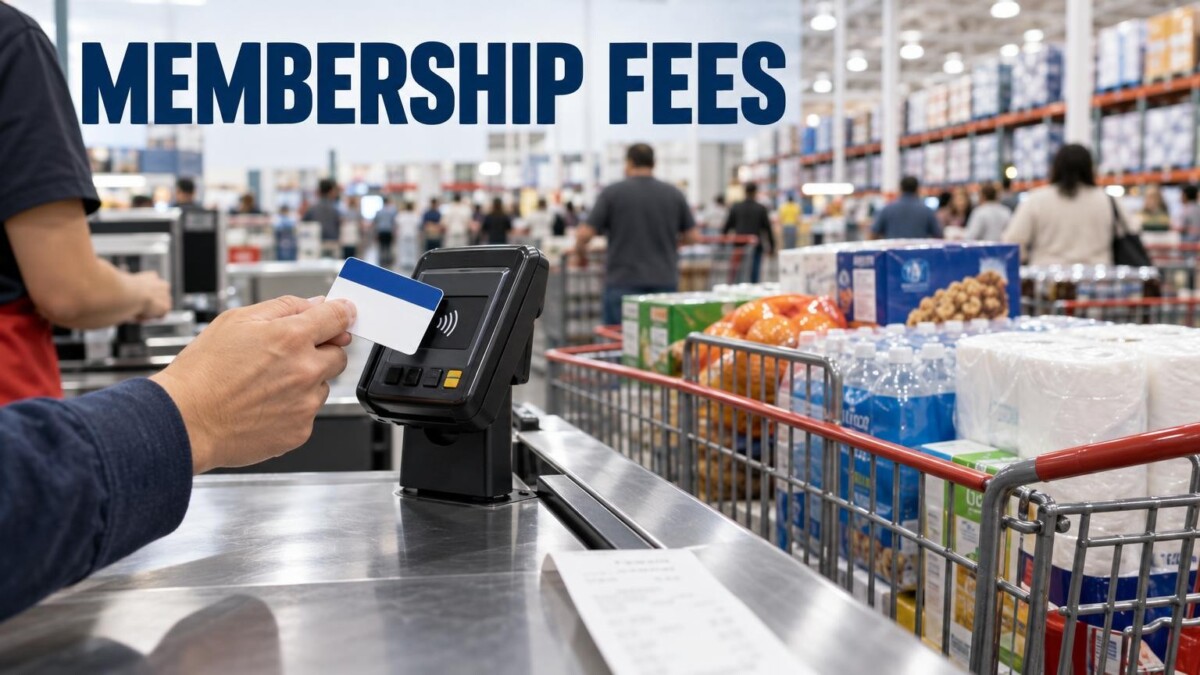
California membership fees: CDTFA’s $85 threshold for 2026
If you run a members-only store in California, you have a new number to live with. Beginning January 1, 2026, the Department of Tax and Fee Administration is raising the California membership fees “nominal amount” in Regulation 1584 from $70 to $85. The change is not a policy shift; it is a mechanical catch-up that the regulation has forced every five years since 1996. But it is the kind of quiet update that quietly changes how a retailer’s membership revenue hits the sales-tax return — and the kind of update that is easy to miss until an auditor flags it.
In our Los Angeles practice, questions about membership-fee sales tax come from two very different kinds of businesses. One is the large warehouse club, where the question is usually a compliance confirmation: nothing is changing about how we book this fee, right? The other is the small, specialty members-only retailer — a wholesale showroom, a neighborhood co-op, a buyer’s-club food hall — that priced its membership years ago and has not revisited the tax side since. Those businesses are the ones most likely to be caught by Rule 100 updates nobody told them about. This post walks through what Regulation 1584 actually says, why the number is moving, and what retailers charging membership fees should do between now and the first 2026 renewal.
What does Regulation 1584 say about California membership fees? 🛒
Regulation 1584 taxes a membership fee charged by a retailer that sells its products only to members, but only when the fee exceeds a defined ‘nominal amount.’ Fees at or below the nominal amount are not included in taxable gross receipts.
The rule lives in the California Code of Regulations, Title 18, Section 1584 — part of the sales and use tax regulations administered by CDTFA under California Government Code § 15570.22. It was adopted in 1996 to answer a narrow but recurring question: when a membership club charges a yearly fee to shop at all, is the fee part of the retailer’s taxable sales?
The regulation’s answer is a two-part test. First, is the retailer a members-only seller? If the general public can walk in and buy, the membership fee is generally not a cost of the sale under Revenue and Taxation Code § 6012, and Regulation 1584 does not apply. Second, if the retailer sells only to members, is the fee more than a nominal amount? If so, the fee is includible in taxable gross receipts. If not, it falls outside the tax base.
The structure matters because the regulation decides the tax treatment at the fee level, not at the store level. A members-only retailer charging a $40 introductory tier and a $120 premium tier may collect tax on the premium tier only, because only the premium tier exceeds the nominal threshold. Full text and historical versions sit in the CDTFA Regulation 1584, Membership Fees page inside the CDTFA Business Taxes Law Guides.
Why did the California membership fees nominal amount go from $70 to $85? 📈
Because Regulation 1584 forces the number upward every five years when the California Consumer Price Index moves more than 5 percent. The June 2025 CCPI was 23.95 percent higher than the June 2020 CCPI, and the regulation’s formula converts that into a $15 increase, producing the new $85 threshold.
Subdivision (b) of Regulation 1584 has contained an automatic CCPI adjustment clause since the regulation was first adopted. Every five years, in September of a computation year (2000, 2005, 2010, 2015, 2020, 2025, 2030, …), CDTFA compares the June CCPI from the current computation year to the June CCPI from the most recent year that produced an adjustment. If the change exceeds 5 percent, the threshold is bumped, rounded to the nearest $5. The CCPI figures come from the California Consumer Price Index series maintained by the California Department of Finance.
Here is how CDTFA actually ran the 2025 math, step by step:
| Step | Calculation | Result |
|---|---|---|
| 1. Get the June 2020 CCPI (last adjustment year) | Department of Finance CCPI series | 284.835 |
| 2. Get the June 2025 CCPI (current year) | Department of Finance CCPI series | 353.044 |
| 3. Compute the percentage change | (353.044 − 284.835) / 284.835 | 23.947% |
| 4. Apply the change to the prior threshold | $70 × 23.947% | $16.76 |
| 5. Round to the nearest $5 (regulation formula) | $16.76 rounded | $15 |
| 6. Add to the prior threshold | $70 + $15 | $85 |
Because the percentage change exceeded 5 percent and the regulation already specifies the formula, CDTFA processed the update under Rule 100 — the Office of Administrative Law’s path for changes without regulatory effect. That path does not require public hearings or a full rulemaking, but it also does not permit any substantive change. All CDTFA is allowed to do is plug the new numbers into the existing formula, update the illustrative example, and refresh the citations.
From our practice: the five-year history matters at audit
When a sales-tax auditor walks through a membership-fee file, the first question is always which threshold applied in which year. A retailer that charged a $75 annual fee during 2022 was above the $70 line and owed tax on the fee; the same $75 fee charged starting January 1, 2026 is below the $85 line and is not in the tax base. Retailers that keep a year-by-year ledger of membership tiers against the then-current nominal amount almost always come out of audit cleanly. Retailers that rely on the current threshold to defend past years do not.
Which California retailers are actually affected by this change? 🏬
The rule reaches any California retailer that both (1) sells only to members and (2) charges an annual membership fee. Practically, that means warehouse clubs, wholesale showrooms, buyer’s-club food halls, specialty co-ops, and members-only online marketplaces — not stores that take membership fees but also sell to the general public.
Three categories deserve a closer look because the line is not always obvious:
- Warehouse clubs and bulk retailers. The classic Regulation 1584 case. If the store is closed to non-members, the fee has always been in the tax base when it exceeded the nominal amount. The $85 move does not disturb anything for clubs charging well above the threshold; it quietly raises the floor for lower-priced tiers.
- Specialty members-only retailers. Think design-trade showrooms, members-only wine clubs with a physical shop, co-op grocery operations where only members can buy. These often price memberships near the threshold and have the biggest practical exposure when the line moves.
- Hybrid stores (members plus public). If non-members can also buy, Regulation 1584’s mandatory inclusion rule generally does not apply, because the fee is not a condition of sale. A separate analysis under the general sales-price definition may still apply, and the facts need to be documented.
What about online-only membership retailers in California? The same two-part test applies. A platform that restricts purchases to paying members is a members-only retailer for Regulation 1584 purposes, regardless of whether the storefront is physical. Platforms that allow non-members to browse and buy at a higher price — a common model — generally fall outside Regulation 1584, though the fee may still interact with the sales-price definition in Revenue and Taxation Code § 6012 in other ways.
This update does not change the members-only requirement
Rule 100 can only move the number. It cannot rewrite the regulation. A retailer that is not a members-only seller does not become subject to Regulation 1584 just because the threshold moved, and a members-only retailer that was already in the regulation does not get a new exemption. If a business switches its model mid-year — opening to non-members, or closing to non-members — the classification may change, but the dollar line is the same for everyone who falls inside the regulation on a given sale date.
What should California retailers do before January 1, 2026? ✅
Document which tier of fees crosses the new $85 line, confirm the tax treatment for renewals and new sign-ups starting on that date, and keep the historical schedule of nominal amounts in the compliance file.
- Map each membership tier against the new line. Pull the price list for every tier you sell and mark which ones are above $85, which are at or below $85, and which cross the line because of a pending price change. The treatment turns on the fee charged on the sale date, not on when the membership year begins.
- Decide the cutoff for renewals. A renewal processed on December 31, 2025 for a 2026 membership year is still a sale on December 31, 2025 and is tested against the $70 line. A renewal processed on January 2, 2026 is tested against the $85 line. Advance-billing businesses should pick the convention and apply it consistently.
- Update the sales-tax reporting workflow. If your point-of-sale system classifies the fee as taxable or non-taxable based on a flag, change the flag only for tiers that actually cross the line. The regulation does not require you to re-tax every membership — only those over the nominal amount.
- Save the CDTFA source material. Download the current Regulation 1584 text, the CDTFA Statement of Explanation, and the CCPI figures used in the calculation. An audit two years out will ask which version of the regulation you relied on.
- Review the five-year history for past periods. If you have ever sold a membership priced near the then-current threshold ($40 pre-2001, $45 through 2005, $50 through 2010, $55 through 2015, $60 through 2020, $70 through 2025), make sure the tax treatment matched the threshold in effect for that year. Audits reach back three years for timely filers and longer where fraud is alleged.
Where does Regulation 1584 sit in California sales-tax law? 📚
Regulation 1584 is a CDTFA regulation under Title 18 of the California Code of Regulations, tied to the general sales-price definition in Revenue and Taxation Code § 6012 and administered by CDTFA under Government Code § 15570.22.
Understanding where Regulation 1584 lives in the statutory stack explains why Rule 100 can change the dollar amount without touching the rule itself. The chain is:
- Statute: Revenue and Taxation Code § 6012 defines “gross receipts” and “sales price” for sales and use tax purposes. The statute is written broadly and includes any consideration paid in connection with a sale.
- Regulation: CDTFA Regulation 1584, Membership Fees applies that statutory definition to membership fees and draws the line between taxable and nontaxable fees at the nominal amount, with a built-in CCPI escalator.
- Authority: California Government Code § 15570.22 transferred the Board of Equalization’s sales and use tax rulemaking authority to CDTFA in 2017, which is why the updated authority note on the regulation now cites CDTFA rather than the Board.
- Procedure: Rule 100, issued by the Office of Administrative Law, lets an agency update dates and dollar figures that were already prescribed by the underlying regulation, without reopening the rulemaking.
Summary: California membership fees for 2026
- CDTFA is raising the Regulation 1584 nominal amount from $70 to $85 effective January 1, 2026.
- The change is automatic — a 23.95% CCPI increase from June 2020 to June 2025 triggered the five-year adjustment baked into the regulation.
- Members-only retailers charging more than $85 per year in membership fees continue to collect sales tax on the fee; those charging $85 or less do not.
- Hybrid retailers that sell to both members and non-members generally fall outside Regulation 1584 — but the facts matter.
- Document which tiers cross the line, pick a consistent renewal convention, and keep the historical schedule for future audits.
Frequently asked questions about California membership fees ❓
Q. When are California membership fees subject to sales tax?
Under CDTFA Regulation 1584, a membership fee is includible in taxable gross receipts when the retailer sells its products only to members and the fee exceeds the regulation’s ‘nominal amount.’ For periods from January 1, 2021 through December 31, 2025, the nominal amount is $70 or less per year. Beginning January 1, 2026, the nominal amount is $85 or less per year. A membership-only retailer charging more than those amounts generally must collect sales tax on the fee itself.
Q. Why is CDTFA increasing the nominal amount from $70 to $85?
The adjustment is not discretionary. Regulation 1584, subdivision (b), has required an automatic review every five years since 1996. CDTFA compares the California Consumer Price Index (CCPI) for the current computation year to the CCPI for the most recent adjustment year. The June 2025 CCPI (353.044) was 23.947 percent higher than the June 2020 CCPI (284.835), and the regulation’s formula converts that increase into a $15 bump to the nearest $5, moving the threshold to $85 effective January 1, 2026.
Q. Does this change the sales-tax rules for warehouse club stores like Costco or Sam’s Club?
Only indirectly. The legal rule — that membership fees charged by a members-only retailer are taxable when they exceed the nominal amount — is unchanged. What changes is the dollar line. If an annual fee crosses from below the 2025 line of $70 to above the 2026 line of $85, the tax treatment turns on the fee amount in effect on the sale date. Stores charging more than $85 for 2026 memberships continue to collect sales tax on the fee the same way they did in 2025.
Q. Is the CDTFA adjustment a regulatory rewrite or a mechanical update?
CDTFA processed the change under Rule 100 of the Office of Administrative Law’s regulations, meaning it is a change without regulatory effect. The underlying rule — the 1996 structure that taxes above-nominal membership fees at members-only retailers — is unchanged. Only the dollar figure, the date references in the subdivision (b)(2) example, and the authority-note citations move. Public comment and a full Administrative Procedure Act rulemaking are not required for Rule 100 changes.
Q. When will the next California membership-fee threshold adjustment happen?
The regulation locks the review into a five-year cadence tied to the June CCPI. CDTFA reviews the index in September of each adjustment year (2020, 2025, 2030, 2035). The next potential adjustment is effective January 1, 2031, and will be based on the June 2030 CCPI compared to June 2025. If inflation stays roughly at the pace of the past five years, another step up is likely; if the CCPI change is 5 percent or less compared to the last adjustment, no change is made.
Q. Where can California businesses read Regulation 1584 itself?
The full text sits inside the CDTFA Business Taxes Law Guides, Sales and Use Tax Regulations, Regulation 1584 (Membership Fees). The regulation is part of Title 18 of the California Code of Regulations, authorized by the sales and use tax law in the Revenue and Taxation Code. The CDTFA law guides include historical versions, so retailers that need to show which threshold applied in a given period have a traceable record.
This article is general information, not tax advice for your situation. Membership-fee classification turns on how your business operates, how your fees are structured, and how renewals are booked. If your 2026 pricing could cross the $85 line, contact SW Accounting & Consulting Corp for a review.