Kwong tax refund: does the COVID postponement apply?
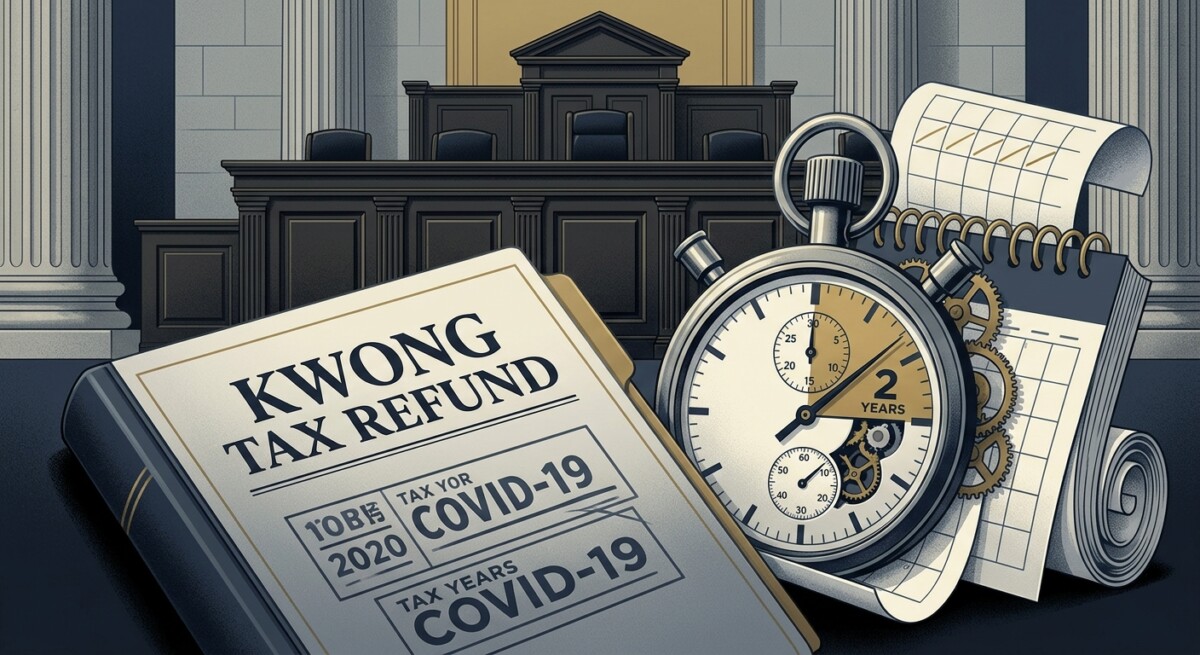
If you are chasing a COVID-era refund, the two-year clock in 26 U.S.C. § 6532(a)(1) is either much longer than you thought — or exactly as short as it always was. A single Federal Circuit appeal will decide which. The Kwong tax refund case, now on appeal from the U.S. Court of Federal Claims, puts a novel reading of § 7508A(d) directly in front of an appellate court, and the government’s opening brief argues the lower court got it badly wrong. This post walks through what the trial court held, what the government is asking the appellate court to do, why the answer matters to taxpayers who never met Terry Kwong, and how CPAs should be preserving positions while the docket sits.
Two caveats first. Nothing here is legal advice for a specific claim — statute-of-limitations analysis is fact-specific and the case law is developing in real time. And the ruling we discuss binds only the parties before the Court of Federal Claims; other courts have not yet weighed in, and the IRS has not conceded the point. Read this as background for a conversation with your tax counsel, not a green light to sit on a refund claim.
What is the Kwong tax refund case about? ⚖️
Terry Kwong sued for refunds for tax years 2007, 2010, and 2011. The government argued the suit was untimely under the two-year deadline in 26 U.S.C. § 6532(a)(1). The Court of Federal Claims disagreed and held that § 7508A(d) automatically postponed that deadline during COVID-19.
In U.S. Court of Federal Claims decision Kwong, 179 Fed. Cl. 382 (2025), the court concluded that the two-year deadline in 26 U.S.C. § 6532 for filing a refund lawsuit was postponed by operation of law under 26 U.S.C. § 7508A(d) during the COVID-19 disaster period. On the court’s reading, the mandatory postponement began January 20, 2020 and ended July 10, 2023. Mr. Kwong filed suit on February 23, 2023, and the court held the claims timely.
The government has appealed to the U.S. Court of Appeals for the Federal Circuit and asked the appellate court to reverse and dismiss those claims. The threshold question is not whether Mr. Kwong is entitled to the refunds. It is whether he was allowed to sue at all.
How does § 7508A(d) work, and what triggered the dispute? 📜
Section 7508A(d) is a mandatory postponement of at least 60 days that triggers automatically for taxpayers affected by a qualified disaster. The fight in Kwong is over when the qualified-disaster clock starts, and when it stops.
Congress wrote § 7508A(d) to give disaster victims automatic breathing room. Where a federally declared disaster has an ‘incident date,’ the section postpones certain acts — filing a return, filing suit, and others — for a minimum period beginning on that date. The Court of Federal Claims and the government agree on the framework. They disagree on which date and which duration control.
The government’s position is that the presidential disaster declaration for California COVID-19 specified a single incident date of January 20, 2020. On that reading, the mandatory postponement period ended 60 days later on March 20, 2020. The trial court instead looked to the FEMA-published incident period, which was open-ended for COVID-19 and did not close until July 10, 2023. On that reading, every deadline sitting inside that three-and-a-half-year window was postponed automatically.
What is the government arguing on appeal? 🏛️
Three main arguments, plus two fallbacks. The government’s core position is that the statute is tied to incident dates, not FEMA incident periods, and that Congress used the two terms deliberately.
- Incident date, not incident period. Section 7508A(d) refers to the incident date in the presidential declaration, not the FEMA incident period. The government notes that Congress used ‘incident period’ elsewhere in the Taxpayer Certainty and Disaster Tax Relief Act of 2019 but did not use it in § 7508A(d) — a ‘meaningful’ drafting choice, in the brief’s words.
- The 2021 amendment does not rewrite history. The lower court leaned on a 2021 amendment to § 7508A(d) as support for its reading. The government responds that the amendment does not show the earlier text allowed multi-year postponements — if anything, it shows Congress felt it had to add language to reach that result.
- Structure of § 7508A itself. Section 7508A(a) is a discretionary postponement authority the Treasury Secretary can invoke by notice. Section 7508A(d) is a mandatory automatic postponement. If the trial court’s reading were right, the mandatory (d) provision would have postponed almost everything for three years, and the discretionary (a) authority — used repeatedly during COVID — would have been largely surplusage.
The government cites Treasury’s own use of § 7508A(a) discretionary authority during the pandemic to make the point, including IRS Notice 2020-23 (which extended the April 15, 2020 filing and payment deadlines to July 15) and IRS Notice 2021-21 (which extended the 2021 filing deadline). The brief’s argument is that these notices only made sense because § 7508A(d) had not already done the same work by operation of law. The government also relies on the caption to § 7508A(d) — ‘Mandatory 60-day extension’ — arguing that the caption reflects Congress’s expectation of automatic but limited relief.
The government’s two fallback arguments are worth noting. First, if the phrase ‘and continuing’ in the presidential declaration must be given effect, the latest incident date is at most March 22, 2020 — the date the California declaration itself issued — which would produce a postponement period ending May 21, 2020. Second, even on the broadest reading of § 7508A(d), the mandatory postponement could not exceed one year because of § 7508A(a)’s one-year limitation and the related Treasury regulations. Either fallback would kill the Kwong suit while leaving less collateral damage than a clean win on the incident-date theory.
Why do the numbers behind the Kwong tax refund appeal matter? 💰
Because § 7508A(d) is not opt-in. It runs by operation of law. A ruling that the COVID-19 declaration automatically postponed the § 6532(a)(1) deadline for three-plus years would reopen a very large universe of refund claims that would otherwise be time-barred.
The government’s brief warns that the trial court’s interpretation could affect tens of millions of taxpayers and expose Treasury to tens of billions of dollars in potential refund claims. That is not litigation hyperbole. Section 7508A(d) postpones ‘time-sensitive acts’ listed in Treasury regulations, which reach a much broader set of deadlines than just the two-year refund-suit window at issue in Kwong. If a court holds that the mandatory postponement ran from January 20, 2020 through July 10, 2023, any deadline that would otherwise have expired inside that period arguably gets pushed out by that same automatic operation.
| Reading | Postponement period | Kwong result | Practical reach |
|---|---|---|---|
| Government (primary): incident date only | Jan. 20, 2020 – March 20, 2020 (60 days) | Suit untimely; dismiss | Narrow — matches how § 7508A(d) has worked in prior disasters |
| Government (fallback 1): latest ‘incident date’ | Jan. 20, 2020 – May 21, 2020 | Suit untimely; dismiss | Slightly broader; still short of Feb. 2023 filing |
| Government (fallback 2): § 7508A(a) one-year cap | Up to one year from incident date | Suit untimely; dismiss | Limits any postponement to one year, regardless of theory |
| Court of Federal Claims: FEMA incident period | Jan. 20, 2020 – July 10, 2023 | Suit timely; proceed | Very broad — reopens deadlines across the pandemic window |
Even a partial affirmance — say, on the one-year cap theory — would still be a meaningful expansion of what taxpayers can revisit. A clean affirmance of the trial court’s reading would be an unusual event in tax refund practice.
What should taxpayers and CPAs do while the Kwong appeal is pending? 🛠️
Preserve positions, do not spend them. If a two-year clock is close, file the suit or the administrative claim now and expressly assert the § 7508A(d) argument. Do not assume a favorable Federal Circuit ruling will bail you out of a stale claim.
- Calendar the notice of disallowance. The two-year clock under 26 U.S.C. § 6532(a)(1) runs from the date the IRS mails a notice of disallowance on a refund claim. Pull the certified-mail envelope from the file and log the date. Every downstream calculation depends on it.
- Separate claims that survive on either reading from those that only survive on the trial court’s reading. Some claims are timely no matter which side of Kwong prevails. Others depend entirely on a broad § 7508A(d) postponement. Sort the two piles before you decide when to file.
- File and preserve the argument. For claims within reach on either reading, file and note the postponement argument as a backup. For claims that depend on Kwong, file and expressly plead § 7508A(d) so the position is preserved and, if the appeal comes out favorably, is available on appeal.
- Refresh Form 843 and Form 1040-X filings for the same reason. Administrative claims start their own downstream clocks. Track when the IRS issued or is likely to issue a notice of disallowance on each pending Form 843 and 1040-X — that is when the two-year suit clock starts.
- Watch the Federal Circuit docket, not the news. The Federal Circuit’s opinion, when it comes, will control. Follow the docket at U.S. Court of Appeals for the Federal Circuit and calendar the argument date and opinion release.
From our practice: the years that decide clients’ outcomes
In our practice, most Kwong-adjacent conversations turn on two or three specific tax years — often 2016 through 2019 — where a notice of disallowance landed in the early months of the pandemic and the two-year suit clock quietly ran out in 2022. Whether those claims are recoverable depends almost entirely on which reading of § 7508A(d) survives appeal. The right move today is to identify those years by client and get the preservation filings out; the wrong move is to wait for certainty that will not arrive before the deadline.
Do not treat the Court of Federal Claims decision as universally binding
Kwong, 179 Fed. Cl. 382 (2025) is a trial court decision. It binds the parties before it. It is persuasive, not controlling, for other courts, and the IRS has not conceded the interpretation. Treat the ruling as a live argument to be preserved on your client’s behalf, not as a rule you can rely on without further support.
Summary: Kwong tax refund appeal
- Kwong, 179 Fed. Cl. 382 (2025) held that § 7508A(d) automatically postponed the § 6532(a)(1) two-year refund-suit deadline from Jan. 20, 2020 through July 10, 2023.
- The government has appealed to the Federal Circuit and argues the mandatory postponement ended 60 days after the presidential incident date — around March 20, 2020 — with two fallback positions capping it at May 21, 2020 or at one year.
- The stakes are broad: § 7508A(d) postpones a wide range of ‘time-sensitive acts’ automatically. Treasury estimates tens of millions of taxpayers and tens of billions of dollars in potential refund exposure.
- Current standards still control: the Court of Federal Claims ruling binds only the parties, and the IRS has not conceded the reading.
- Practical response: calendar the notice-of-disallowance date on every pending claim, file within the shortest plausible reading of the deadline, and expressly preserve the § 7508A(d) argument in the filing.
Frequently asked questions about the Kwong tax refund appeal ❓
Q. What is Kwong v. United States about?
Kwong v. United States is a refund suit filed by Terry Kwong in the U.S. Court of Federal Claims. The court held in Kwong, 179 Fed. Cl. 382 (2025), that the two-year deadline in 26 U.S.C. § 6532(a)(1) for filing a refund lawsuit was automatically postponed under 26 U.S.C. § 7508A(d) during the COVID-19 disaster period, from January 20, 2020 through July 10, 2023. On that reading, Mr. Kwong’s suit filed February 23, 2023 for 2007, 2010, and 2011 was timely. The government has appealed to the Federal Circuit and asked the appellate court to reverse and dismiss those claims as untimely.
Q. Why does the Kwong tax refund case matter beyond one taxpayer?
Because § 7508A(d) is a mandatory postponement that applies by operation of law when there is a qualified disaster. If the Court of Federal Claims’ reading is upheld, the COVID-19 declaration would have automatically extended a long list of taxpayer and government deadlines for over three years. The government’s brief argues that reading could affect tens of millions of taxpayers and expose Treasury to tens of billions of dollars in potential refund claims.
Q. What is the difference between an ‘incident date’ and a FEMA ‘incident period’?
A presidential disaster declaration lists an incident date — a specific date the qualifying event began. FEMA separately publishes an incident period, which can run for months or years, marking how long federal assistance is available. Section 7508A(d) is drafted around the incident date. The government’s position is that the mandatory 60-day postponement runs 60 days from the incident date; the Court of Federal Claims looked instead to the FEMA incident period, which extended through 2023.
Q. Does the Kwong ruling automatically extend my refund deadline?
Not automatically, and not yet. The Court of Federal Claims’ ruling binds the parties before it, and the appeal is pending in the Federal Circuit. Other courts are not required to follow it, and the IRS has not conceded the point. For any specific claim, the two-year deadline under 26 U.S.C. § 6532(a)(1) still starts running on the date the IRS mails a notice of disallowance, and taxpayers relying on a Kwong-based extension should preserve the argument in the filing rather than assume it applies.
Q. What is the difference between § 7508A(d) and § 7508A(a) postponements?
Section 7508A(d) is a mandatory postponement of at least 60 days that triggers automatically for taxpayers affected by a qualified disaster. Section 7508A(a) is a discretionary postponement of up to one year that the Treasury Secretary can grant by notice. During COVID-19, Treasury exercised its § 7508A(a) discretion repeatedly, including in IRS Notice 2020-23 and IRS Notice 2021-21. The government argues that if § 7508A(d) already postponed everything for three years, most of that discretionary relief would have been unnecessary.
Q. What should I do if I have a potential COVID-era refund claim on the line?
Do not wait for the Federal Circuit. If the two-year clock under 26 U.S.C. § 6532(a)(1) is close, file the refund suit or the administrative claim now and expressly preserve the § 7508A(d) postponement argument. For pending Form 843 or Form 1040-X claims, calendar the notice-of-disallowance date and track appellate developments. Coordinate with your tax professional on which years are within reach on any reading of the statute and which years depend entirely on the Kwong interpretation.
This article is general information, not tax or legal advice for your situation. Statute-of-limitations questions are fact-specific and the Kwong appeal is unresolved. For a review of pending refund claims and the § 7508A(d) postponement posture in your file, contact SW Accounting & Consulting Corp.