What Is the IRS Savers Match? 50% Federal Match in 2027
On August 7, 2026, Treasury and the IRS released Notice 2026-48, formally announcing the framework for the federal savers match program. This is the long-promised replacement for the old Saver’s Credit — and unlike a credit that only reduces the tax you owe, the Saver’s Match sends the federal government’s money directly into your retirement account, even if you owe no tax.
At SW Accounting & Consulting Corp, we advise Los Angeles individuals and small-business employees who are trying to save for retirement while managing tight cash flow. The Saver’s Match is one of the most meaningful federal retirement incentives in a generation for low- and moderate-income workers, and it deserves early attention because contributions you make in 2027 determine what the government pays you in 2028.
What exactly is the savers match, and how much can I get? 💰
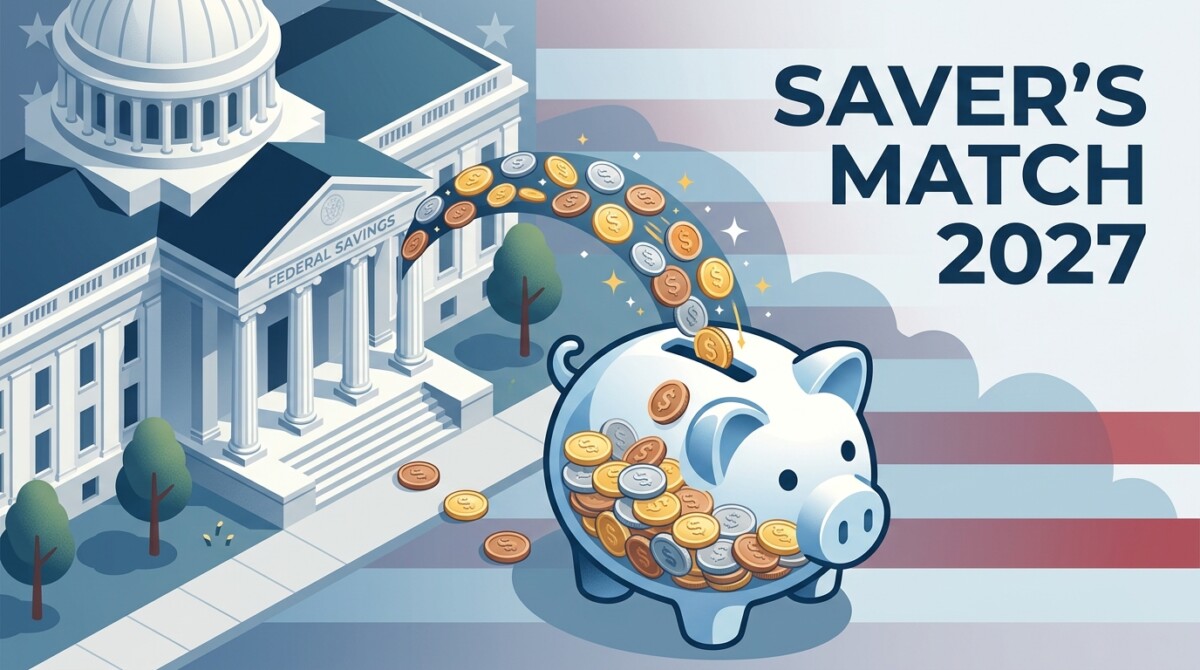
It is a federal contribution equal to 50% of the first $2,000 you put into a qualifying retirement account each year — a maximum federal deposit of $1,000 annually.
The Saver’s Match was created as part of the SECURE 2.0 Act (2022) and replaces the old nonrefundable Saver’s Credit for retirement-savings contributions. Instead of reducing your tax bill, the federal money is deposited straight into your qualifying retirement account. For a household that contributes $2,000 to a workplace 401(k) or IRA in 2027, Treasury pays another $1,000 into that account in 2028 — an immediate 50% return before any market gains.
The match is available for contributions made to an employer-sponsored retirement plan (such as a 401(k) or 403(b)) or to an IRA, and eligibility phases out at higher income levels defined by statute. Because the payment is a federal deposit rather than a tax credit, it benefits savers even if they owe no federal income tax — which is a structural improvement over the old credit.
When does the savers match actually start? 📅
Contributions made for the 2027 tax year are the first eligible for a match, and the federal deposits arrive in 2028.
The IRS press release (IR-2026-89) confirms the timing. Notice 2026-48 also opens a public comment window: interested parties can submit feedback on the anticipated rules by October 5, 2026, which the IRS will consider when drafting formal proposed regulations. If you or your employer’s plan administrator has practical concerns — recordkeeping burden, matching mechanics, participant education — this is the window to raise them on the record.
In parallel, the notice also begins implementing Executive Order 14403 — “Promoting Retirement-Savings Access for American Workers by Establishing TrumpIRA.gov” — signed April 30, 2026. Under the executive order, Treasury will launch TrumpIRA.gov on January 1, 2027 as a public directory of low-cost, diversified, index-based IRA providers that accept Saver’s Match contributions.
Who is eligible for the savers match? 👤
Low- and moderate-income taxpayers who make qualified retirement contributions and meet the SECURE 2.0 income thresholds.
The precise income phase-out ranges are set by statute and indexed. In broad terms, the full match is aimed at lower-income workers and phases down as income rises, with married-filing-jointly filers receiving higher thresholds than single filers. Because Notice 2026-48 is an intent-to-propose notice rather than the final regulation, taxpayers should watch for the formal proposed rules after the October 5, 2026 comment deadline for the definitive eligibility and phase-out mechanics.
- Age & status: generally at least age 18, not a full-time student, and not claimed as a dependent on someone else’s return.
- Contribution type: qualified retirement contributions to an employer plan (401(k), 403(b), governmental 457(b)) or an IRA.
- Cap: the match is 50% of the first $2,000 contributed — a maximum federal deposit of $1,000 per eligible taxpayer per year.
- Payment form: deposited into your retirement account, not received as cash or a tax refund.
How is the savers match different from the old Saver’s Credit? 🔄
The old credit only reduced tax you already owed; the Saver’s Match pays actual dollars into your retirement account whether you owe tax or not.
This is the most important structural change. For years, the Saver’s Credit largely failed the low-income workers it was meant to help — because those workers frequently had little or no federal income tax liability to offset, the nonrefundable credit produced no real benefit. Congress fixed that in SECURE 2.0 by converting the incentive into a matching federal contribution deposited into the qualifying account. The Saver’s Match therefore reaches taxpayers with zero tax liability, which is the population that has historically had the lowest retirement-plan participation rates.
Savers Match at a glance 📊
| Item | Rule |
|---|---|
| Match rate | 50% of the first $2,000 contributed |
| Maximum federal deposit | $1,000 per eligible taxpayer, per year |
| First eligible year | 2027 contributions (paid in 2028) |
| Qualifying accounts | 401(k), 403(b), governmental 457(b), IRA |
| Public comment deadline | October 5, 2026 (on Notice 2026-48) |
| TrumpIRA.gov launch | January 1, 2027 (Executive Order 14403) |
📌 Key Takeaways
- The Saver’s Match is a 50% federal contribution on up to $2,000 of qualified retirement savings — worth up to $1,000/year.
- Unlike the old credit, it is paid into your account even if you owe no tax.
- First eligible year is 2027; first federal deposits arrive in 2028.
- Public comments on Notice 2026-48 are due October 5, 2026.
Frequently Asked Questions ❓
Q. What is the Saver’s Match in one sentence?
It is a federal deposit equal to 50% of the first $2,000 you contribute to a qualifying retirement account each year — up to $1,000 — paid directly into that account, even if you owe no federal income tax.
Q. When does it start, and when do I actually receive money?
The first eligible contribution year is 2027. Based on your 2027 contributions, Treasury will begin paying the match into your retirement account in 2028, according to IRS Notice 2026-48 and IR-2026-89.
Q. Which accounts qualify for the match?
Qualified contributions to an employer plan such as a 401(k), 403(b), or governmental 457(b), and contributions to an IRA. The match is deposited into the qualifying account rather than paid as cash.
Q. Do I have to owe federal income tax to benefit?
No — that is the biggest difference from the old Saver’s Credit. Because the Saver’s Match is a federal contribution rather than a nonrefundable tax credit, low-income workers with little or no tax liability still receive the full match.
Q. What is TrumpIRA.gov?
Under Executive Order 14403, Treasury will launch TrumpIRA.gov on January 1, 2027. It will list financial institutions that offer low-cost, diversified IRAs and that accept Saver’s Match contributions, aimed especially at workers without an employer plan.
Q. Can I submit a comment on the rules?
Yes. Notice 2026-48 requests public comment on the anticipated Saver’s Match rules by October 5, 2026, with the IRS identifying the issues on which it particularly wants input.
The Saver’s Match will meaningfully change retirement planning for low- and moderate-income households — but only if you contribute in 2027. If you would like help evaluating your eligibility, choosing an account, or setting up a compliant workplace plan, contact SW Accounting & Consulting Corp. Primary sources: IRS Notice 2026-48, IRS release IR-2026-89, Executive Order 14403, and the SECURE 2.0 Act (P.L. 117-328).