Does CARB SB 253 Reporting Apply to My Company? (2027)
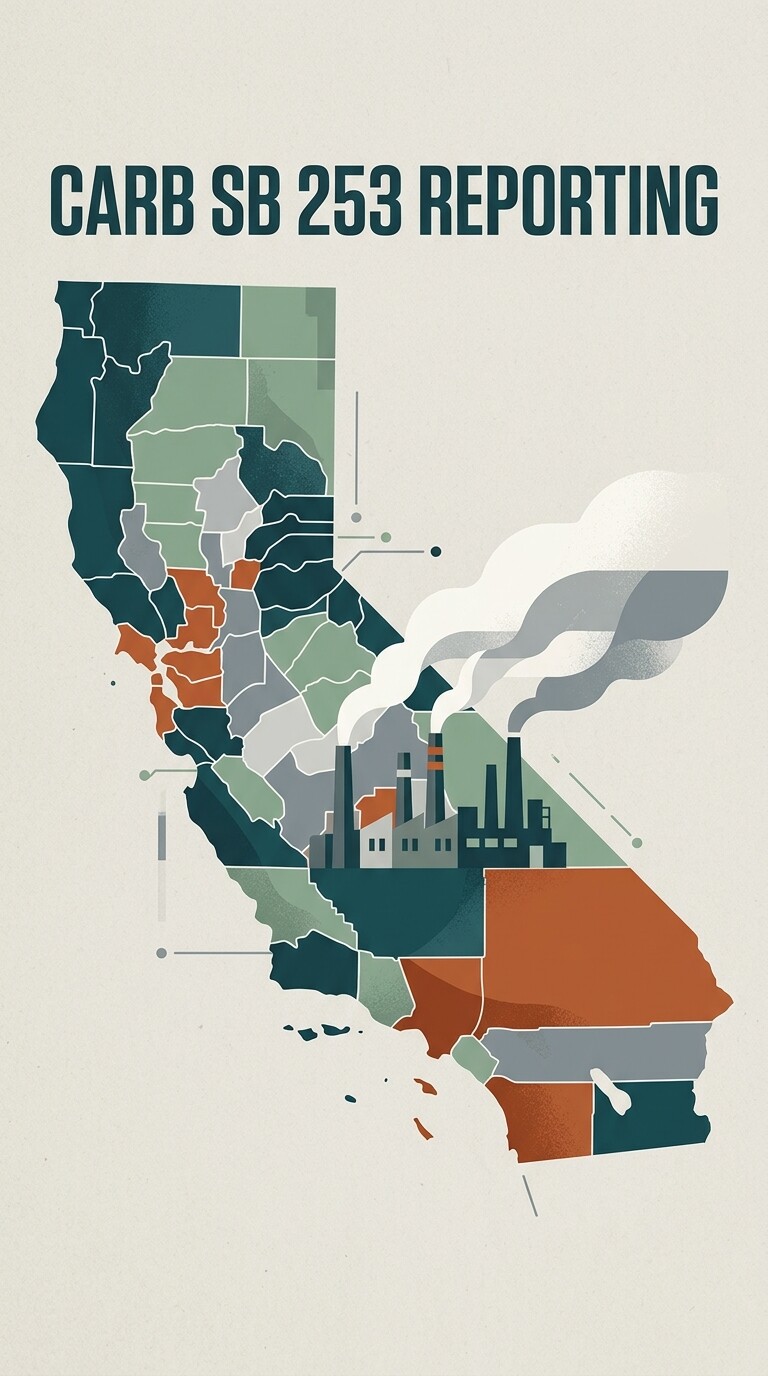
If you run finance or reporting for a large enterprise that operates in California, the next 12 months are the ones that matter. On July 21, 2026, the California Air Resources Board (CARB) held a public workshop laying out how CARB SB 253 reporting will work for the 2027 cycle and beyond — and the answer is more prescriptive than many companies were bracing for. The proposals sharpen scope 3 requirements, tie the framework to a specific vintage of the GHG Protocol, tighten the assurance regime, and remove the broad exemption that has kept insurance groups out of scope.
At SW Accounting & Consulting Corp, we sit on the finance-side of these conversations with Los Angeles-based operating companies and multinational groups doing business in California. What follows is a plain-English map of what CARB is proposing, which parts are already effectively locked in, and what a well-run finance function should be doing between now and the November 10 reporting deadline.
What did CARB actually propose on July 21, 2026? 📅
The workshop refined CARB’s rulemaking blueprint for the 2027 reporting cycle: gross scope 1, 2, and 3 emissions on a defined November 10 deadline, tied to a fixed vintage of the GHG Protocol, with limited assurance over scope 1 and scope 2.
The July session followed the March 23, 2026 workshop in which CARB staff introduced preliminary concepts. In July, staff added detail and, in some cases, moved the concepts closer to final positions. The most important structural choices for CARB SB 253 reporting in 2027 are:
- Aligned to a fixed vintage of the GHG Protocol. CARB proposes to incorporate the Corporate Accounting and Reporting Standard, the Scope 2 Guidance, and the Corporate Value Chain (Scope 3) Standard by reference as of a specified date. Future amendments to the GHG Protocol would not automatically flow into California rules — CARB would have to update the regulation. The new Land Sector and Removals Standard is explicitly excluded.
- A November 10 reporting deadline. Entities with a fiscal year ending after February 1 report emissions for the fiscal year ending in the preceding calendar year. Entities with a January or early-February year-end report the fiscal year ending in the reporting year itself.
- Uncertainty and missing-data disclosures are mandatory. Reporters must assess measurement uncertainty quantitatively when feasible and, when not, explain why and provide a qualitative assessment. Missing data elements and the substitute sources or estimation methods used must be documented, along with the reasoning behind the choice.
- Base-year recalculations kick in at 5%. If the cumulative effect of corporate-structure changes or accounting-method changes exceeds 5% of total emissions reported for the base year, the reporter must recalculate the base year and disclose the change.
Which scope 3 categories are actually required? 🧮
CARB is starting mandatory scope 3 reporting with five of the fifteen GHG Protocol categories; the remaining ten remain voluntary for now.
This is the most consequential narrowing in the July proposals. Under CARB’s approach, in-scope entities must disclose the five categories that are most commonly reported today and most tractable to measure across the value chain:
- Category 1 — Purchased goods and services
- Category 3 — Fuel- and energy-related activities (not already in scope 1 or scope 2)
- Category 5 — Waste generated in operations
- Category 6 — Business travel
- Category 7 — Employee commuting
The other 10 categories can be reported voluntarily and consistent with the GHG Protocol. CARB staff did not commit to a timetable for expanding the mandatory scope, so companies should read this as a floor, not a ceiling. Scope 2 must be reported using both the location-based and the market-based methods and disaggregated by each of the seven greenhouse gases and by source type (electricity, steam, heating, cooling). Voluntary disclosure of emissions reductions or removals is allowed but must be reported separately from gross scope 1, 2, and 3 totals.
Who is affected — and why do insurance companies matter here? 🏢
CARB is proposing to remove the broad insurance-company exemption from SB 253, so property/casualty and life insurance groups doing business in California with more than $1 billion in revenue will be pulled into 2027 reporting.
The universe of covered entities under California SB 253 is any US-organized business entity doing business in California with total annual revenues over $1 billion. In its initial 2026 regulation, CARB granted a broad exemption to insurance companies. Beginning with reports submitted in 2027, that exemption goes away.
Practically, an insurance group can use the same report to satisfy both its California Department of Insurance (CDI) climate-risk reporting and SB 253 — but only if the report meets every one of CARB’s requirements. CARB staff signaled during the workshop that they do not believe CDI’s current reporting fully covers SB 253, which means insurers should assume they will need supplemental disclosures rather than a straight rely-on of CDI. Insurers should not confuse the 2026 exemption with 2027; the 2026 exemption still stands for reports filed this year.
What assurance is required in 2027? ✅
Limited assurance over scope 1 and scope 2 emissions begins with the reports submitted in 2027; scope 3 assurance and reasonable assurance for scope 1/2 do not kick in until later rulemaking.
CARB is not writing a bespoke assurance standard — it is letting the assurance provider elect from a set of recognized independent assurance standards. That gives the market flexibility on providers but also puts pressure on companies to make sure the underlying data is auditable. Reasonable assurance, if a company elects to obtain it, satisfies the limited-assurance requirement. Assurance covers the quantitative disclosures, the qualitative narrative accompanying scope 1 and 2, and the separately reported biogenic carbon dioxide emissions. Assurance providers must comply with the independence, qualification, and oversight rules of whichever standard they use; CARB is not going to build a separate California-only regime for providers. Assurance reports themselves have a minimum disclosure set that CARB will define in the regulation.
What should a CFO do before the SB 253 rules go final? 🛠️
Treat the July workshop as the effective operating design and start building the 2027 data and controls now; the formal rule is scheduled to be issued in the fall of 2026 and finalized by year-end.
CARB will hold six weekly public listening sessions for designated organizations between August 5 and September 9 and will accept written comments to ClimateDisclosure@arb.ca.gov. The formal rulemaking phase then begins with a draft regulation subject to a 45-day public comment period. The final regulation is targeted for release by the end of 2026. A well-run finance function does not wait for the last sentence of the rule to move — the direction is already clear enough. Practical steps for the balance of 2026:
- Confirm scope of coverage. Test the $1 billion revenue and “doing business in California” thresholds at the consolidated group level. Insurance groups should specifically re-test after CARB’s July signals.
- Freeze a base year. Pick a base year, document the accounting boundary, and lock the recalculation policy — because the 5% cumulative-change trigger will bite reorganizations, divestitures, and acquisitions.
- Run a scope 3 dry-run on the five mandatory categories. Build the model off procurement, utility, waste, T&E, and HR data. Note gaps and document the estimation methods now, not in October.
- Engage an assurance provider early. The assurance provider has to accept the underlying data. Have a technical readiness conversation before the Q4 close.
- Draft the qualitative narrative. Uncertainty and missing-data disclosures are their own workstream — start writing them alongside the numbers.
SB 253 2027 requirements at a glance 📊
| Requirement | Scope 1 | Scope 2 | Scope 3 |
|---|---|---|---|
| Mandatory reporting | Yes (gross, by gas) | Yes (location + market) | Categories 1, 3, 5, 6, 7 |
| Assurance (2027) | Limited | Limited | Not yet required |
| Disaggregation | By GHG type | By GHG + source type | By category |
| Voluntary items | Emissions reductions/removals (separate) | Emissions reductions/removals (separate) | Other 10 categories |
📌 Key Takeaways
- In-scope companies must report gross scope 1, 2, and 3 GHG emissions by November 10 under CARB’s 2027 SB 253 rules.
- Scope 3 is limited to five categories (1, 3, 5, 6, 7); the other ten remain voluntary.
- Insurance companies lose their broad exemption for reports submitted in 2027.
- Limited assurance is required over scope 1 and scope 2 emissions.
- The proposed rule is expected in fall 2026 with a final regulation by year-end — build data and controls now.
Frequently Asked Questions ❓
Q. Who has to comply with CARB SB 253 reporting?
US-organized business entities doing business in California with more than $1 billion in annual revenues. The July 21, 2026 CARB workshop proposed removing the broad insurance-company exemption starting with reports submitted in 2027, so many large insurers are now in scope.
Q. What is the SB 253 reporting deadline?
CARB is proposing a November 10 annual deadline. Entities with fiscal years ending after February 1 report the fiscal year ending in the preceding calendar year; entities with a January or early-February year-end report the fiscal year ending in the reporting year.
Q. Which GHG Protocol standards does CARB adopt?
CARB proposes to incorporate the Corporate Accounting and Reporting Standard, the Scope 2 Guidance, and the Corporate Value Chain (Scope 3) Standard by reference as of a specified date. Subsequent amendments would not automatically apply. The new Land Sector and Removals Standard is excluded.
Q. Do I have to report all 15 scope 3 categories?
No. For 2027 reporting, mandatory disclosure is limited to five categories: purchased goods and services (1), fuel- and energy-related activities (3), waste generated in operations (5), business travel (6), and employee commuting (7). The other 10 categories may be reported voluntarily.
Q. What kind of assurance is required?
Limited assurance over scope 1 and scope 2 emissions, beginning with reports submitted in 2027. Reasonable assurance for scope 1/2 and limited assurance for scope 3 are not yet required and will be addressed in later rulemaking. Providers may elect from recognized independent assurance standards.
Q. When is the final SB 253 rule expected?
CARB indicated the formal proposed regulation would be issued in fall 2026, followed by a 45-day public comment period, with a final regulation targeted by the end of 2026. In the meantime, listening sessions ran between August 5 and September 9, 2026, and written comments can be submitted to ClimateDisclosure@arb.ca.gov.
If your company is close to the SB 253 threshold or already in scope, the data-and-controls work has to start now — not after the final rule prints. To scope a readiness review before the 2027 reporting cycle, contact SW Accounting & Consulting Corp. Primary sources: the California Air Resources Board rulemaking record, California SB 253, and the GHG Protocol Corporate Standard.